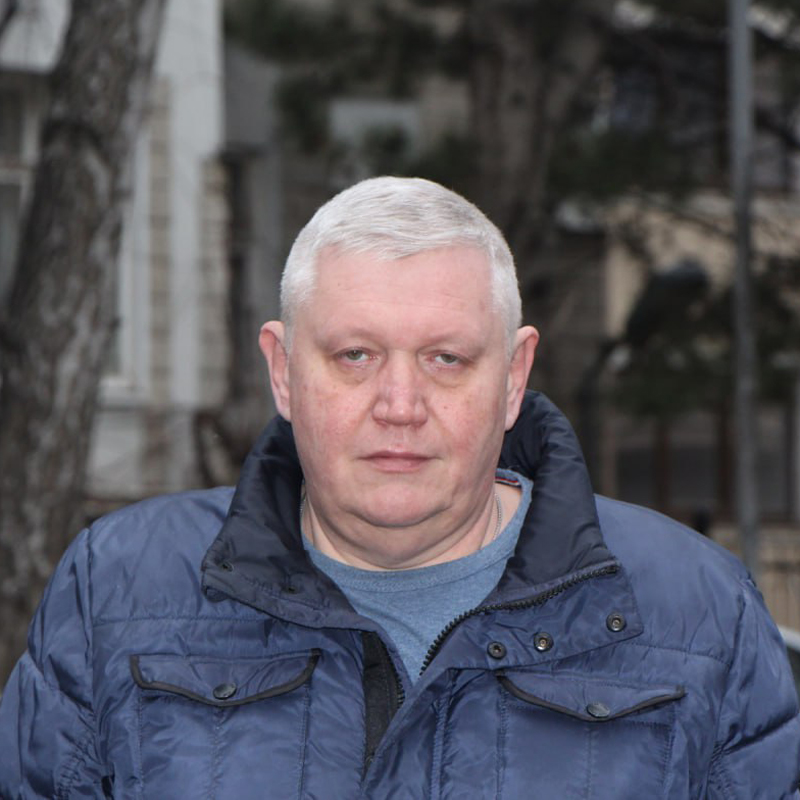

Dorin Jungietu
Moldova is rushing to approve the construction of a major new photovoltaic park and to exempt imports of wind farms and BESS batteries from taxes. But having quickly switched to green energy after narrowly avoiding dependence on Russian gas, the country risks a new dependence on Chinese technology, Europa Liberă writes.
The new park with an installed capacity of 30 MW and a set of batteries for energy storage with a capacity of 60 MWh will be built in the town of Vadul-lui-Voda in Chisinau municipality. On May 29, the Ministry of Energy announced the start of the construction approval procedure.
Just a month earlier, on April 30, Energy Minister Dorin Jungietu cut the ribbon at the inauguration of another energy storage system in Moldova’s largest photovoltaic park, located on 96 hectares in the commune of Radeni, on a hill overlooking the town of Straseni.
Until recently dependent on Russian gas supplies, including for power generation at the MGRES power plant on the left bank of the Nistru River, which covered 70-80% of its consumption, Moldova has seen one of the fastest growth rates in renewable energy generation capacity in recent years.
From almost zero in 2020, capacity increased to 1,023 MW by April 2026, covering 25% of consumption, mainly thanks to solar (photovoltaic) power plants, according to the Energy Ministry.
BESS batteries are now prioritized to store energy generated during peak generation hours and supply it to the grid during peak consumption hours.
However, Moldova is building up this capacity by purchasing technology from China, while the EU warns of the risk of this technology and has already taken the first steps to limit the purchase of Chinese technology in the energy sector.
The Chinese “brain” of Moldovan energy projects
The energy storage system in Radeni, Straseni, inaugurated at the end of April by Minister Jungietu, with a capacity of 50 MW and 60 MWh batteries, was built by Zaw Energy with investments from Lumina Noastră, GS Blue Electric and Kaliope Energy.
Zaw Energy, founded in 2016, has a portfolio of 100 MW projects in operation in the Republic of Moldova and is one of the main local operators in the design, procurement and implementation of renewable energy projects.
The company indicates on its website that it has two Chinese partners and that it uses PV panels from Jinko Solar and inverters from Huawei in its projects. However, the latter company is also the main target of concerns from European countries.
In early May, the European Commission said it would block purchases of Chinese solar technology with European funds from November 2026 after receiving concerns about Huawei’s inverters from member states.
Inverters, which are a key component of photovoltaic or wind power plants, convert the direct current they produce into alternating current used in the power grid and are considered the “brains” of these systems.
Connected to the Internet, they can be used remotely for maintenance and software updates, but cybersecurity experts warn that hackers or hostile state actors could use them to orchestrate large-scale blackouts across the country.
China’s leadership has protested the European Commission’s plans, with Huawei saying that “any legislative proposal aimed at limiting or excluding non-EU suppliers on the basis of country of origin, without being based on concrete evidence and technical standards, violates the EU’s fundamental legal principles: fairness, non-discrimination and proportionality.”
“The end justifies the means”
Lumina Noastră’s spokesman, Dumitru Plamadeale, told RFE/RL that Chinese technology is “more advanced, the price is reasonable and the delivery conditions are more convenient,” making European alternatives “uncompetitive.”
More costly investments would extend the recovery period of the PV plant’s inverters and lead to higher tariffs for the public. “Here the end already justifies the means,” says Plamedale.
In addition to the Radeni power plant in which Lumina Noastră is investing, the company also operates four other large-scale PV parks, including Negureni Park, Telenesti, stating on its website that it uses Huawei inverters in several of these projects.
Plămădă assures that Lumina Noastră has taken measures to ensure the security of its plants, including using local software other than Chinese software. “We have integrated another software at the second level that manages all the assets. We give them [Chinese manufacturers] access only for maintenance, (…) upgrades or technical support (…). But basically, the network is always closed. No one but us can access it,” Plémédalet assures.
Investing in a large solar or wind power plant requires an investment of tens of millions of euros. To reduce risks and make investments more attractive, the government has developed a mechanism that guarantees the purchase of energy produced by these power plants at stable prices for 15 years after their commissioning.
The guarantees are given to those who obtain the status of “large eligible producer” through an auction, the first such auction being held in June 2025. Among the winners was a consortium represented by Lumina Noastră, with seven photovoltaic and wind power projects.
In the 2025 auction, cybersecurity guarantees were not included among the criteria. However, participants in the new auction, which will end in June 2026, will also have to present such measures, Energy Minister Dorin Jungietu told RFE/RL.
“Most of it is from China.”
A direct proportional correlation can be established between the development of solar power plants in Moldova and the import of “green technology” from China.
Data from the EMBER organization, an international think tank in the field of green energy transition, shows that imports of solar panels from China to Moldova in 2022 doubled compared to the previous year, and in 2023 and 2024 these imports increased sharply.
These figures show that in 2024 alone, more than 100,000 solar panels with a total capacity of 59.65 MW and a value of almost $7 million were imported.
EMBER’s data shows that in 2025 and the first half of 2026, imports of solar panels declined, but imports of batteries for energy storage began to grow exponentially.
This trend reflects the situation on the ground, where solar power generation capacity has increased significantly and storage capacity is very small, leading to a crisis in the renewable energy sector. However, the April 2026 data released by the Department of Energy shows an improvement in the situation, which is in line with the trend of battery imports.
Victor Parlicov, former Minister of Energy for the period 2023-2024, says that “most” of the renewable energy production equipment installed in Moldova is made in China, but adds that this situation is not specific to our country.
“It is practically everywhere, including in most EU countries,” Parlicov told Europa Liberă.
China, the expert explains, has become a world leader in the production and export of renewable energy technologies thanks to an economic policy “for decades” in which it has developed “the exploitation of rare minerals”, while the EU and the US “have reduced or stopped exploiting their own resources, especially for environmental reasons”.
European equipment, although more efficient, is more expensive, says Parlicov, echoing the observation of Dumitru Plamedale of Lumina Noastră that its use leads to higher prices and a “burden” for electricity consumers.
European experts quoted by Deutsche Welle say that, at least in the case of inverters, EU manufacturers have the ability to increase their production capacity in a few months to the level needed to meet demand, estimating the cost of equipment produced in the EU to be 2% higher than its Chinese counterparts.
“Safety costs money.”
This statement comes from energy expert Sergiu Tofilat, for whom it is not only about cybersecurity, but also about “situations in which China can exploit its dominant position.”
“If most of your energy-producing equipment is produced in China by a single supplier, that supplier has serious leverage over your political situation,” Tofilat told RFE/RL.
“He doesn’t like what you are doing, he doesn’t supply you with equipment, you are left without energy,” Tofilat continued, and his remark about dependence on Chinese technology brings to mind a situation very familiar to Moldova just a few years ago, when it was still dependent on gas supplies from Russian state-owned Gazprom.
Risks should be assessed and managed in advance, and sources should be diversified, Tofilat urges.
He agrees that Moldova cannot “afford” to interfere with national policy on importing Chinese technology, but says it should harmonize its policies and requirements with those of the EU as they are developed.
Commenting on EU concerns about Chinese inverters, Energy Minister Dorin Jungietu told RFE/RL that this is not news to him and that he “looks forward to further communication” with the European Commission to find out “which technologies or technology suppliers from China may pose risks.”
Jungietu acknowledges that the prices sought by the authorities in the 2025 auction for “large qualified producer” status have encouraged investors to bid for projects based on Chinese technology. But this year’s auction takes into account security issues, which are a “priority.”
“At the same time, we are following with interest European development and production (…) and competitiveness. Because this is also an aspect that the EU has to work on so that European products are competitive on the market and we have access to them,” Jungietu said.
However, the alternative is unclear at the moment, and Minister Jungietu’s government colleague, Deputy Prime Minister and Foreign Minister Mihai Popşoi, was in active talks with Chinese authorities during a recent visit to Beijing at the end of May to explore joint projects in renewable energy production and storage.
In Chisinau, the parliamentary majority, supported by opposition MPs, on May 28 approved in first reading a legislative initiative proposed by the Energy Ministry to abolish 8% customs duties on imports of wind energy equipment and 5% on imports of renewable energy storage batteries, as well as VAT refunds for companies investing in energy storage systems.


