



Eduard Ţugui
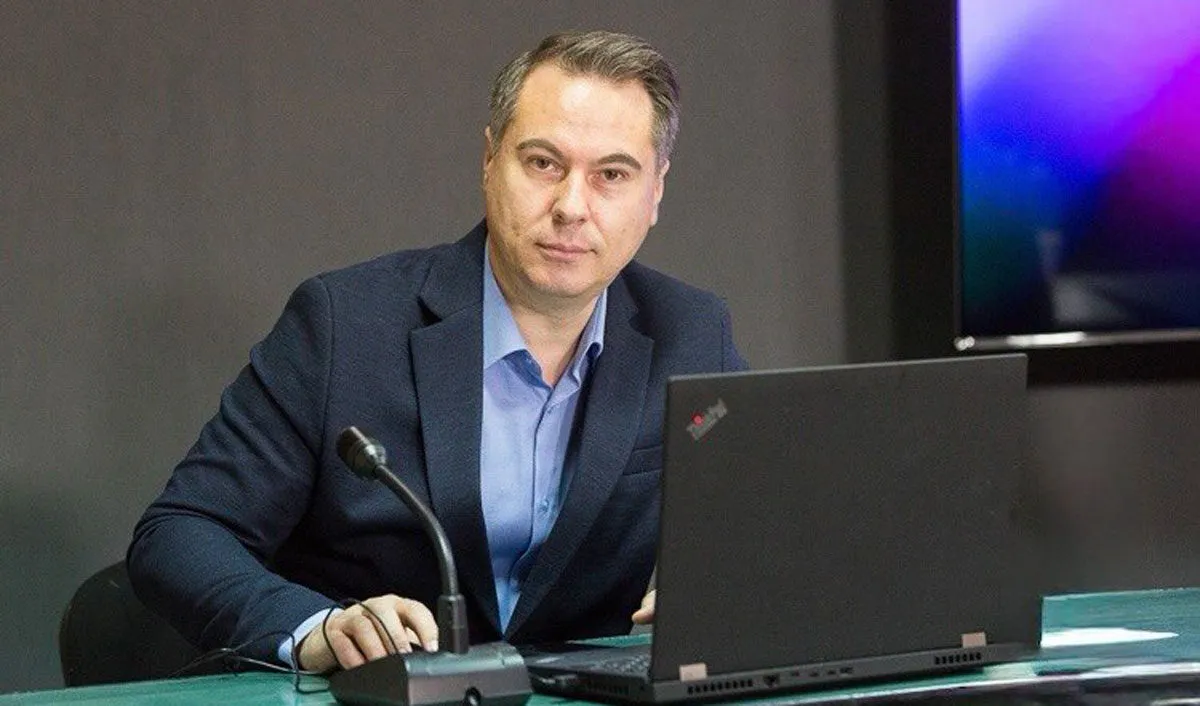
Eduard Țugui, head of the Directorate for Investment Attraction and Industrial Development Policies within the Ministry of Economic Development and Investment (MDED), stated that the ministry is drafting a bill that will address five of the ten recommendations made by the Court of Auditors. The draft is due to be presented to Parliament in January 2027.
“Of course, the first step is to establish the organisational and legal structure of the Free Economic Zones’ administrations. Legally, we currently have two basic options: a public institution or a commercial company. The commercial company may be a public limited company (SA) or a private limited company (SRL),” the official explained.
According to Țugui, the specific proposals will be included in the draft bill, which is due to be presented to Parliament around January. Subsequently, consultations will take place with all stakeholders, including the Free Economic Zone administrations.
If the commercial company form is chosen, amendments to the Tax Code will also be required. At the same time, the chosen legal form will determine who will act as the founder and how the properties and assets of the zones will be managed and monitored.
“Whether it is the Ministry of the Economy or any other institution or authority designated by the Government, depending on that, we will then look further into whose balance sheet and oversight the properties or assets under management fall under, what the reporting structure is, how the budget is approved, and what the level of involvement is. We do not wish to merely pay lip service, as has been done for many years – the law has been flouted – but we want to devise a coherent governance mechanism,” emphasised Eduard Țugui.
ZEL residents will not be affected
The MDED representative was keen to point out that the reorganisation concerns the governance of the administrations and will not alter the regime applicable to economic operators operating in free economic zones.
“We would therefore like to inform economic operators and FEZ residents that they will not be affected by our proposals regarding governance. This is a very important message, as it is crucial that these discussions and reports are not misinterpreted as us once again meddling with and disrupting our economic operators, of whom there are few. The investment environment must be one of predictability and certainty. With the exception of the Ungheni Free Economic Zone, all zones, in accordance with the guarantees, are set to operate until 2035. Once again: the proposed changes regarding governance will not affect Free Economic Zone residents,” he stated.
“What the Government and the Republic of Moldova have committed to remains set in stone,” assured Eduard Țugui.
Free Economic Zones and logistics hubs for investors
At the same time, the authorities are seeking to strengthen the role of free economic zones as platforms for attracting new investment, including through the development of logistics activities.
“For new investors, the free economic zones will become logistics hubs. For example, they bring in a product from somewhere in Asia, assemble it, repackage it, for instance, and export it to Brazil or the European Union – to Germany, for example. During this time, they do not have to pay import duties and are not subject to customs red tape – in other words, they benefit from this suspensive free zone regime. This, too, is a logistics hub,” the official explained.
The need to clarify the legal status and asset records of the Free Economic Zones (FEZs) was highlighted by the Court of Auditors. The audit identified shortcomings in the accounting for state-owned land relating to the free economic zones. These were not properly reflected in the Public Property Agency’s accounts, in the founders’ balance sheets or in the Government’s consolidated balance sheet, which affected the accurate representation of the value of public assets and the traceability of property rights.
This story was translated with the assistance of artificial intelligence.The translation was also reviewed by the Logos Press editorial team.
Follow our updates
Have information for the newsroom? Share it with Logos-Press

























Comments
0No comments yet. You can start the conversation.
Comments are open to readers with a Logos Press account.
Sign in to comment