


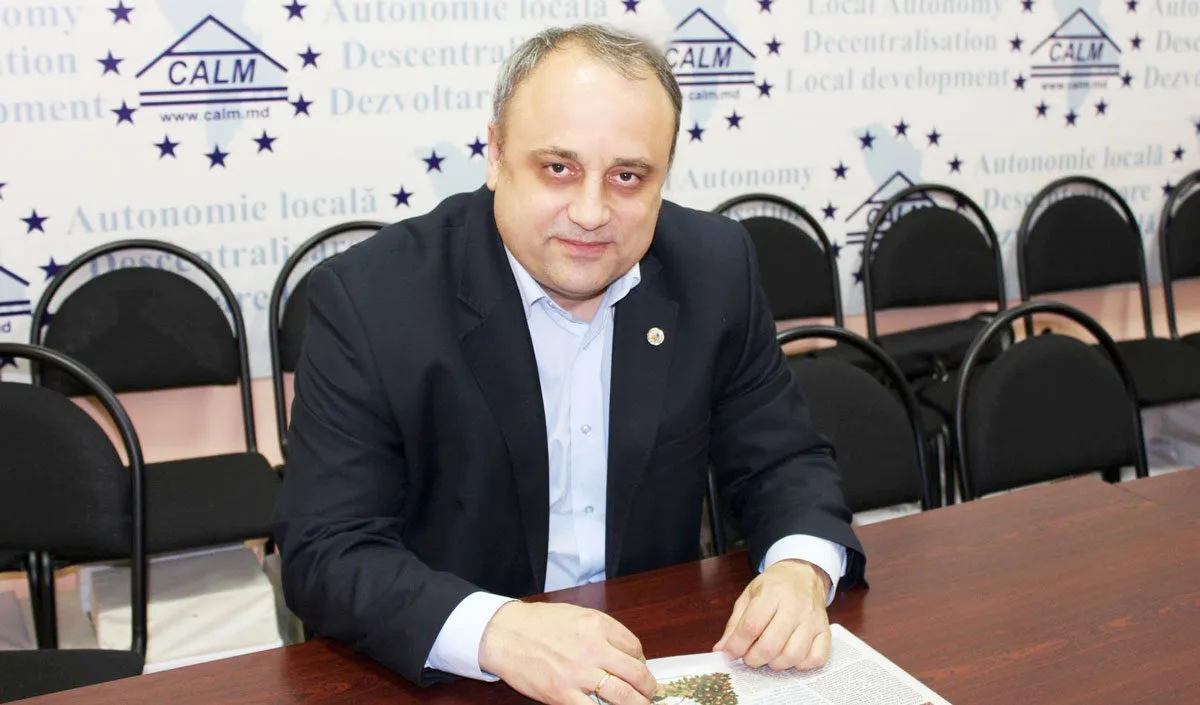
Viorel Furdui
According to Viorel Furdui, Executive Director of the Congress of Local Authorities in Moldova (CALM), the organisation welcomes the concept of reorganising second-tier local government, which, he says, “fits into the existing system of regional development”.
He asserts that the new concept is in line with the proposals previously put forward by the Congress and submitted to the government.
The most challenging part of the reform lies ahead
“For us, this is a pleasant surprise, especially compared to what was originally proposed – 10 districts – which, in our view, represented a completely outdated system,” notes Furdui. “However, in my view, the most challenging part lies ahead: how to flesh out this administrative structure – with powers, funding, election procedures and so on.”
As previously reported by Logos Press, Prime Minister Vasile Tofan presented the concept for the reorganisation of second-tier local government yesterday, 1 October, during a press conference. It provides for the renaming of second-level administrative-territorial units as ‘regions’, as well as the reorganisation of the 32 existing districts into three administrative regions: Northern, Central and Southern. In addition, a new municipality – Taraclia – will be established.
Institutions and services currently under the jurisdiction of the districts will be transferred to the jurisdiction of the municipalities or central authorities; however, their location will not change: they will remain in the same localities and will continue to be accessible to the public.
Property owned by the districts will also be transferred to the municipalities or central authorities. The new regions will have a more limited administrative structure and smaller budgets than the current district administrations, whilst the municipalities of Chișinău and Bălți will retain their powers.
This story was translated with the assistance of artificial intelligence.The translation was also reviewed by the Logos Press editorial team.
Follow our updates
Have information for the newsroom? Share it with Logos-Press






















Comments
0No comments yet. You can start the conversation.
Comments are open to readers with a Logos Press account.
Sign in to comment