


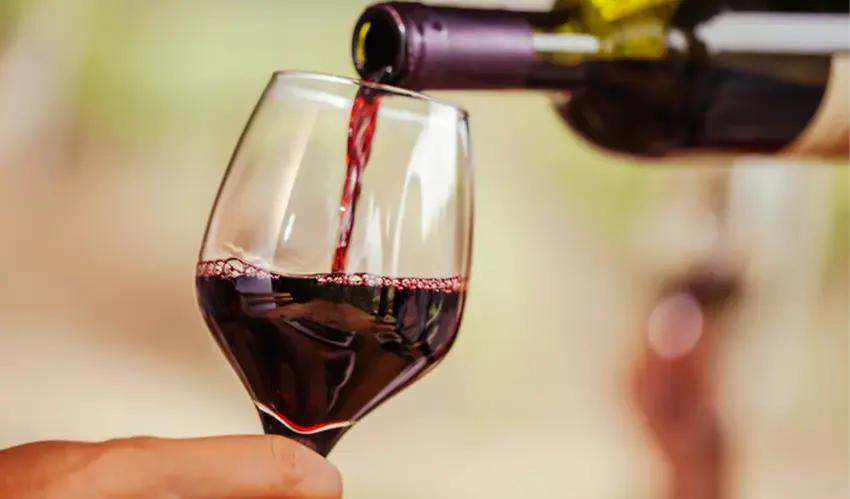
First place went to the Paul Hobbs Cabernet Sauvignon Coombsville 2023 from California’s Napa Valley. The wine received 95 points, and its estimated price, as stated in the ranking, is $120 per bottle.
The Wine Spectator editorial team highlighted the wine’s combination of quality, provenance and market appeal. It is characterised by an emphasis on terroir – the distinctive characteristics of a specific vineyard site – rather than merely the power and intensity typically associated with Cabernet Sauvignon.
The grapes for this wine come, amongst other sources, from historic plots at the Nathan Coombs Estate in the Coombsville appellation. The vineyards are situated in a cooler part of the Napa Valley, which influences the ripening profile of the grapes and the style of the finished wine.
Second place went to the Italian Produttori del Barbaresco Barbaresco Rabajà Riserva 2021, which scored 98 points and is priced at $91. Third place went to the Australian Penfolds Cabernet-Shiraz South Australia Bin 389 2024 — 95 points and $80.
Thus, the ranking shows that first place does not necessarily go to the wine with the highest tasting score.
Wine Spectator’s Top 10 for 2026
| Rank | Wine | Country and region | Points | Price, $ |
| 1 | Paul Hobbs Cabernet Sauvignon Coombsville 2023 | USA, California | 95 | 120 |
| 2 | Produttori del Barbaresco Barbaresco Rabajà Riserva 2021 | Italy, Piedmont | 98 | 91 |
| 3 | Penfolds Cabernet-Shiraz South Australia Bin 389 2024 | Australia, South Australia | 95 | 80 |
| 4 | Caparzo Brunello di Montalcino 2021 | Italy, Tuscany | 95 | 54 |
| 5 | Château St.-Pierre St.-Julien 2023 | France, Bordeaux | 95 | 50 |
| 6 | Stag’s Leap Wine Cellars Cabernet Sauvignon Stags Leap District Fay 2023 | USA, California | 95 | 200 |
| 7 | Law Sagacious Adelaida District 2023 | USA, California | 96 | 90 |
| 8 | Château Carbonnieux Pessac-Léognan White 2023 | France, Bordeaux | 95 | 55 |
| 9 | Bodegas y Viñedos Alion Ribera del Duero 2022 | Spain, Ribera del Duero | 95 | 200 |
| 10 | Melville Pinot Noir Sta. Rita Hills 2024 | USA, California | 94 | 46 |
Source: Wine Spectator Top 100, 2026. Prices are quoted in US dollars according to the ranking and may not necessarily correspond to current retail prices in other countries.
How Wine Spectator selects the best wines
The ranking is based on blind tastings: experts evaluate wines without knowing the producer or the price per bottle. However, they are aware of the grape variety and/or region of origin.
Over the past year, the editors have reviewed nearly 11,000 wines. More than 7,295 of these scored at least 90 points on a 100-point scale. The final top 100 is selected from this sample.
Four main criteria are taken into account during the selection process:
Quality – the wine’s tasting assessment.
Value for money – how well the price reflects the quality of the product.
Availability – production volume and the number of bottles produced or imported into the US.
X-factor – the wine’s additional appeal: an interesting story, distinctive features of the producer, the region or the product itself.
This is precisely why the ranking is not simply a table of wines sorted by score. A wine with a higher score may be overtaken by a product that better balances quality, price, availability and editorial interest.
What the 2026 ranking reveals
The top ten features four wines from California, two from Italy, two from Bordeaux in France, and one each from Australia and Spain.
The highest-rated wine in the top ten – the 2021 Barbaresco Rabajà Riserva – scored 98 points. Meanwhile, the most expensive wines in the ranking were the 2023 Stag’s Leap Wine Cellars Cabernet Sauvignon Fay and the 2022 Alion Ribera del Duero: both cost $200 a bottle, according to the publication.
The most affordable wine was the Melville Pinot Noir Sta. Rita Hills 2024, priced at $46. The French Château St.-Pierre St.-Julien 2023 also stands out for its value for money: 95 points at a price of $50.
The ranking demonstrates the diversity of contemporary winemaking approaches – from classic European regions to New World producers. At the same time, Wine Spectator’s final selection reflects not only tasting characteristics but also the editorial team’s assessment of which wines are of greatest interest to consumers.
Follow our updates
Have information for the newsroom? Share it with Logos-Press






















Comments
0No comments yet. You can start the conversation.
Comments are open to readers with a Logos Press account.
Sign in to comment