


Foto Martin Mills
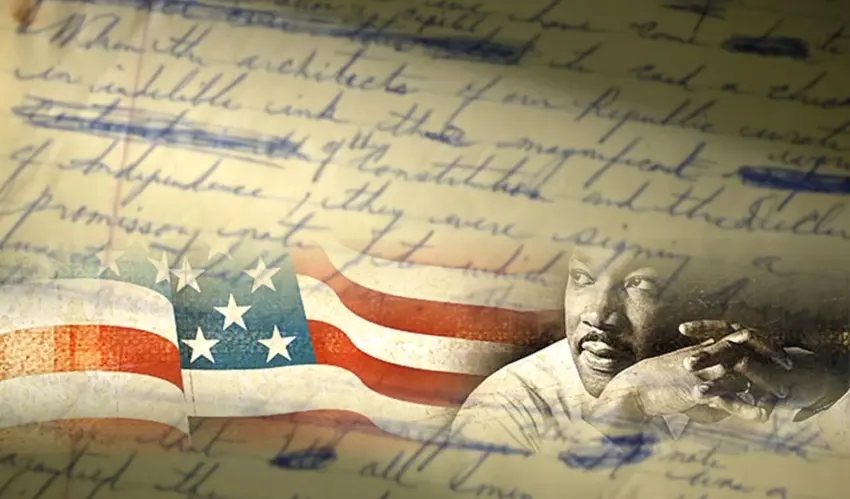
The document dates from the period leading up to the historic March on Washington for Jobs and Freedom, which took place on 28 August 1963, according to the AP. The seven yellow sheets contain numerous corrections, crossed-out passages and marginal notes, allowing us to trace how King worked on the text of one of the most famous speeches of the 20th century.
The manuscript does not contain the phrase ‘I have a dream’ — these were the very words King spoke off the cuff to the crowd gathered at the Lincoln Memorial. However, the draft does include the full concluding section of the speech, with the words: ‘At last free, at last free; thank God, we are at last free’.
From a desk drawer to the auction room
The history of the manuscript is linked to Edward T. Clayton, director of public relations for the Southern Christian Leadership Conference (SCLC), who helped King prepare the speech. After Clayton’s death in 1966, his papers remained in his desk. In the late 1990s, Clayton’s widow, Xernona, discovered amongst them an envelope marked ‘Speech’, containing seven sheets of handwritten text. Realising the document’s historical value, she kept it safe, but it was not until 2024 that she revisited the manuscript and handed it over to experts at Christie’s. They confirmed that this is the only known handwritten final draft of the famous speech.
The proceeds from the sale will go to organisations preserving the legacy of the civil rights movement, including the Clayton Xerנון Foundation and the King Centre in Atlanta.
Prior to the auction, the manuscript will be displayed to the public for the first time at the National Centre for Civil and Human Rights in Atlanta. The exhibition will run from 16 to 22 November 2026.
Follow our updates
Have information for the newsroom? Share it with Logos-Press













Comments
0No comments yet. You can start the conversation.
Comments are open to readers with a Logos Press account.
Sign in to comment