



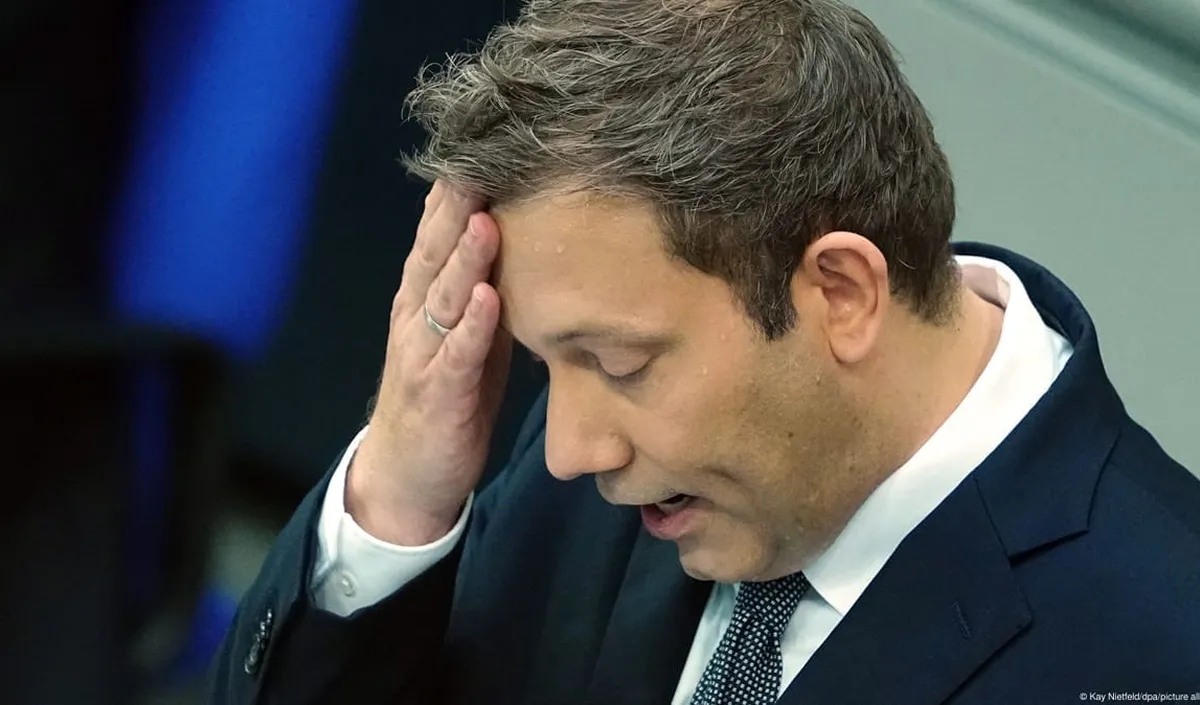
German Finance Minister Lars Klingbeil Photo: Kay Nietfeld/dpa/picture alliance
This is the second-largest volume of borrowing since the Second World War, following the pandemic-driven record set in 2021. The ruling coalition’s compromise provides for increased spending on infrastructure and defence, but is accompanied by the abandonment of some tax initiatives and a review of plans to cut social benefits.
Spending will rise by 7 per cent
According to data published by Reuters, total expenditure under Germany’s federal budget for 2027 will amount to €560.9 billion – approximately 7 per cent more than the previous year. Tax revenue is forecast at €396.2 billion.
New borrowing will reach €210.4 billion. Of this, around €123 billion is allocated to the main budget, a further €57.8 billion to the special fund for infrastructure and climate neutrality, and €29.6 billion to the special fund for the German armed forces.
The government therefore intends to finance large-scale investments not only through current budget revenue, but also by increasing borrowing.
Investment expenditure is set at €62 billion. The main priorities remain the modernisation of transport and other basic infrastructure, as well as strengthening the country’s defence capabilities.
The coalition has made concessions on tax and social policy
Reaching agreement on the budget required several weeks of negotiations between the conservative CDU/CSU bloc and the Social Democratic Party of Germany (SPD), notes Reuters. The coalition partners had to find a compromise between investment plans, social policy and the need to keep the deficit under control.
As a result, the coalition abandoned the planned tax on plastic packaging and postponed the introduction of a tax on sugary drinks until 2028. In addition, plans to cut child benefit payments to low-income families were revised.
It was also not possible to agree on the funding for the reduction in the electricity tax, which Chancellor Friedrich Merz had been pushing for. The proposed measure would have required around €5 billion in additional funding. Merz stated that he still intends to push for a reduction in the tax to the minimum level permitted under EU rules.
These concessions reflect divisions within the coalition: the Conservatives are insisting on budgetary discipline and reforms, whilst the Social Democrats are seeking to preserve social safeguards.
Economists warn of a rising deficit
According to Reuters, Germany’s Council of Economic Experts forecasts that the country’s economy will grow by 1 per cent in 2027. However, the experts warn of the need to rein in spending on defence and pensions in order to limit a further increase in the deficit.
Holger Schmiding, an economist at Berenberg Bank, noted that, from an economic perspective, one might have expected more far-reaching reforms from the budget. In his view, the decision not to make substantial cuts to social spending and to maintain the overall tax burden reflects the difficulties in reaching a compromise between the coalition partners.
The opposition party ‘Alternative for Germany’ (AfD), for its part, sharply criticised the increase in borrowing, describing it as excessive debt accumulation.
The Budget Committee has approved the package, which must now be put to a vote in the Bundestag. Further political debate is possible before final adoption, particularly regarding the reduction in the electricity tax.
Follow our updates
Have information for the newsroom? Share it with Logos-Press




















Comments
0No comments yet. You can start the conversation.
Comments are open to readers with a Logos Press account.
Sign in to comment