


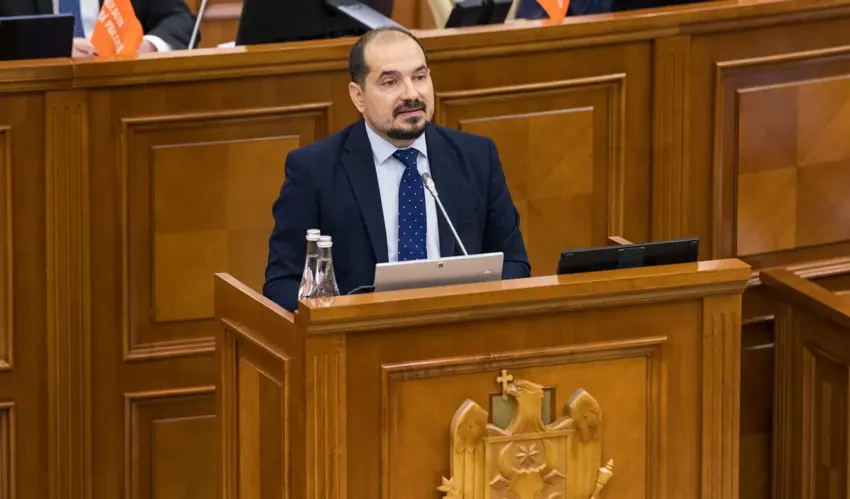
Alexei Buzu
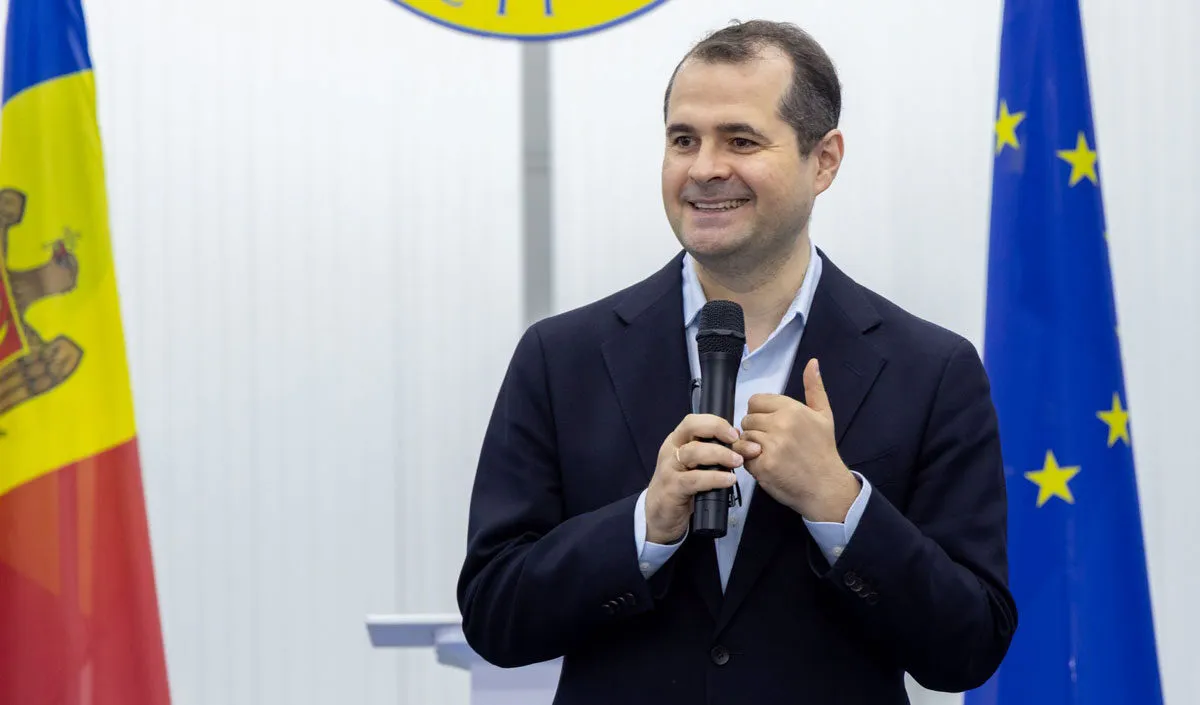
The scale of the work makes the administrative reform one of the largest operations to date involving the inventory and redistribution of public property. The Secretary-General of the Government, Alexei Buzu, emphasises that the main task is to ensure the transition process takes place without any loss of assets and without disrupting the work of institutions.
“We will work with the towns – district centres – and with the district councils to ensure that every facility and every service is inventoried, so that we can transfer museums, cultural centres and holiday camps. We have 27 dental clinics managed by district councils as municipal enterprises, and we will need to find a solution for these too. Everything must be organised so that, with the transition to the new administrative map, citizens do not experience any disruption to services,” Mr Buzu stated in Parliament.
The inventory will cover not only immovable property but also the infrastructure required to deliver public services. The authorities must determine which facilities are managed by the district councils, how they are administered, and to whom they will be transferred following the change in the administrative-territorial organisation: to the new local councils or to central authorities. Another task will be to establish the operating model for municipal enterprises.
Assets must remain at local level
One of the key issues is determining the ownership of assets following the amalgamation of administrative units. The government intends to avoid the concentration of property at regional level and to transfer it to the local authorities in whose territory it is situated.
Buzu directly links this approach to the need to build on the experience of the previous administrative-territorial reform, carried out in the late 1990s. Between 1998 and 1999, the Republic of Moldova replaced the Soviet system of raions with a county-based structure, modelled on the Romanian system, merging small settlements into larger communes. However, the reform did not last long: in 2003, the country reverted to the system of 32 raions:
‘We want to learn from the experience of 1998–1999. Property must belong to the local level. If there is a plot of land or a building within the territory of a local council – a district centre – these must be transferred to it. The regions must not own property or buildings. What, are you going to manage a building in Edineț from Bălți? It must remain in Edineț!”
However, the practical application of this principle will require the legal formalisation of the transfer of each asset, the reconciliation of property registers and the determination of the legal status of properties currently managed by district councils.
MP Vera Cernega noted that the two reforms have much in common: back then, the number of local councils was halved, and now it has been reduced by 70 per cent. There is, however, a difference when it comes to staff recruitment:
“Back then, the authorities were more impartial and were guided by the criterion of professionalism when recruiting staff, whereas you are acting solely on the basis of political criteria.”
The new local authorities will inherit the assets and liabilities. But what about the powers?
A particular challenge is legal succession. The new administrative units will take over not only the assets of the former local councils, but also the associated property rights and obligations. Consequently, the inventory must form the basis for establishing the complete picture of each new structure’s assets.
“The new local authority becomes the legal successor to the entire estate, all claims and all these assets. We still need to prepare for this process. We have made better progress with some local authorities: we are organising meetings, and the inventory process has already begun. We are trying to collate the registers and so on. In some local councils, where I hope the situation will become clearer once this draft is approved, we will also be able to make progress and find solutions,” said Buzu.
The new administrations will need to obtain accurate information about the composition of the assets, the rights over them and the obligations taken over from the previous bodies. In the absence of a coordinated record of assets and a clearly defined legal succession, there is a risk of delays in the transfer of assets and the emergence of disputes between administrations.
However, the transfer of assets is only one part of the reform. The Deputy Speaker of Parliament, Vlad Batrîncea, has drawn attention to another issue: the new structures could be given responsibility for entire sectors without possessing the necessary powers and resources. In these circumstances, he considers that this is not a reform, but rather an ‘anti-reform’.
“Decentralisation involves both retaining financial resources at local level and transferring powers to local authorities. In reality, we are witnessing an ever-increasing concentration of power at the centre. Nor is the promise of greater investment convincing: there is no extra money, just loans that citizens will have to repay with interest. Ultimately, local councils will become dependent on funding from Chișinău,” said Batrîncea.
MP Ala Pelipețcaia, for her part, wonders what powers will remain the responsibility of local councils if all competences are concentrated in the administrative centres:
“What will be left for local councils – to consult citizens and bear responsibility for decisions taken at central level? The minister is far away, but local authorities will be held accountable.”
Size matters
The Government justifies the need to review the administrative structure on the grounds of demographic changes. In recent years, the population of local authorities with fewer than 3,000 inhabitants has fallen by 33 per cent, whilst in those with more than 10,000 inhabitants it has risen by 36 per cent.
“Not everyone is leaving the country. Our citizens are moving to places where there are more opportunities,” says Buzu.
This trend is reflected in the distribution of resources and the workload of local authorities. As part of the reform, 556 municipalities opted for voluntary amalgamation, whilst a further 272 underwent statutory amalgamation.
As a result, the territory and population of the administrative centres will increase considerably. On average, the number of residents in the district-centre municipalities will rise by 60 per cent. For example, in Nisporeni, the population will rise from 9,200 to 26,000; in Călărași, from 9,000 to 27,000; and in Sîngerei, from 10,000 to 20,000.
The risks of amalgamation
One of the risks of amalgamation is the increased distance between residents of small villages and the administrative centre. The government promises to resolve this issue through the network of Unified Public Service Centres (CUPS) and the mayor’s representatives in each locality.
According to Buzu, citizens will not be required to travel to the new town hall to access the services they need: the necessary infrastructure is to be maintained directly within the localities.
To ensure the practical implementation of the transition, the ministry is preparing an operational guide that will outline the sequence of actions and procedures for each stage:
“As soon as the law comes into force, we will begin this work. The second option is to return to Parliament, should certain structural obstacles arise, in order to simplify the procedure itself.”
However, the proposed merger model has sparked objections from the opposition. MP Mark Tkaciuk described the reform as follows: “We are being asked to divide the country into three fiefdoms and put over 600 local councils on the chopping block.”
MP Gaik Vartanean called the reform “an amputation carried out without anaesthetic”, emphasising that the population had not been consulted via local referendums: “Not a single villager was asked via a local referendum”.
Vasile Costiuc went even further, linking the amalgamation of administrative units to the risk of villages being wiped out and land being concentrated in the hands of companies: “The economic model is, in fact, organised crime through the deliberate destruction of villages and the consolidation of land around transnational companies.”
At the same time, the role of regional development agencies is also changing. In the context of European integration, these are set to be transformed into management agencies, focused on coordinating the funding of regional projects.
“For example, in Romania, the agencies do not implement projects but carry out supervisory functions: they have a seven-year budget, agreed as part of the multiannual framework with the European Commission, and organise the project funding process within their respective territories.”
The reform must take place without any loss of assets, and indeed with additional investment
The preparation of the administrative reform was accompanied by over 1,300 consultations, in which more than 121,000 citizens took part. In addition, the Government organised over 2,000 meetings with local elected representatives. According to the Secretary-General of the Government, the consultations were aimed at hearing participants’ views, explaining the proposed changes and assessing any potential risks.
The financial instrument for the transition will be the second stimulus package for amalgamation. The total value of the planned investments exceeds 3.4 billion lei. Over 1.7 billion lei are already included in the budget for 2027.
“If these resources are exhausted, we will undoubtedly allocate additional funds. According to our estimates, the available resources will be utilised in about a year and a half, which means that part of the money will also be used in 2028,” said Alexei Buzu.
The draft law on the administrative-territorial organisation of the Republic of Moldova was passed by the PAS parliamentary group at first reading. A second reading is due to follow. It is due to come into force following confirmation of the results of the first round of the 2027 general local elections.
Follow our updates
Have information for the newsroom? Share it with Logos-Press












Comments
0No comments yet. You can start the conversation.
Comments are open to readers with a Logos Press account.
Sign in to comment