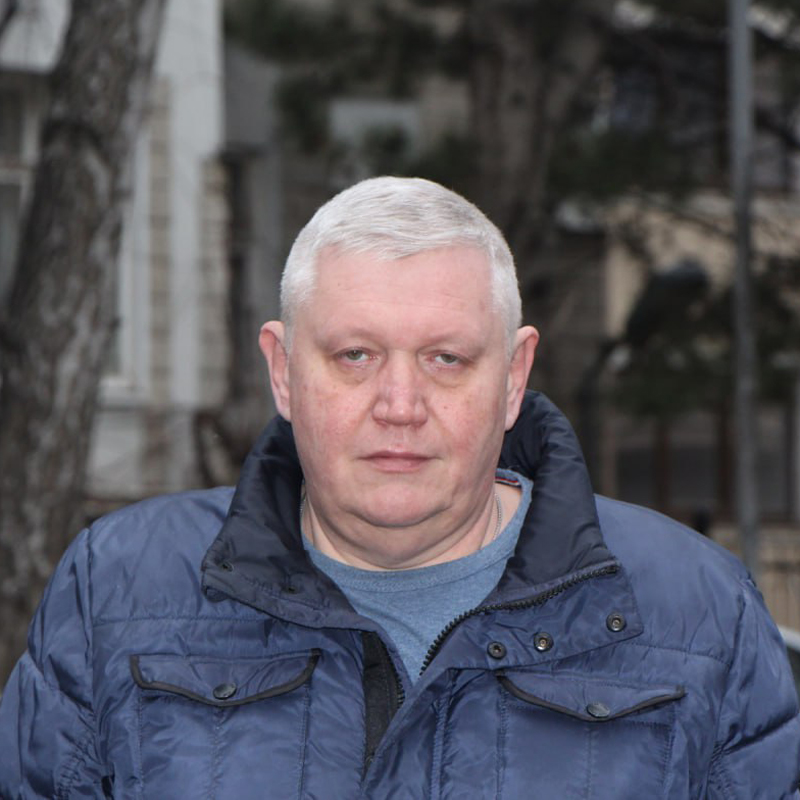

Dan Dungaciu. Photo: Inquam Photos / George Călin
The reaction came after Dungaciu stated that Romania should no longer provide financial assistance to Moldova due to its budget deficit. Shalaru also accused Dungaciu of pursuing a pro-Russian policy.
“The economic deficit is what it is. Romania is halting all external funding, whether it concerns Ukraine or the Republic of Moldova. The Republic of Moldova will finance itself, from our point of view, only through the Moldovan Investment Fund, which we have proposed,” Dan Dungaciu told a TV channel.
“There is no more free money. Romania must invest, not provide non-repayable funding,” he added.
During the same program, Dungaciu also stated that financial support should be replaced with an investment mechanism that would benefit both Romania and the Republic of Moldova economically.
This statement sparked a wave of reactions both in Romania and abroad.
“Russia at the Gates”
“Dan Dungaciu’s statements that Moldova should no longer be aided, but should instead be viewed merely as a business opportunity through a possible future investment fund from which both Chisinau and Bucharest would ‘benefit,’ is difficult to understand, given Moldovan-Romanian economic relations,” Shalaru writes in his Facebook post.
According to the former minister, Romania has invested approximately 480 million euros in direct foreign investment in Moldova, to which is added about 350 million euros representing the capital of more than 1,500 Romanian companies operating in our country. This translates to more than 30,000 jobs.
The support provided by Bucharest goes beyond the economic dimension, according to the former Moldovan official.
“The Republic of Moldova needs help because it is part of Romania, and by helping this piece of Romanian territory, Romania is helping itself. Moldova has long ceased to be an external problem for Romania and has become an internal one, and Romania’s security no longer begins at the Prut River, but at the Dniester,” he states.
Dan Dungaciu, Ties to Russians and Pro-Russian Forces in Moldova
In his article, Anatol Şalaru points out that Dan Dungaciu had close ties with the Chisinau authorities in the past. After Dungaciu received Moldovan citizenship in July 2010, he was appointed advisor on European integration to Mihai Ghimpu (who, by any stretch of the imagination, cannot be called pro-Russian), the interim president at the time.
“So what is Dan Dungaciu’s motivation for attacking the Republic of Moldova and the authorities in Chisinau from his position as leader of the AUR?” asks Shalaru.
The former minister links Dungaciu’s change in stance to an event organized in Chisinau earlier this year.
A Book Presentation as Treason Against the Motherland
It should be noted that on January 15, 2026, Dan Dungaciu presented his book about Donald Trump in Chisinau. Among his guests were representatives of the Russian Federation’s embassy in Chisinau, the PSRM led by Igor Dodon, and MAN, the party headed by Chisinau Mayor Ion Ceban, claims Shalaru, who also published photos from the presentation.
“In the photos below, you can see Oleg Valentinovich Rvachev, who is listed as an attaché at the Embassy of the Russian Federation in Chisinau and also serves as the third representative of the Russian Federation on the Joint Control Commission (JCC), the body responsible for ensuring compliance with the Ceasefire Agreement on the Dniester. His position clearly indicates his connection to the GRU,” Shalaru believes.
The second “guest” at the book presentation was Daniil Zakharov, who assists Russian Ambassador Oleg Ozerov in his activities in Transnistria and Gagauzia. Shalaru presented photographs showing him in Transnistria and Gagauzia alongside the Russian ambassador accredited in Chisinau.
Representing Igor Dodon and the PSRM at the event was Adrian Albu, a former PSRM candidate for mayor of Chisinau, about whom the press published audio recordings in which he is heard speaking with Yuri Gudilin—presented as an FSB agent—in the context of supporting Alexandru Stoianoglo.
Representing Ion Ceban, the mayor of Chisinau—who was declared persona non grata in Romania and subsequently in the Schengen Area—was MAN MP Haik Vartanyan, considered one of his closest allies,” — explained Anatol Shalaru.
“All these individuals who ‘love’ Romania came exclusively at the invitation of Dan Dungaciu,” he emphasized.
Appeal to Maia Sandu
In his appeal to the President of Moldova, the former minister noted: “Perhaps it is time for President Maia Sandu to consider revoking Dan Dungaciu’s Moldovan citizenship,” suggests Anatol Shalaru, comparing the situation to that of former Deputy Head of the Information and Security Service Alexandru Belan, who is accused of treason.
He concludes his post with a warning. He suggests that Russian influence is evident around Dan Dungaciu and the AUR (Alliance for the Unification of Romanians).
“Looking at the photos and analyzing the behavior of the AUR, led by Gheorghe Simion—its refusal to vote in favor of shooting down Russian drones, their vote against U.S. support, as well as their failure to condemn the Russian Federation—whose drones continue to ‘pay us a visit’—we can rephrase the title of Dan Dungaciu’s book as ‘Russia at the Gates,’” Shalaru believes.
What Is the Moldova Fund?
A few days after the TV broadcast, Dungaciu explained on his Facebook page how he envisions the foundation’s operation.
“The Moldova Fund is an idea I proposed together with Mr. Petrișor Peiu in Chișinău more than ten years ago. It was officially launched in 2016, and today the project is part of the AUR parliamentary program. The Moldova Fund is a mechanism designed to regulate economic relations between the two banks of the Prut River, with the aim of breaking the vicious cycle of cash flows between Bucharest and Chisinau and making these relations truly transparent from a financial standpoint. “The reaction to this initiative has been very positive,” Dungaciu stated.
The first vice president of AUR criticized the current Moldovan government, which, he said, has negatively impacted relations with a segment of public opinion in Romania.
“The current government has managed to turn a significant portion of Romanian citizens away from taking an interest in the Republic of Moldova,” Dan Dungaciu asserts.
According to the Romanian politician, the reason lies in the fact that Moldova has not returned to Romania a building that is a cultural heritage site—the former interwar Theological Seminary, now the National Library building in Chisinau.
“This return would have profound significance, especially because it would establish a sense of shared identity between Romania and the Republic of Moldova. From this perspective, it would have been a unique gesture demonstrating that relations between the two states are more than just neighborly ties. This intention had not even been properly announced when the storm broke. Civil society, the ruling PAS party, and the entire media mobilized against the project, including supporters from Bucharest. The pressure was immense; the project failed, and nothing more came of it. Ms. Maia Sandu has also forgotten about it. “This episode, which irritates those who do not want to view bilateral relations through the lens of identity, has been consigned to history,” Dungaciu asserts.
He also confirms that Romania remains Moldova’s main pillar of support in times of crisis and warns against a deterioration in relations between the two countries.
“Romania is what remains for the Republic of Moldova when everything else is taken away from it,” Dungaciu states.
At the same time, he warns the authorities in Chisinau:
“Don’t argue with the Romanians on the right bank of the Prut. Don’t give them the impression that you don’t need them.”
Such passions are running high in the neighboring country surrounding the Republic of Moldova.


