


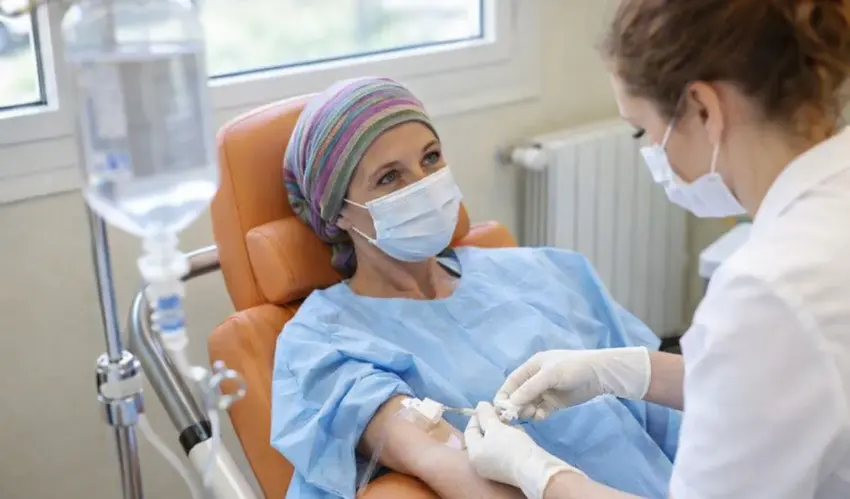
Increase in the volume of care whilst maintaining free access
Between 2023 and 2025, the number of confirmed and reimbursed cases of inpatient treatment rose by 13.6 per cent – from 31,241 to 35,477. The number of additional tests, including immunohistochemical tests, increased from 5,159 to 7,199 over the same period.
Adjustments to contractual volumes and payment for cases treated in excess of the plan made it possible to maintain free access to inpatient care for insured citizens. Furthermore, at the IMSP Oncology Institute, 147 out of the 151 specialists scheduled underwent further training, and a mechanism for calculating medication requirements and insurance reserves was introduced.
Staff shortages and medicine shortages
One of the key problems remains the shortage of specialist doctors in the regions: the number of districts where medical facilities employ oncologists has fallen from 19 in 2022 to 13 in 2026. According to the auditors’ assessment, the current financial incentive measures have failed to ensure an even distribution of specialists across the country.
Difficulties have also been identified in the supply of medicines. A number of essential anti-cancer drugs are either missing from the National List of Essential Medicines or are not fully covered by insurance.
Between 2024 and 2026, economic operators failed to fulfil their supply obligations for 29 contract items totalling 6.6 million lei, which created risks of treatment interruptions for patients.
Waiting lists for radiotherapy and treatment abroad
Despite a total investment of 240.8 million lei in modernising the Oncology Institute’s facilities, the equipping of the radiotherapy department remains incomplete — the second linear accelerator has not yet been commissioned.
Due to technical disruptions, waiting times for procedures reached three months in 2024–2025 and two months in the first half of 2026. There is also a continuing need for equipment for angiography, PET-CT and SPECT-CT.
The mechanism for paying for treatment abroad remains unresolved: costs are reimbursed retrospectively, so the initial financial burden is borne by patients and their families.
An audit of 53 cases revealed irregularities in the verification of entitlement to care and the authorisation of payments, including the unauthorised payment of 130,700 lei following the death of the recipients.
Palliative care and management gaps
Incomplete multidisciplinary teams and a lack of centralised coordination limit access for patients in the late stages of their illness to psychological and social support at home.
In 2025, the volumes of a number of opioid analgesics supplied fell short of contractual levels, whilst the need for assistive devices (including wheelchairs) had not been established.
The Accounts Chamber also noted a lack of continuity in sectoral policy: no evaluation was carried out of the results of the National Cancer Control Programme for 2016–2023, and the new programme for 2026–2030 has not yet been approved.
Of the 31 national clinical protocols, only 7 have been updated. Furthermore, the ‘National Cancer Register’ information system does not yet function as a unified platform — only the Institute of Oncology has direct access to it, whilst other healthcare facilities submit data manually or via email.
Follow our updates
Have information for the newsroom? Share it with Logos-Press




















Comments
0No comments yet. You can start the conversation.
Comments are open to readers with a Logos Press account.
Sign in to comment