


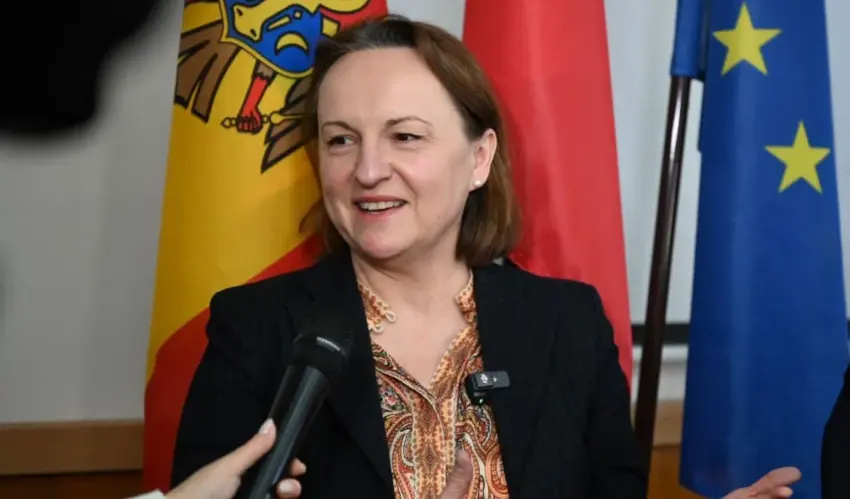
Iwona Piórko
According to the diplomat, financial support is provided in instalments, and fulfilment of commitments is assessed every six months. This concerns both the adoption of the necessary legislation and its implementation in practice.
“It is only at the end of this six-month period that we assess very carefully whether all the reforms have been implemented. If not, we allocate funds only for what has already been achieved,” explained Piórko during the programme on Exclusiv TV.
She pointed out that failure to meet certain commitments does not automatically mean the loss of the allocated funds. The authorities in Chișinău have an additional year to fulfil the outstanding conditions and secure the corresponding funding.
The EU is awaiting convictions
According to the ambassador, judicial reform is one of the most important components of European integration.
“Legislation and its implementation are one thing, but we also analyse the practical results. People want to see final judgements in high-profile corruption cases; they also want to see the recovery of assets. I believe we are asking for nothing more than what the citizens of this country are asking for,” said the head of the EU Delegation.
According to her, the fight against corruption must be accompanied by concrete results that citizens can see in practice.
By the end of December, the Republic of Moldova must implement 40 reforms, with a further 67 planned for next year.
This story was translated with the assistance of artificial intelligence.The translation was also reviewed by the Logos Press editorial team.
Follow our updates
Have information for the newsroom? Share it with Logos-Press
















Comments
0No comments yet. You can start the conversation.
Comments are open to readers with a Logos Press account.
Sign in to comment