Send us a message, and we will definitely consider your suggestions and comments.
All
Business & Companies
Agribusiness & Winemaking
Art & Culture
Banks & Finance
International Trade
Culture
Digitalization
Social Sphere
Moldova’s Economy
Global Economy
Economy & Law
Green Economy
Education
Electricity
Renewable Energy
Events
Logos Press Exclusive
Export & Import
FinTech
Gas
Accidents
Infrastructure
European Integration
Artificial Intelligence
Investments & Markets
Municipalities
City & Regions
IT Market
Global Markets
Politics & Economy
Top News
Pro Business
Point of View
Territorial Reform
Retail & HoReCa
Healthcare
Society
Sport & Tourism
Technology & Innovation
Tourism
News
Alexandru Ursu, Director of the Board of Directors of the National Energy Regulatory Agency (ANRE), stated on a Moldovan television channel that Moldova, as a country, is unable to purchase cheap natural gas. This is true even when there is information indicating that this is the best price offer available.

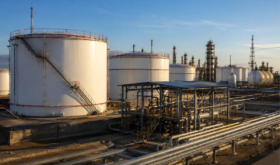
Facilities used to store emergency reserves of petroleum products must allow authorities access to them, enable them to verify the volume of available reserves at any time, and ensure that the reserves can be deployed promptly in the event of a supply crisis.
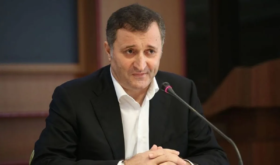
The country’s authorities have made its citizens pay for their own incompetence, according to Vlad Filat, a former prime minister, businessman, politician, and tycoon, and founder of the Liberal Democratic Party of Moldova.
The Day-Ahead Market (DAM), operated by Operatorul Pieței de Energie M (OPEM), set an all-time record for electricity trading volume for the delivery date of August 22, 2026. Trading volume totaled 4,487.576 MWh, equivalent to approximately 40% of electricity consumption in the Republic of Moldova, at an average price of 2,427.08 MDL/MWh, which is equivalent to approximately 120 euros/MWh.
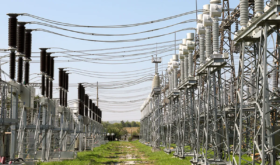
Constantin Cuiumju, a member of the Moldovan Parliament, stated that NARE used an inflated euro exchange rate when calculating the new tariff, which results in additional costs for consumers.

No gas shortage is expected this coming winter, despite the low fill levels in gas storage facilities. The Federal Ministry of Economy and Energy believes that pipeline supplies and new liquefied natural gas import capacity will ensure a stable supply even with lower inventory levels.

The Board of Directors of the National Energy Regulatory Agency (ANRE), at its meeting on August 21, 2026, approved regulated prices for the supply of natural gas by Energocom to certain categories of end users as part of its public service obligation.
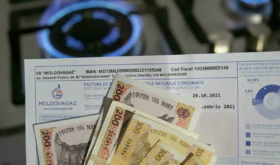
Natural gas rates in Moldova will rise by 41% starting September 1—to 20.3 lei per cubic meter, including VAT. The increase was approved by the National Energy Regulatory Agency (NARE) at the request of Energocom. Opposition representatives are demanding that the authorities disclose the contracts and prices at which gas is purchased.
Participants in the joint internship program organized by the European Union and the Moldovan government, who are completing their internships at the Ministry of Energy, visited Premier Energy. During the study visit, they learned about the workings of the electric power sector—from electricity distribution and supply to real-time grid monitoring and management.

As of today, the water level in the Dniester Reservoir stands at 112.35 meters. Over the past 24 hours, the inflow into the reservoir has ranged from 15 to 29 cubic meters per second. The downstream flow remains unchanged at 75 cubic meters per second. The water level in the Dubossary Reservoir is virtually constant—approximately 28.06 meters.
Prime Minister Vasile Tofan stated that it will be possible to assess a potential increase in electricity rates if Energocom or other energy market participants submit proposals that take into account the cost of purchasing electricity. He noted that he is not yet ready to discuss a possible rate increase.

Starting Monday, the Polish government sharply reduced the VAT on gasoline and diesel fuel—from 23% to 8%. In addition, Warsaw now sets a daily cap on retail fuel prices.
At a public meeting on August 18, the Board of Directors of the National Energy Regulatory Agency (ANRE) approved the criteria that must be met to ensure compliance with obligations regarding the effective, simultaneous, complete, and timely disclosure of insider information by participants in the wholesale electricity and natural gas markets.
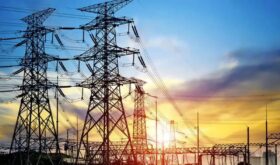
After the Cernavodă Nuclear Power Plant in Romania was shut down due to low water levels in the Danube, Russian gas supplies to the country increased.
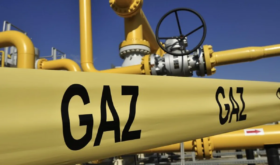
A shortage of diesel fuel and gasoline continues at some gas stations in Moldova, and operators are working to fully restore supplies, according to the National Energy Regulatory Agency (NARE).
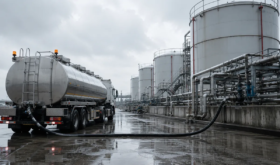
It will be more difficult to secure external funding for energy subsidies this year, President Maia Sandu said.

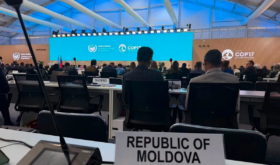
A delegation from the Republic of Moldova is, after all, participating in the 17th Conference of the Parties to the United Nations Convention to Combat Desertification (UNCCD COP17), which is taking place in Ulaanbaatar, Mongolia, from August 17–28. This is the very same forum for which Prime Minister Vasile Tofan had criticized government officials for their potential participation, considering this business trip not the best use of their working time.
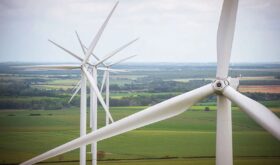
In the tender conducted by the Ministry of Energy for the construction of onshore wind farms with a total capacity of 170 MW, seven projects were selected as the winners.
The Swedish company VIM Energy Systems has signed a contract worth approximately 190 million Swedish kronor (about 17.25 million euros) for the design, supply, installation, and commissioning of a large-scale battery energy storage system park in Bălți, the Republic of Moldova.

At its meeting on August 21, the National Energy Regulatory Agency (ANRE) plans to consider a draft decision to raise the natural gas rate for residential consumers to 20.30 lei per cubic meter.