Send us a message, and we will definitely consider your suggestions and comments.
All
Business & Companies
Agribusiness & Winemaking
Art & Culture
Banks & Finance
International Trade
Culture
Digitalization
Social Sphere
Global Economy
Economy & Law
Green Economy
Education
Energy
Electricity
Renewable Energy
Events
Logos Press Exclusive
Export & Import
FinTech
Gas
Accidents
Infrastructure
European Integration
Artificial Intelligence
Investments & Markets
Municipalities
City & Regions
IT Market
Global Markets
Politics & Economy
Top News
Pro Business
Point of View
Territorial Reform
Retail & HoReCa
Healthcare
Society
Sport & Tourism
Technology & Innovation
Tourism
News
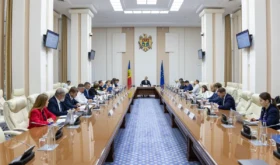
The government has extended the state of heightened readiness in the energy and hydrological sectors by 30 days amid regional risks and drought.
The current increase in gas rates has not sparked a broad public debate about how it will affect the production of essential goods. As always, it was mainly politicians and experts who spoke out, and the discussion focused more on the direct impact of the new rates on the general public. Any mention of the indirect rise in the cost of bread, sugar, dairy products, and so on—if it was mentioned at all—was only in passing. The same goes for the problems faced directly by the producers of these goods.

There are currently 20 clusters operating in the Republic of Moldova, most of which were established with support from UNDP Moldova. Of these, 19 are small clusters, and one is a large cluster.

The Republic of Moldova has fallen to 136th place out of 145 countries in the Global Firepower 2026 military power ranking.

The Republic of Moldova’s GDP accounts for 0.1% of the gross domestic product of the 27 member states of the European Community.
Moldova is introducing new rules for defense procurement, aligned with EU standards. The law, published in the “Official Gazette,” provides for special procedures—including closed tenders—for procurements intended for the military and security agencies, designed to protect military information and ensure the security of the supply chain. The new provisions will take effect on January 1, 2027.

The government says it has cut spending on the Independence Day concert by more than 2.7 million lei. Initially, the cost of the event was estimated at 12.6 million lei, but the final amount came to 9,858,843 lei—21% less.

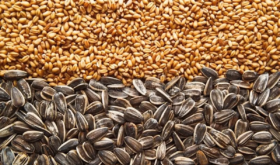
The government is insisting that several key clarifications be made to the draft law on grain import licensing. The Cabinet’s position, along with its comments and proposals, is set forth in the review, which has been published.
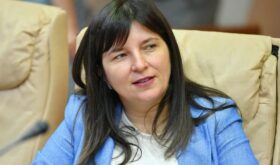
The government should not cut public spending simply by reducing the number of civil servants: some government agencies today carry out tasks that did not exist ten years ago, and European integration continues to increase the workload on the bureaucracy. Finance Minister Viktoria Belous made this statement in an interview with Logos Press.

Issues related to technical capabilities and the effectiveness of customs controls took center stage at a meeting between representatives of the Customs Service of the Republic of Moldova and representatives of the U.S. Department of Energy’s Nuclear Smuggling Detection and Deterrence (NSDD) program.

The Ministry of Finance is proposing to raise the preferential VAT rate for agricultural products from 8% to 12%. Finance Minister Victoria Belous believes that this change will allow for a more even distribution of the tax burden between raw material producers and processors.
The Ukrainian publication finance.ua conducted a comparative analysis of average and minimum wages in Ukraine and other countries in our region.
During the first two weeks of September, the release of water from the Dniester Reservoir downstream will be reduced from the current 75 to 60 cubic meters per second.

Investment activity showed a positive trend reversal in the second quarter of 2026. According to data from the National Bureau of Statistics (NBS), investment in Moldova’s long-term assets rose by 5.2% in the first half of the year. The data released today is diametrically opposed to the NBS figures reported at the end of the first quarter of this year, when investment activity in the country recorded a 2.4% decline.

Eugeniu Osmokescu and Claudiu Năsui took the oath of office on Friday before Maia Sandu, President of the Republic of Moldova. The head of state signed decrees appointing them as ministers.

In the first half of 2026, Purcari Wineries’ revenue totaled 182.2 million Romanian lei (approximately 700 million Moldovan lei), down 7% from the same period last year. The decline occurred amid weakening demand in Romania and a transition to new distribution models in Central and Eastern Europe.

Eugeniu Osmocescu, nominated for the position of Minister of Agriculture and Food Industry, and Claudiu Năsui, nominated for the position of Minister of Economic Development and Digitalization, will be sworn in on Friday, August 28, and will begin their duties that same day.
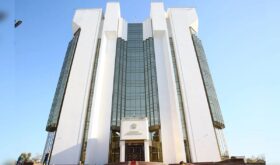
Prime Minister Vasile Tofan is outraged by the bureaucracy and the overwhelming number of requirements imposed on entrepreneurs, and believes that the government must radically simplify procedures. As an example, he cited the field of dentistry, where, he said, obtaining accreditation for a dental office requires fulfilling dozens of pages of requirements, including even obtaining a priest’s blessing.
Expert-Grup and the Friedrich Ebert Foundation in Moldova are publishing the “Socio-Economic Encyclopedia of Moldova”: 35 years of independence, analyzed through the lens of 35 events. The encyclopedia is a reference work that traces the country’s economic history based on 35 defining events—one for each year of independence (1991–2026).
In the first half of 2026, official statistics show significant growth in both the volume of cargo transported and the distance traveled. Such indicators typically point to a revival of economic activity, the expansion of trade routes, or changes in logistics chains.