

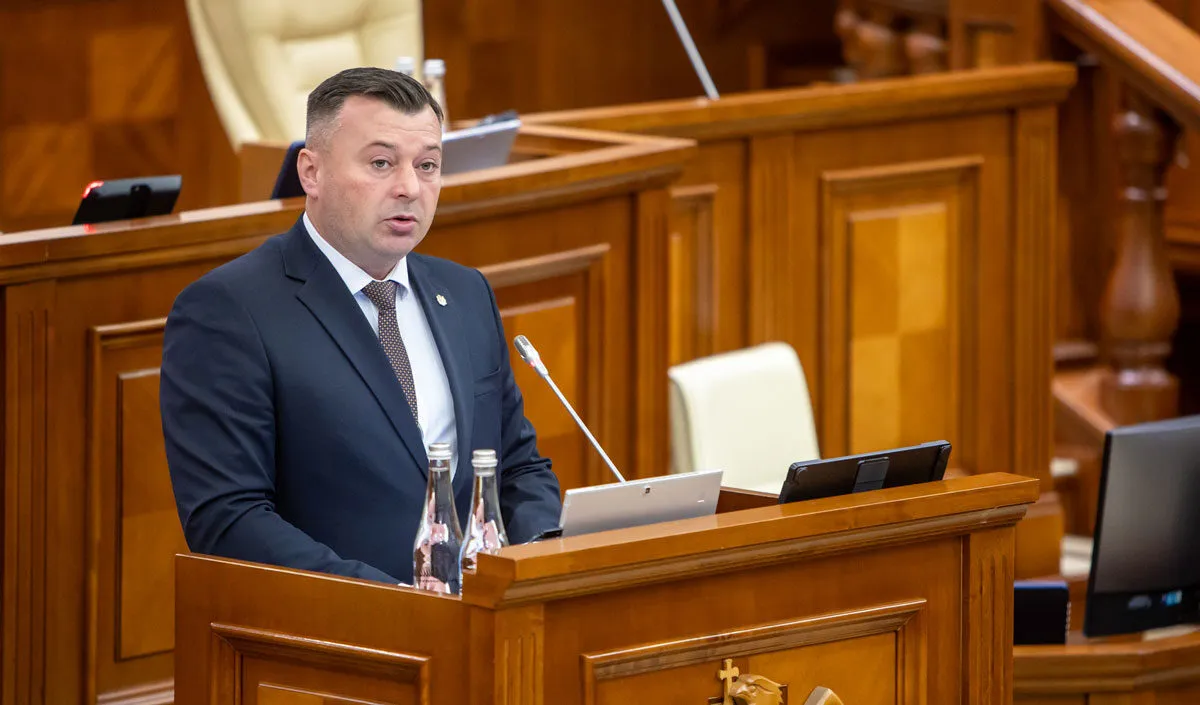
Dorin Pavaloi
According to preliminary estimates, the reform could affect around 161 institutions, employing a total of some 52,000 people.
It should be noted that, according to the Prime Minister, the savings should begin with the very institution he heads. Consequently, a 39 per cent reduction in the number of posts provided for in the staffing plan has already been announced.
Will they start ‘from the fifth floor’?
MP Dorin Pavaloi, a member of the Parliamentary Committee on Public Administration and Regional Development, believes that the reform should be implemented from the top down. In a conversation with a Logos Press reporter, he suggested that the ‘big clear-out’ must begin at the highest levels.
“If this change is truly to take place, it must happen from the top down. From the Government downwards, not the other way round. And if we clear things up up there, we won’t even need to go all the way down. That will be enough. All these ‘parasites’ that have sprung up over the last 4–5 years – agencies, directorates, centres and so on – which are no longer accountable to anyone, and nobody knows exactly what they do or whether they do anything at all. If we start specifically there, believe me, we won’t even need to get down to the lower levels,” said the MP.
“Outrageous salaries”
There is also a very practical calculation behind this line of thinking. It is not just about trying to reduce public discontent over “exorbitant salaries” in the public sector, but also about cutting budgetary expenditure.
In this way, the Government could also avoid the recurring scandals surrounding civil servants’ salaries or the earnings of state representatives on company boards.
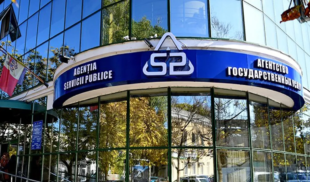
The most recent case concerns the head of a department within the Public Services Agency, who, in a single year, sat on the boards of nine state-owned enterprises and joint-stock companies, earning a total of 211,000 lei.
“If we compare the budgets required to maintain all the structures we have discussed at Government level with the budget required at local level, we will see the difference. In any case, the reform is set to take place. At the very least, this clean-up must be carried out up there, at Government level. If such a clean-up isn’t carried out there, nothing will change down here either,” added MP Dorin Pavaloi.
“Who are these people?”
Asked whether it is fair, from a social and human perspective, for such cuts and redundancies to be made on the eve of winter, the MP replied bluntly:
“Let’s first see who these people are and how they got there. Through a competitive selection process? Without one? Relatives? Friends?”
Against the backdrop of the scandals that have plagued the civil service over the years, this question can be considered relevant to the debate on administrative reform.
Where is public money actually being spent?
The President of the Federation of Public Service Workers’ Trade Unions of the Republic of Moldova, Vlad Canțîr, drew attention to the fact that public administration is structured on three levels – the central level, represented by the Government; the second level, represented by district councils; and the first level, represented by local councils.
In his view, before deciding on cuts, a clear analysis of the figures is needed: how many posts there are at each level and how much money is spent on maintaining them.
“How many posts are there, and what amount of money actually goes to the executive bodies? In central public administration – how many posts are there and what sum is channelled there? In second-tier local public administration, in first-tier local administration – how many posts are there and what sum is allocated? If we look at these figures, we will see who is actually spending the money – the central government or local administration,” he said.
The trade union leader believes that the Prime Minister’s intention to cut spending, particularly in the context of high salaries at central government level, is justified.
However, beyond the Prime Minister’s statements, the most important questions remain: the people and the figures. How much does the state currently spend on maintaining central and local government? How much will the budget save as a result of reducing the number of posts? So far, these calculations have not been presented.
There is no overall picture that would allow for a clear understanding of the areas in which the state intends to make savings.
“Let’s not throw the baby out with the bathwater”
Vlad Canțîr believes that the administrative-territorial reform could leave many local authority employees out of work.
“At present, attempts are probably being made to establish the entire structure of the reform, and unpredictable stages are emerging. It is not known how many town halls there will be, how many districts, or whether districts will continue to exist at all. In practice, everything is happening somewhat haphazardly,” said the trade union leader.
Canțîr acknowledges the need to save public money, but believes this cannot be achieved solely by reducing staff numbers, particularly without taking the social consequences into account.
“The authorities say they are concerned about people and that no one will be left without a job or a means of support. But how is a woman with three children in a village, in a merged local authority, supposed to manage if there is no public transport? The children have to be taken to nursery at 8 am. She has to be at work by 8 am. Schools open at specific times. In other words, there are a whole host of problems. Public transport, infrastructure, networks – none of these exist. What are we doing? What are we turning the civil service in the Republic of Moldova into? Into something utterly chaotic and unclear, with consequences that will unfold who knows when and in what way,” concluded Vlad Canțîr.
This story was translated with the assistance of artificial intelligence.The translation was also reviewed by the Logos Press editorial team.
Follow our updates
Have information for the newsroom? Share it with Logos-Press
















Comments
0No comments yet. You can start the conversation.
Comments are open to readers with a Logos Press account.
Sign in to comment