


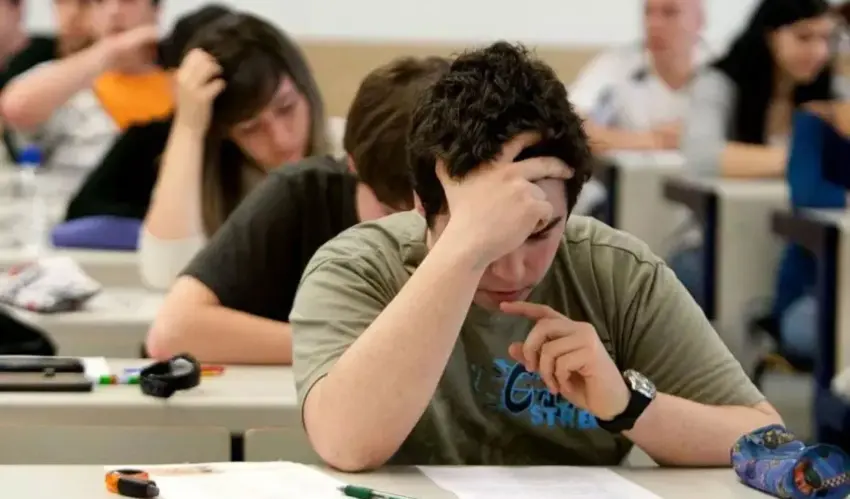
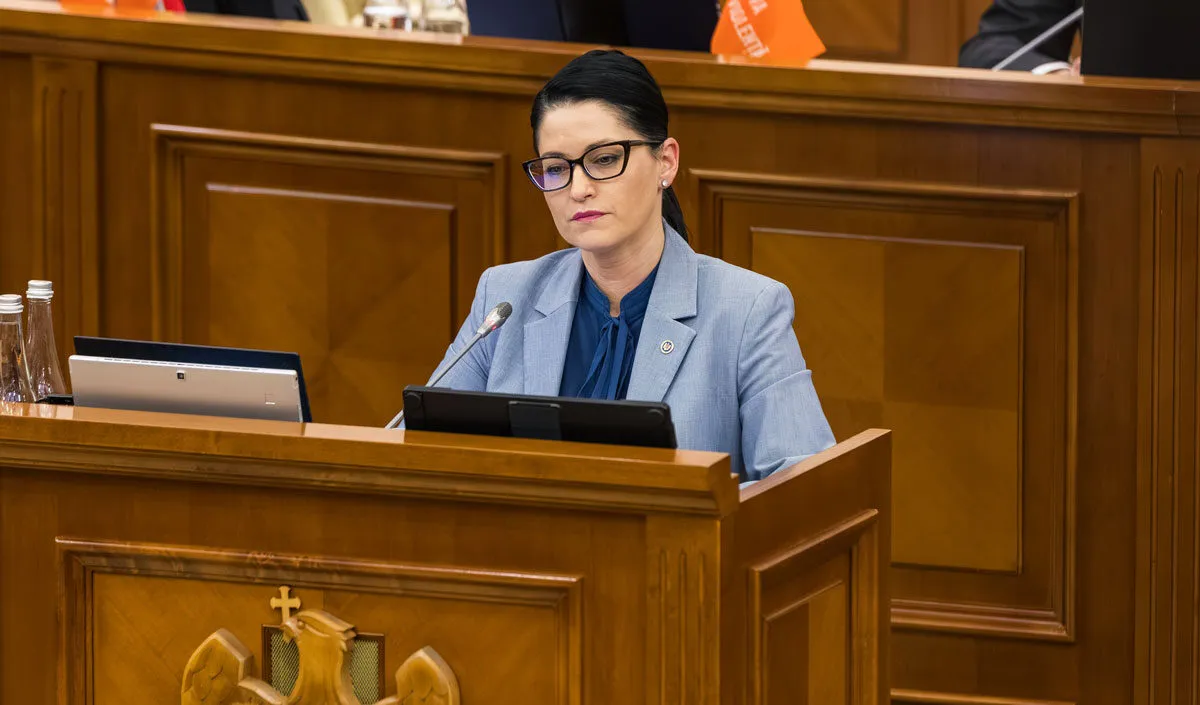
According to the minister, the new approach aims to focus on assessing skills, not just testing theoretical knowledge. Students will therefore have to demonstrate that they can apply what they have learnt in real-life contexts, that they can make decisions and that they can justify their choices.
“Our ultimate objective is to assess the extent to which pupils acquire the skills that will enable them to put their accumulated knowledge into practice. So we are shifting our focus from the question ‘What does the pupil know?’ to the question ‘What can the pupil do with what they know?’. It is not just a matter of calculating or defining something, but also of being able to choose, decide and justify the choices they make,” explained Dan Perciun.
What a maths problem will look like
The Minister also gave a concrete example of how a maths exercise might be modified. Whereas in the traditional format pupils would have been asked to calculate a percentage of a given sum, in the new format the problem will be set in a familiar context.
“The price of a laptop in a shop is 5,000 lei. When buying online, the shop offers a 12 per cent discount, and delivery costs 150 lei. Vasile wants to buy the laptop online. What is the total amount Vasile will have to pay?”, is the example given by the minister.
Dan Perciun explained that, to solve the problem, the pupil must understand the situation, determine the order of operations and take into account both the discount and the delivery cost.
“This is a type of question based on an everyday situation we are all familiar with. When we go online to buy something, we have to take into account the delivery cost and whether or not a discount is being offered. We all make such calculations in our daily lives. There is nothing out of the ordinary about it,” said the minister.
How to spot a fake – new question in the Year 9 exam
According to Dan Perciun, a maximum of two such questions will be introduced in the maths and Romanian language papers for the next session of the Year 9 national exam. These will not exceed the average level of difficulty and will not require knowledge not covered in the curriculum or school textbooks.
Sample questions for maths are due to be published in early January, and those for Romanian in February–March. This will give pupils time to familiarise themselves with the new format.
In Romanian, for example, pupils might be given a fictitious social media post announcing that all schools in the country are closing for the holidays due to the flu. They will have to identify clues that cast doubt on the accuracy of the information and explain where they could check whether it is true.
The changes are part of the Ministry of Education and Research’s plan to improve pupils’ results in maths, reading and science.
Follow our updates
Have information for the newsroom? Share it with Logos-Press













Comments
0No comments yet. You can start the conversation.
Comments are open to readers with a Logos Press account.
Sign in to comment