

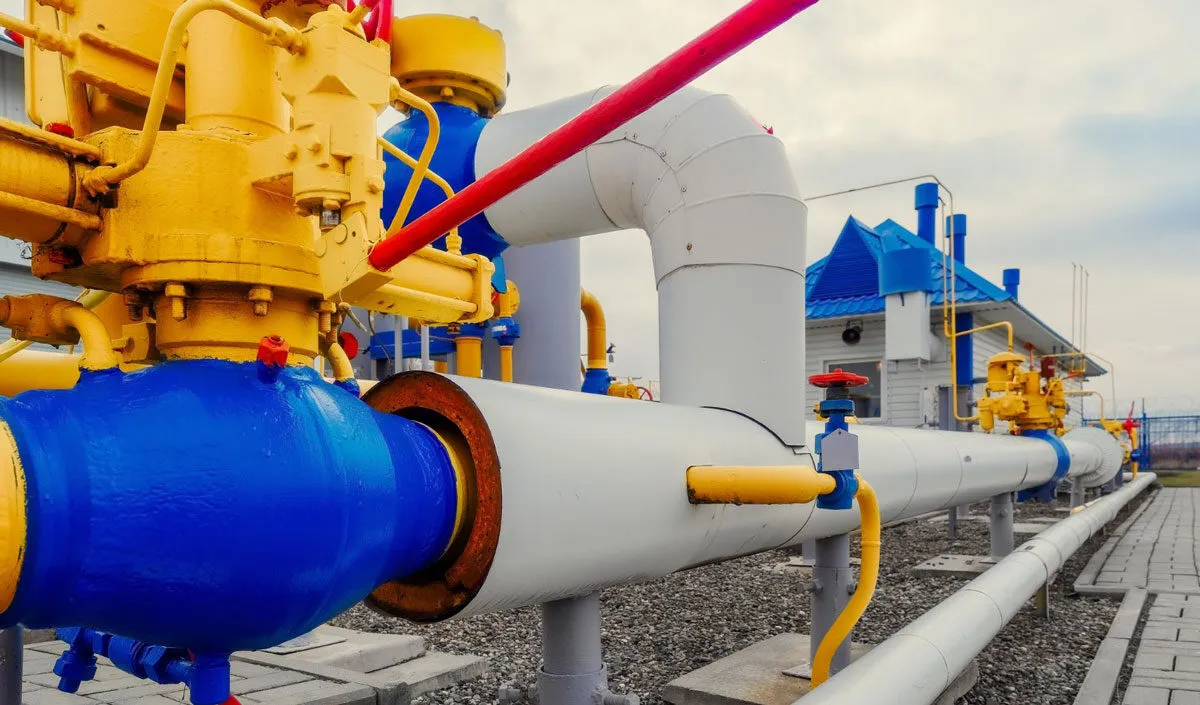
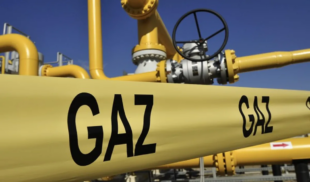
The changes are aimed at reducing transport barriers and costs, as well as making the Trans-Balkan Pipeline a more attractive trade route for gas from sources such as LNG from Greece or Azerbaijani gas.
For Romania, this means strengthening its role as a transit country and gaining access to more flexible regional gas flows. For the Republic of Moldova, the new regime could mean more supply options and less dependence on a single route, according to the European portal 2eu.brussels.
What exactly are the changes?
The changes, which come into force on 1 October, are the result of an integration process that began some time ago. European rules on capacity allocation and network operation must be applied by Member States, including at entry and exit points to third countries, which reduces the difference in regime between the segment located in the EU and the segment in the Energy Community states.
The Secretariat states that non-EU countries have begun to take countermeasures. The aim is to enable traders to use a route with compatible rules on reservation, balancing and access, rather than having to manage a chain of different national regimes, which can turn physically available infrastructure into a difficult-to-access trading route.
Round-trip transport, without gas supplies from Russia
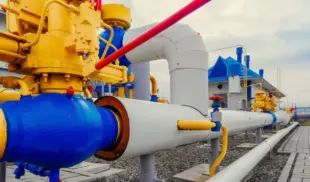
It should be borne in mind, however, that the Trans-Balkan pipeline was built primarily to transport Russian gas from the north to the Balkans and Turkey.
Following changes to supply routes, the infrastructure could be used in the opposite direction for volumes coming from Greece or other southern sources and passing through Bulgaria and Romania to Moldova and Ukraine.
In Romania, Transgaz has already published the parameters for the 2026–2027 gas year. The transmission tariff, based on the actual volume of gas transported, is set at 1.51 Romanian lei (5.79 Moldovan lei) per MWh, whilst the capacity booking fee is set separately depending on the point, duration and type of product. This transport tariff should not be confused with the total cost of transport along a regional route.
In September, the Romanian operator announced tenders for October capacity on several key interconnections, including Negru-Voda 1, Isaccea 1, Giurgiu-Ruse and Ungheni.
More importantly, the Romanian NARE indicates that the regional solution provides for annual, quarterly, monthly, daily and intraday products, guaranteed capacity aggregated at interconnection points, and access to virtual trading points where infrastructure permits. Romania is therefore one of the key links in the mechanism.
Bulgartransgaz has published separately the prices and multipliers applicable to firm and interruptible products for the same gas year.
This is precisely why there is no single ‘Trans-Balkan pipeline fee’. Supplies to Moldova or Ukraine pass through several systems and may require sequential or grouped bookings, whilst the reduction in commercial costs depends on the coordination of tariffs and the elimination of duplicate or hard-to-use products.
Romania has previously reduced the reserve price for certain ‘Route 1’ products, whilst regional operators presented a roadmap for a long-term solution in March. The operators have committed to offering standard annual, quarterly, monthly, daily and intraday products from 1 October and to integrating the details of the solution into capacity auctions.
It is not just the cost of transmission that is at stake
The Energy Community presents the Trans-Balkan Pipeline as a diversification route for Moldova and Ukraine at a time when the EU is preparing to end its dependence on Russian gas, and the European Commission is working on a possible adaptation of the REPowerEU programme for Energy Community members.
However, the real impact can only be assessed once the new gas year begins.
The volumes of reserved supplies, the difference between effective tariffs and previous levels, and the actual utilisation of capacity will reveal whether this modification will transform the route from a technically viable option into a permanently operational commercial corridor.
Diversification for Moldova
The European Commission believes that the operation of the Trans-Balkan Pipeline in a south-north direction, alongside the diversification of supply sources, could boost trade, competition and the liquidity of the regional market without the need to build entirely new infrastructure. However, the Commission explicitly notes that regulatory and trade barriers have so far undermined the viability of this route.
This is also relevant for Romania in the context of the Neptun Deep pipeline: a pipeline capable of transporting gas from south to north could form part of a regional network in which gas from different sources competes for access to the markets of Moldova and Ukraine. However, this does not mean that Neptun Deep will automatically ensure supplies via this route, or that the new regulations will reduce the price of Romanian gas.
For Moldova, the most direct benefit lies in the diversification of sources and routes.
Moldova’s Ministry of Energy explicitly states that the reverse flow of the Trans-Balkan Pipeline, together with the Iași–Ungheni–Chișinău interconnector, creates the technical conditions for diversifying supplies. Gas can be delivered to Moldova via this route from Greece, including LNG from the terminals at Revithoussa and Alexandroupoli, as well as gas from Azerbaijan.
It is worth noting that, at present, all three routes of the Vertical Gas Corridor (which consists of the Trans-Balkan gas pipeline, now operating in reverse mode to facilitate supplies from Greece via Bulgaria, Romania and Moldova to Ukraine) are currently virtually unused. This is due to high tariffs.
Therefore, it would appear that all the measures listed above are aimed at ensuring the viability of this project.
This story was translated with the assistance of artificial intelligence.The translation was also reviewed by the Logos Press editorial team.
Follow our updates
Have information for the newsroom? Share it with Logos-Press














Comments
0No comments yet. You can start the conversation.
Comments are open to readers with a Logos Press account.
Sign in to comment