


Subsidies
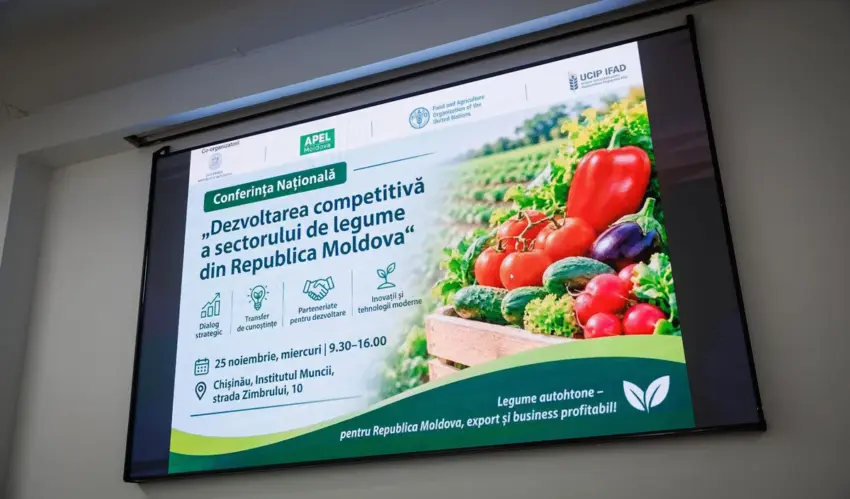
Vegetable growing has been included in the list of agri-food sectors eligible for direct payments under state support measure PD-03: subsidies for every kilogramme of produce grown and sold, as confirmed by a tax invoice. Farmers are entitled to receive these payments when growing vegetables using both ‘protected ground’ technologies (in greenhouses, etc.) and in open fields. This support mechanism for vegetable growing was developed by the Ministry of Agriculture and Food (MAIA) in collaboration with the sector-specific association APEL Moldova and experts from partner organisations specialising in agribusiness development.
“Thanks to our dialogue with the vegetable growers’ association, we are able to devise measures that are as closely aligned as possible with the realities of the sector and the needs of the farmers themselves,” noted Grigore Baltag, Head of the Crop Production Policy Department at MAIA.
Through IFAD/UCIP, vegetable growers can access preferential loans, grants and funding to purchase equipment for production and post-harvest processing. “To revitalise this strategically important sector of Moldova’s agriculture, IFAD/UCIP is providing vegetable growers with financial support of up to 2 million Moldovan lei, which can be channelled towards both production and processing,” said Iurie Ușurelu, Director of IFAD/UCIP.
As part of the project, funded by Switzerland under the ‘Sustainable and Inclusive Markets’ programme, the FAO will establish 14 so-called ‘field schools for farmers’. At these schools, producers have the opportunity to learn, right in the fields, vegetable-growing methods adapted to climate change, as well as how to use water resources efficiently. The project also helps them strengthen their links with the market. “We know how to grow vegetables, but we need to turn vegetable farming into an attractive economic sector capable of competing effectively in all markets,” said Tudor Robu, Deputy Representative of the FAO in the Republic of Moldova.
Priorities
Conference participants identified the challenges faced by domestic farmers. These include:
- the impacts of climate change;
- limited access to water for irrigation and its high cost, as well as rising costs of production inputs;
- a decline in sales through wholesale markets;
- competition from imports (including produce supplied directly by retail chains). Currently, only around 45 per cent of vegetables sold in retail chains are locally produced.
These difficulties have a particularly severe impact on micro and small-scale agricultural producers – who make up the vast majority of vegetable growers in Moldova.
To address these challenges, conference participants identified areas requiring investment and support measures:
- increasing vegetable exports;
- ensuring access to water for irrigation;
- modernising post-harvest processing infrastructure;
- extending the growing season (by combining open-field and protected-field cultivation with the use of storage facilities);
- developing cooperation between producers (groups of 5–20 members);
- as well as expanding long-term access to retail chains;
- regulating imports of vegetables and leafy greens.
“We are convinced that only through the joint efforts of producers, retail chains, processing enterprises, government authorities, relevant institutions and development partners can a modern, competitive and sustainable vegetable-growing sector be created,” concluded Daniela Avraman, Chair of the Board of Directors of the APEL Moldova association.
Follow our updates
Have information for the newsroom? Share it with Logos-Press

















Comments
0No comments yet. You can start the conversation.
Comments are open to readers with a Logos Press account.
Sign in to comment