

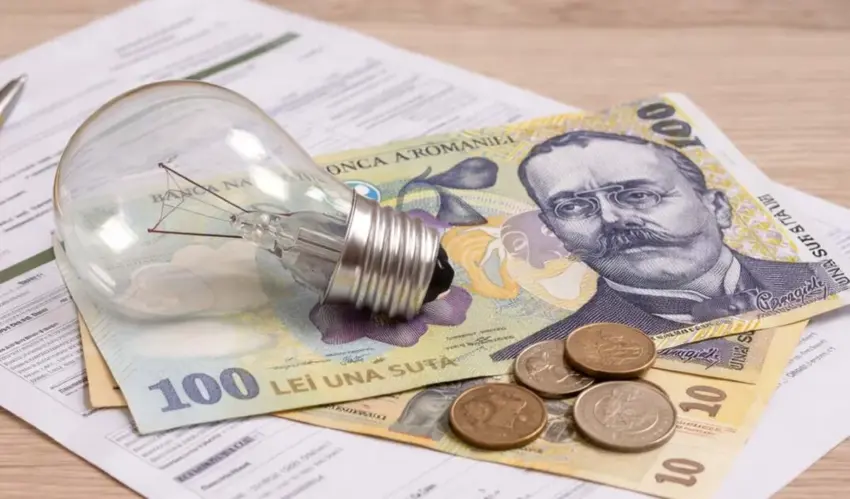
At the same time, the average price of electricity in the EU fell, whilst Romania ranked first in terms of the cost of electricity relative to the population’s purchasing power, reports HotNews, citing Eurostat data published on 30 October.
As the publication notes, between January and June 2026, the price of electricity for households rose in 13 EU countries, fell in 11 and remained relatively stable in a further three.
After Romania, the most significant year-on-year increase was recorded in Ireland – up 19.8 per cent – and Finland – up 18.4 per cent. The most substantial price falls were observed in Denmark – down 31.7 per cent – Luxembourg – down 24.1 per cent – and the Czech Republic – down 11.8 per cent.
On average across the European Union, the price of electricity for households stood at around 0.28 euros per kWh in the first half of 2026. Compared with the second half of 2025, this figure fell by 2.2 per cent. However, prices remain higher than the levels seen prior to the 2022 energy crisis.
Romania tops the list for the cost of electricity when adjusted for purchasing power
In nominal terms, the average electricity price for households in Romania stood at 0.2836 euros per kWh – roughly in line with the EU average.
The highest nominal prices in the first half of the year were recorded in Ireland – €0.3871 per kWh, Germany – €0.3618, and Belgium – €0.3575. Thus, Romania did not feature among the countries with the highest tariffs in absolute terms.
However, when the comparison takes purchasing power into account, the picture changes. According to Eurostat, the cost of electricity in Romania stood at 46.9 purchasing power standards (PPS) per 100 kWh. This is the highest figure in the EU. It is followed by Poland at 41.1 PPS and the Czech Republic at 34.3 PPS.
The PPS indicator allows us to assess how significant electricity costs are for consumers, taking into account differences in the general price level and purchasing power across different countries. Therefore, Romania’s top position in this ranking means that electricity places a particularly heavy burden on household budgets relative to their means.
Prices for businesses have also fallen
At European level, the cost of electricity for businesses has also fallen. In the first half of 2026, the average price for non-domestic consumers in the EU stood at 0.1800 euros per kWh, compared with 0.1903 euros a year earlier. The year-on-year decrease amounted to approximately 5.4 per cent.
Romania ranked 11th among EU countries in terms of the cost of electricity for businesses, on a par with Belgium, Austria and Slovakia.
However, price trends for businesses varied from country to country: electricity prices rose in seven EU Member States, whilst they fell in 19. The most significant increases were recorded in Sweden (18.8 per cent), Finland (18.7 per cent) and Bulgaria (14.2 per cent).
This story was translated with the assistance of artificial intelligence.The translation was also reviewed by the Logos Press editorial team.
Follow our updates
Have information for the newsroom? Share it with Logos-Press























Comments
0No comments yet. You can start the conversation.
Comments are open to readers with a Logos Press account.
Sign in to comment