


Oleg Cara
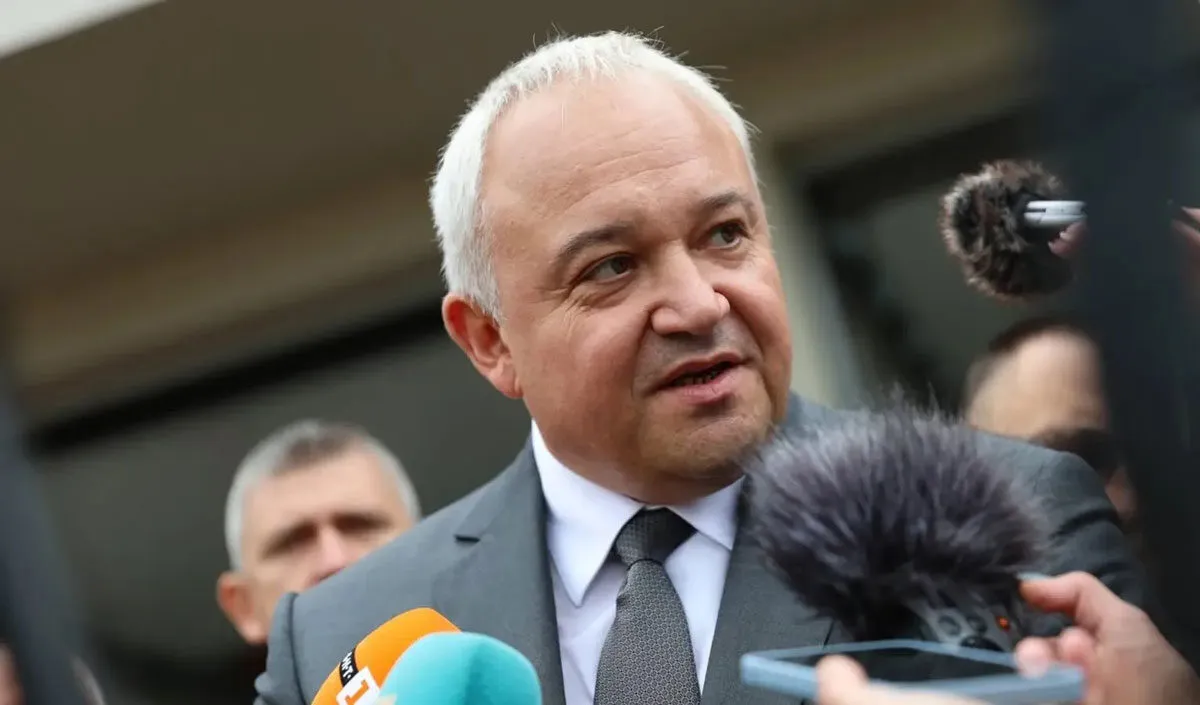
As Oleg Cara, Director General of the National Bureau of Statistics, told Logos Press, the portal is currently operating in test mode. The agency has established this transitional period in order to assess user feedback, comments and suggestions, so that these can be taken into account when the tool is officially launched.
“We used the same approach when launching the foreign trade portal,” he explains. “At that time, whilst testing the platform, we received useful feedback from users and took this into account for its final launch.”
Various levels of aggregation and 180 maps
The geoportal offers the ability to visualise data of varying content and specificity. “In the first phase, we have included over 180 maps that allow for detailed analysis of the information,” continues the NBS director. “We provide various levels of aggregation – by region, district, municipality and locality. Furthermore, users can access data not only by administrative units but also by small areas of 1 km², following the example of other European Union countries.”
The NBS offers the possibility of refining the data at a more detailed level. ‘We have already compiled the information; it will be broken down by population composition, gender and age groups,’ he continues. ‘There is data on population density, concentration and other characteristics.’
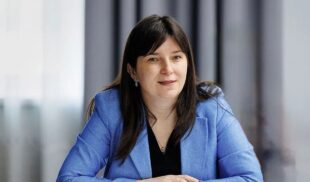
Maria Ovdii, a lecturer at the State University of Moldova, notes that the integration of statistical data with spatial information is important not only for scientific research. This is a ‘single statistical portal’ that can be used, amongst others, by economists and representatives of the business community. At the same time, the portal provides the opportunity for comparison and easy access to information.
Meeting chaired by Eurostat
As previously reported by Logos Press, the data from the latest population census comprises 235 tables, 118 infographics and 34 maps. Their use by public authorities in planning services and developing public policy and compensation programmes was discussed at a meeting of the Policy Group on Statistical Cooperation (PGSC), organised by the Statistical Office of the European Union (Eurostat) in collaboration with the National Bureau of Statistics (NBS) of Moldova. The meeting took place in Chișinău on 24–25 September this year.
Priorities and challenges in the development of official statistics, and in bringing them into line with European standards as part of the European integration process, were also discussed.
This is an annual forum organised by the European Commission, which brings together representatives of Eurostat and the national statistical offices of countries involved in the EU enlargement process.
The event was attended by representatives of Eurostat and the statistical offices of candidate and potential candidate countries for EU accession: Albania, Bosnia and Herzegovina, Montenegro, North Macedonia, Serbia, Turkey, Ukraine, Kosovo and Moldova.
Mariana Kotseva, Director-General of Eurostat, who attended the meeting, welcomed the efforts of the national statistical offices to bring their systems into line with EU standards.
She emphasised that Eurostat would continue to provide them with technical support in preparing for the closure of Chapter 18 ‘Statistics’ in the EU accession negotiations, as well as in developing intra-European trade statistics following accession to the European Union.
The meeting participants also discussed the use of artificial intelligence in the production and dissemination of official statistics.
This story was translated with the assistance of artificial intelligence.The translation was also reviewed by the Logos Press editorial team.
Follow our updates
Have information for the newsroom? Share it with Logos-Press













Comments
0No comments yet. You can start the conversation.
Comments are open to readers with a Logos Press account.
Sign in to comment