


Previous articles in the series:
Quo vadis, Moldova? The EU, Language, and the Future of Moldova
Moldova’s European Transition Requires an Internal Partnership
Without this, Moldova will struggle to navigate its European transition. Too much has to change at the same time, while the country itself remains deeply divided.
After a recent television appearance, I found myself in a debate on social media. I argued that change must be explained in language people understand, that different parts of society must be involved, and not to leave the Russian-speaking community at the mercy of outside interpretations.
In response, I encountered a view that many people share today: how much longer should we keep explaining things to those who, for decades, have refused to accept the state language, the country’s European direction and the reality of Russian pressure? Perhaps the time for persuasion is over, and the country simply needs to be pushed forward.
Behind this firmness are real historical grievances: repression and deportation, Soviet language policy, the war on the Dniester, the presence of the Russian army, and Russia’s war against Ukraine. There is also a sense that historical justice is constantly being postponed for the sake of those who refuse to acknowledge it.
Another part of society has fears of its own: losing the language they are accustomed to, becoming a stranger in a country where its families have lived for generations, being regarded as disloyal from the outset, and one day being told that a place in the future must be earned by giving up part of one’s own life.
These fears do not negate Russian aggression or external pressure. But they do not disappear simply because the explanations used to reinforce them may be false. If they are ignored, they can easily turn into distrust of the state and of the European course.
Our debate did not end in agreement, but it helped reveal the problem more clearly: too often, instead of offering one another a shared future, we offer a choice between two defeats. One side is asked to postpone historical justice yet again. The other is asked to accept a future built without its participation and then presented as an already settled order.
No agreement is possible on those terms. But continuing to live in this condition is becoming increasingly dangerous.
Agreement on the Direction Is Not Enough
For decades, Moldova has lived between several competing ideas of itself. Every important decision is quickly interpreted through old questions: who has won, who must give way, whose history has been recognised, and who will now have to adapt.
This is why a change of government rarely ends the argument about the country. It merely moves the pendulum: reforms are revised, priorities change, and people become accustomed to treating no change as permanent.
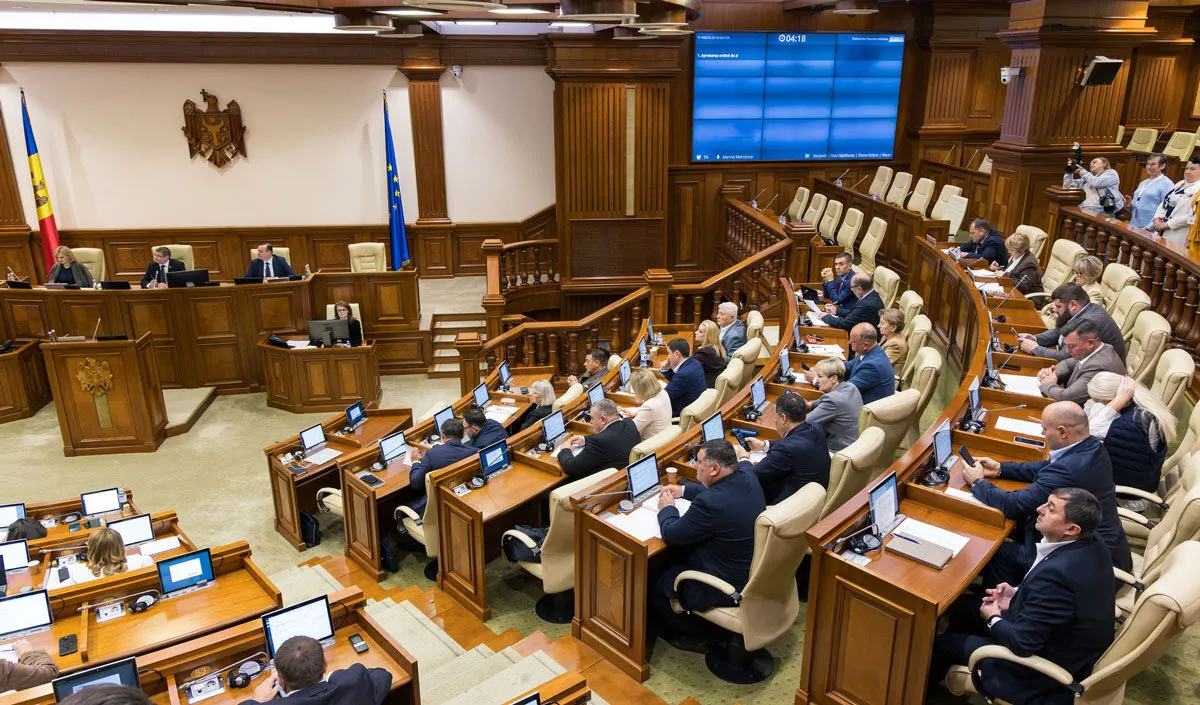
Today, most parliamentary forces say they support the European course. It may seem that the central choice has been made. Yet the swings continue, now within what is formally a common direction.
The government links the European transition to its own mandate and decisions. The opposition may not dispute the goal of EU accession, while still turning mistakes, unpopular measures and public fears into arguments against those implementing reforms today.
Such competition is natural in a democratic system. The problem begins when the struggle for power weakens the country’s ability to withstand the transition itself.
The European course becomes a common slogan, but not a common rule of action. Institutions are unsure which decisions will survive the next change of government, local authorities become cautious, and people see that almost every reform remains part of the struggle between government and opposition.
Moldova has moved closer to agreement on the direction of travel, but it has not developed the capacity to follow that path together. The argument is therefore no longer mainly about where the country is going, but about who has the right to lead it and whose version of the future everyone else must accept.
A Chance That Cannot Be Postponed
For a long time, Moldova’s political swings were treated almost as part of the landscape. The country lost years, restarted reforms and returned to old disputes, yet the system continued to function.
Today, the cost of another reversal is higher. War and Russian pressure have made resilience a matter of security. Demographic decline is already limiting the capacity of both the state and business. Technological and economic change also requires decisions that cannot be postponed until the next political cycle.
These processes will affect everyone. No part of society can preserve its familiar world separately from the rest: a weak state and mutual distrust make the entire country vulnerable. For business, this means being unable to know which rules will survive the next electoral cycle.
It is precisely at this moment that Moldova has a rare opportunity. European integration offers rules, resources, markets and support for profound change. But external partners cannot create, on our behalf, the capacity to maintain direction when governments change, prices rise or the first results bring disappointment.
The present moment offers a way out of a system in which every political victory is temporary and every major change depends on the fate of a single government.
In the past, political swings mainly cost Moldova time. Today, they could cost it a historic window of opportunity. We are being pushed forward not only by European hope, but also by the impossibility of continuing for much longer as before.
The Limits of Top-Down Decisions
If the direction has been chosen, perhaps the country simply needs to be pushed forward – through resistance, fatigue and distrust.
At the level of political decision-making, this is possible. A parliamentary majority can adopt laws, and a government can launch a reform. But a political decision and a new set of rules do not yet mean that the country itself has changed.
Reforms are carried out by civil servants, local authorities, schools, hospitals, businesses and professional communities. If they do not understand the purpose of the changes, or see them as the temporary project of people currently in power, the system resists in its usual way: it complies formally, delays decisions and waits for a new political signal.
The law remains in place, but old practices gradually adapt around it. People encounter the inconvenience and the costs before they have time to see the results. The opposition gains grounds for criticism, while the government, under pressure from deadlines and resistance, begins to interpret doubts as an attempt to stop the reform.
In Moldova, a decision can be adopted by majority vote. But no single vote can create the institutions and the society capable of sustaining it.
This is the central paradox of the European transition: the laws may become European while the way the country is changed remains the same.
Even when consultations are held, participants often discuss a decision that has already been shaped and are then brought in to help implement it. They are asked to support the reform rather than to influence its adaptation in any meaningful way.
This does not mean that everyone must write the law or be given a veto. But those who will have to carry out the reform should be able to show, early enough, where it will collide with reality, which consequences are not visible from the centre, and what needs to be adapted locally.
Otherwise, reforms acquire implementers but not people willing to regard them as their own. As long as the majority remains strong, the system will continue to move. But after a serious mistake or a change of government, accumulated resistance will push the pendulum back again.
Political swings cannot be overcome by applying more pressure. Pressure only increases the amplitude of the next movement.
The European transition therefore requires not the state’s withdrawal from leadership, but a change in approach: it is not enough to adopt the right decision; a broad enough foundation must be built around it to outlast those who initiated it.
European Integration as a Common Cause
A shared future does not necessarily begin with a grand national agreement. It can gradually emerge through concrete changes – in education, local government, healthcare and the business environment.
When different parts of society take part not only in explaining a decision that has already been made, but also in testing and adapting it, reform ceases to be the project of one government. People and organisations emerge that have a stake in the result and are able to explain it within their own communities.
This does not remove disagreements, nor does it require identical views of history, language, Russia, Romania or the current government. But it creates experience of acting together – something Moldova has lacked for a long time.
A country does not come together when everyone speaks about the future in the same way. It comes together when different people are given a real role in change and begin to share responsibility for the outcome.
For that to happen, everyone will have to move beyond part of their own fears and grievances. Some will have to give up the belief that a political majority is enough to carry the country through change. Others will have to abandon the hope that they can simply wait for the changes to pass and return to the world they knew before. The government will have to take responsibility not only for the content of reforms, but also for the way they are carried out. The opposition will have to criticise specific decisions without undermining trust in the European direction itself.
No one is being asked to abandon their own memory. But everyone will have to move beyond the part of their grievance that leaves no place for others in the future.
Transnistria makes this question especially acute. If we do not know how to include the different communication environments on the right bank in the process of change, it is difficult to imagine genuine reintegration of the left bank. Extending a common administrative system will not be enough: people cannot be included after the fact in a future built without them.
Moldova is entering its European transition as a divided country – divided not only territorially, but also by memory, fear and different ideas of justice.
The historic opportunity of our generation is not only to bring Moldova closer to the European Union. It is to go through a major transition for the first time not as another victory of one part of society, but as one country.
It is not enough to open negotiations, adopt the necessary laws and receive external support. The European transition will become sustainable only when change itself begins, gradually, to bring Moldova together.
Alexandr Bejenari
Founder of PARC Communications, Strategic Communications Expert
Follow our updates
Have information for the newsroom? Share it with Logos-Press







Comments
0No comments yet. You can start the conversation.
Comments are open to readers with a Logos Press account.
Sign in to comment