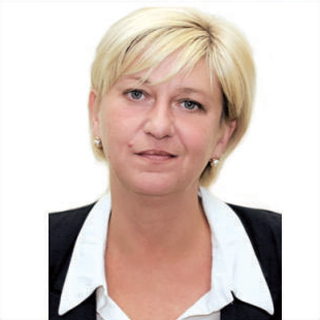

Economist Vladimir Golovatiuc presents the calculations, noting changes in the structure of the debt and its composition. The European Commission (EC), however, still ranks second among the main external creditors with 19.3% of the debt, trailing only the IMF, which accounts for 27% of the borrower’s debt structure.
This does not prevent the EC from outpacing the IMF in the rate of borrowing growth.
“It is noteworthy that while external debt increased by 16% compared to the first quarter of 2025, the debt owed to the European Commission grew 2.4 times, and over the past five years—nearly 9 times. In March 2021, it stood at $105 million (4.8% of total debt), and by the end of the first quarter of 2026, it had reached $945 million (already 19.3%),” the economist calculated.
According to the Ministry of Finance, the government received a total of $215 million in loans in the first quarter of 2026, compared to $46 million in the first quarter of 2025. At the same time, 93% of the loans received came from the European Commission ($198.8 million).
Of the $215 million received in the first quarter, only $16 million was earmarked for financing investment projects, while $198.9 million (or 93% of all loans) are budget support loans, i.e., for the government’s current expenditures, Golovatyuk writes.
“The 2026 state budget stipulates that 66% of expected external loans will go toward budget support, and 34% toward investment projects. Budget support is, of course, very important, but not on such a scale or in such proportions!” the expert believes.
According to information from the Ministry of Finance, during the first four months of 2026, net external budget financing—thanks to a positive external debt balance—reached a positive value of approximately $165.3 million. At the same time, fluctuations in the U.S. dollar exchange rate against other currencies during this period resulted in a negative figure of (-)13.6 million dollars.


