This marked a sharp departure from its previous position, as the United States had long insisted that the ICC could not exercise jurisdiction over citizens of countries that had not ratified the Rome Statute establishing the Court, — a group that includes both Russia and the U.S.
However, Biden changed his position in November 2024, when the ICC issued arrest warrants for Israeli Prime Minister Benjamin Netanyahu and his former defense minister, Yoav Gallant. According to Biden, this decision was “outrageous”, and the U.S. will always support its ally Israel, which is also not a party to the Rome Statute.
Donald Trump, Biden’s successor, went even further by imposing sanctions on ICC officials, including freezing their assets. In August 2025, U.S. Secretary of State Marco Rubio accused the Court of being an “instrument of legal warfare.” By December, 11 ICC judges and prosecutors were subject to U.S. sanctions. Then, in mid-July, the State Department launched a campaign to dismantle the Court.
The U.S.’s recent behavior—acting as if the ICC can be trusted when dealing with an enemy but never with a friend—ignores the fact that the Rome Statute is based on the principle of complementarity.
The ICC is a court of last resort that intervenes only when a national government fails to conduct a bona fide investigation into war crimes and crimes against humanity. Israel’s objection regarding jurisdiction—namely, that Palestine is not a state—obscures a reasonable way out of the situation: conducting a genuine investigation into the crimes of which the ICC prosecutor accuses Israel.
Instead, Israel and the United States have targeted ICC officials. However, this display of contempt is not particularly effective. The ICC’s purpose in issuing warrants is not to detain—it has no police powers to make arrests. Rather, its influence lies in making it burdensome for the accused to appear in public in the company of certain individuals.
Putin, for example, cannot enter any of the 125 countries that have ratified the Rome Statute without risking detention, which is precisely why he decided to participate in the 2023 BRICS summit in South Africa via videoconference.
The arrest warrant for Netanyahu similarly forces him to consider whether other governments might feel compelled to take action should he visit. U.S. sanctions have done nothing to alleviate this concern.
The Inevitable Course of Justice
Some may argue that the law simply reflects political power: the ICC is pursuing Putin, not American officials, because Russia, unlike the United States, has no allies. From this perspective, the consequences apply only to the weak.
In reality, power is fleeting. Although General Augusto Pinochet, who led a 17-year regime of terror, was granted legal immunity as a former president of Chile, he was arrested in 1998 at a London hospital while recovering from surgery. A Spanish judge invoked the UN Convention Against Torture to secure Pinochet’s extradition.
Although Pinochet avoided trial and died in 2006, his arrest set a legal precedent. In 2016, a Senegalese court, guided by the same principles, sentenced former Chadian dictator Hissène Habré to life in prison. Similarly, Serbian dictator Slobodan Milošević was ultimately brought to trial, dying in custody in The Hague during his war crimes trial.
The law caught up with these men only after they had left office. Pinochet resigned; Habré was in exile; Milošević was forced to step down. First the leader falls, and then comes the trial. The protection afforded by power merely delays accountability.
A Challenge to U.S. Dominance
The significance of the ICC’s current cases is secondary to the pattern they reveal. After 1945, the U.S. established a global order in which disputes were largely resolved by institutions over which the U.S. exerted influence.
Accountability mechanisms, such as the ICC and the International Court of Justice (ICJ), were introduced later to challenge this dominance. Now, a judge from a less influential state can stand up to a powerful government without its permission.
For example, in December 2023, South Africa filed charges of genocide against Israel at the ICJ in connection with its actions in Gaza; a month later, the ICJ issued an order on provisional measures.
The U.S. cannot veto decisions by the ICC or the ICJ, as it can with regard to UN Security Council resolutions. This leaves the U.S. with two options: join the system and influence it from within, or boycott these courts and forfeit its right to a voice. The U.S. chose the second option, which does not halt the progress of international law but, on the contrary, cedes the initiative to other countries.
To hold Putin accountable, the U.S. needed the authority of a court respected worldwide that was not under its control. Now, however, they are attempting to tarnish the reputation of that very same court in the name of defending an ally, fundamentally rejecting international law even at a time when the world is divided into rival blocs and the question of who sets the rules is being openly raised for the first time.
Pinochet believed that in London he was beyond the reach of the law. He was wrong.
The U.S. is making the same bet on a much larger scale: that the international laws it helped draft can never be used against it.
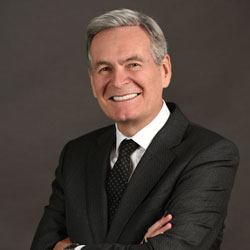
Eric Alter,
Dean of the Anwar Gargash Diplomatic Academy in Abu Dhabi and a member of the Council on Foreign Relations.
© Project Syndicate, 2026.
www.project-syndicate.org
Follow our updates