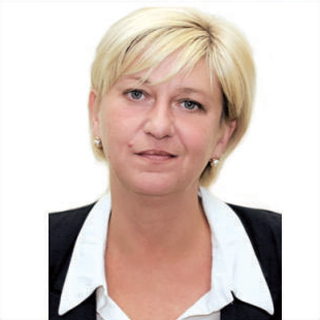

Sergei Merzhan
The report on monitoring the implementation of the State Property Management Strategy was presented by the Independent Analytical Center Expert-Grup, which notes that the process of reorganization and reform of corporate management of state property is stalling. Despite the launch of technical assistance programs (jointly with the State Property Agency), many enterprises remain inefficient and dependent on budget injections.
In key sectors, the state retains control over strategic industries (energy, telecommunications, transportation). For example, the largest companies by revenue (such as Moldovagaz or Energocom) are either fully state-owned or have decisive state participation. In recent years, this is due to the crisis situation in an economy fully dependent on energy imports.
The high share of the public sector and slow privatization create barriers to private investment. Expert-Grup emphasizes that without improved corporate governance and a clear separation of ownership and regulatory functions, the public sector will continue to be a source of fiscal risks.
The role of the state
The evolution mainly reflects state intervention in the context of the crisis. The share of state ownership in GDP has increased from 9.3% in 2019 to 15.4% in 2024, mainly due to increased public spending and the role of energy companies.
However, the direct contribution of state-owned companies to value added remains limited and is estimated at 2.5-3% of GDP, while the local private sector generates 62.7% and foreign and mixed capital 18.7%.
Moldova has a high concentration of state ownership: 93.7% of the assets of all state-owned companies are concentrated in just 20 largest companies. More than half of the assets are controlled by the State Road Administration and Energocom, which makes the economy vulnerable to the financial performance of these giants.
Lack of competition in supposedly liberalized sectors leads to inefficiencies. The high share of the state constrains the overall productivity of the economy and value creation.
According to the report, “the economic importance of state-owned companies remains high, but their relative share is declining.” In 2024, they concentrated about LE 79.5 billion in assets, LE 38.9 billion in equity, LE 54.1 billion in turnover and about 29,300 employees. Compared to the national economy, they accounted for 11.6% of assets, 13.2% of equity capital and 8.1% of turnover, confirming the faster growth of the private sector.
What is the progress?
The authors also emphasize that “the portfolio rationalization process has begun, but the results are still below the expected targets.” The ownership strategy implementation program envisages a reduction in the number of state-owned enterprises from 233 to 185 by the end of 2027. However, the number was still 225 as of June 30, 2025, and only 15 enterprises (11 state-owned enterprises and 4 commercial companies) were de-registered between 2023 and 2024, to which 2 more were added in the first half of 2025.
According to Stanislav Madan, Program Director of Expert-Grup, the persistence of a large number of inactive or troubled enterprises represents one of the main structural problems of the sector.
“As of January 1, 2025, 43 state-owned enterprises were in the process of bankruptcy or liquidation, and another 26 were not functioning. In the case of commercial companies with majority state capital, 13 were in difficulty and 7 were dormant. In total, more than a third of the portfolio is in dysfunctional or distressed condition,” says Stanislav Madan.
Budgetary burden
In the context of economic stagnation (GDP growth in 2024 is only about 0.1%), inefficient state-owned enterprises become a heavy burden on the treasury, which limits the scope for other reforms, although state-owned enterprises form almost 20% of Moldova’s GDP.
According to Expert-Grup Program Director Serghei Merjan, “the size of state assets is not accompanied by commensurate financial results, especially in the case of state-owned enterprises, where capitalization depends heavily on budget interventions.” At the same time, maintaining a large number of inactive or troubled enterprises entails additional administrative costs and risks for the state budget, the expert believes.
The sluggish reform of SOEs also worries donors, in particular the IMF, which insists on optimizing the process as one of the systemic mechanisms of structural reforms in Moldova. More than a third of state-owned enterprises have been in the process of liquidation, insolvency or crisis for years.
The main focus is on restructuring the State Property Agency (APP), digitization of state property registers and implementation of corporate governance codes. A clear delineation of functions is necessary – the state should remain a regulator and not be engaged in business, experts say. Priorities may change, but it is more expensive to leave a non-performing asset “just in case”.
Expert-Grup recommendations
State property should be revised: privatization of non-strategic enterprises and restructuring of those that remain in state ownership. Plus, experts are concerned about the problem of management transparency and appointment of officials to boards of directors for the sake of profitable seats.
“At the same time, the level of fulfillment of obligations aimed at adjusting the regulatory framework to improve the efficiency of management of state-owned enterprises and commercial companies with state capital shows a number of delays, including due to the postponement of the processes of development, promotion and approval of regulations in this area,” say the authors of the report.
In other words, no one is in a hurry to give up their bread-and-butter positions. Confusion over reform program documents and political interference add their own spoonful of tar, and more than one.
“The progress made so far remains fragile and may be reversible,” the experts say, noting the lack of coherence and coordination among the parties involved.
Overall, Expert-Grup emphasizes that without real, rather than formal, reform of state-owned enterprises, Moldova’s economy will continue to stagnate (growth in 2024 was only 0.1%), falling short of its growth potential.
The main recommendations formulated by the authors are aimed at optimizing the portfolio and improving economic efficiency. These include accelerating liquidation and privatization processes, updating information on inactive enterprises, introducing clear performance indicators and strengthening corporate governance.
At the same time, the success of the Strategy should be assessed by specific results: reducing the number of non-viable enterprises, reducing tax risks and increasing the “economic value” of state-owned companies.


