Send us a message, and we will definitely consider your suggestions and comments.
All
Business & Companies
Art & Culture
Banks & Finance
International Trade
Culture
Digitalization
Social Sphere
Moldova’s Economy
Global Economy
Economy & Law
Green Economy
Education
Energy
Electricity
Renewable Energy
Events
Logos Press Exclusive
Export & Import
FinTech
Gas
Accidents
Infrastructure
European Integration
Artificial Intelligence
Investments & Markets
Municipalities
City & Regions
IT Market
Global Markets
Politics & Economy
Top News
Pro Business
Point of View
Territorial Reform
Retail & HoReCa
Healthcare
Society
Sport & Tourism
Technology & Innovation
Tourism
News
As of the beginning of the last ten days of August, the grain and oilseed market in Moldova continues to be driven more by logistical challenges than by supply and demand dynamics. For this reason, prices for first-group grains (wheat and barley) on the domestic market have generally fallen by an average of 0.10–0.15 lei/kg. Rapeseed prices fluctuate from day to day.

Consumers will receive additional assurances regarding the quality and safety of casein and caseinates used in the food industry. The government has approved quality requirements applicable to these proteins and their derivatives.
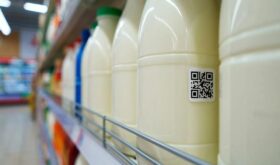
Today, the Republic of Moldova is celebrating National Beekeeper’s Day. To mark the occasion, the Ministry of Agriculture and Food Industry presented an overview of government support and the achievements of the country’s beekeeping sector.

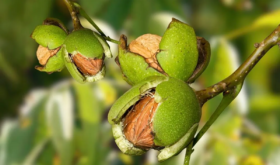
The hot weather in August will bring forward the start of the mass harvest of early-ripening walnut varieties bred in Moldova (“Peschansky,” “Kazaku,” and others) by about a week. It is tentatively scheduled to begin in early September. Just a few years ago, the walnut harvest in commercial orchards began in the second half of the first month of fall.
One week to ten days before the start of the sunflower harvest in Moldova, the gross harvest volume is estimated to be between 0.8 and 1 million metric tons.

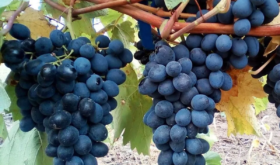
Industry experts in the country’s table grape sector rate the condition of table grape plantations one month before the mass harvest as ranging from “satisfactory” to “good.”
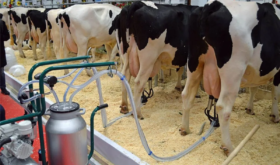
The Agency for Agricultural Interventions and Payments received 226 applications for direct payments for cow, sheep, and goat milk delivered for industrial processing, totaling 105.39 million lei. The application period for these subsidies ran from July 6 to August 14, 2026.

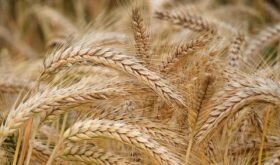
Moldova exported more than 72,000 metric tons of new-crop barley, worth a total of 262 million lei, in July of this year. This marks a new five-year record. Last month’s barley exports were even higher than in July 2021 (nearly 67,000 metric tons), which is currently considered the most productive harvest of the current decade.
After the 2025 season—when Moldovan beekeepers were unable to harvest any acacia honey at all due to unfavorable weather conditions—they expected high purchase prices for this product starting with the 2026 season. They anticipated prices of no less than 180–200 lei/kg for retail and small-scale wholesale, and in the range of 100–120 lei/kg for large-scale wholesale for export shipments. The reality so far is quite different. The first price offer from export traders for this year’s acacia honey harvest is around 80 lei/kg. Should beekeepers be too upset about this just yet?

Young people account for about 52% of the recipients of preferential financing under the “Transforming Rural Areas” (TRTP) project, which is being implemented by the Moldovan government with support from the International Fund for Agricultural Development (IFAD).
The Agency for Agricultural Interventions and Payments reminds farmers that August 14 is the deadline for submitting applications for direct payments “for every kilogram of cow’s, sheep’s, and goat’s milk” delivered by dairy farms authorized by ANSA for industrial processing.
Funding Opportunities for the Horticulture and Viticulture Sectors Under the Strategic Agricultural Policy Program for 2026–2030 The leadership of the Agency for Interventions and Payments (AIPA) discussed these opportunities with members of “Moldova Fruct” during an online seminar organized at the initiative of the association.
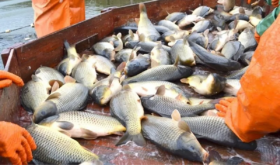
The Moldovan government has approved the Strategic Program for the Development of Aquaculture for 2026–2030.
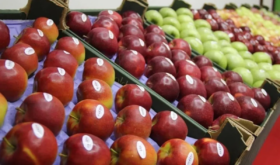
The National Food Safety Agency strongly recommends that Moldovan agricultural producers keep strict records of the phytosanitary products they use. This is especially important now, immediately before and during the harvest of fruits and grapes, which will soon be on store shelves and consumers’ tables.

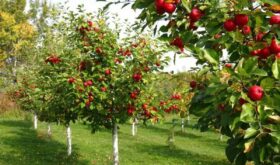
Potential gross apple production in Moldova is expected to total about 526,000 metric tons this year. This is 17.5% higher than last year’s apple harvest (447,000 metric tons).
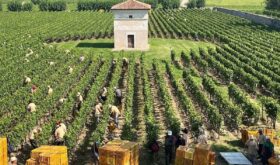
This year, Italian winemakers headed out to the vineyards well before dawn. In Franciacorta, one of the country’s leading sparkling wine-producing regions, the harvest began on August 2—10 days earlier than last year. Workers start picking around 4 a.m., cutting the bunches by the light of floodlights.
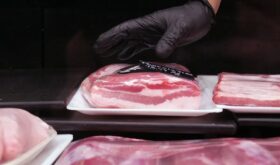
Certain pork products imported into Moldova will be sent to a laboratory to determine their meat and fat content if customs authorities have doubts about the accuracy of their tariff classification.
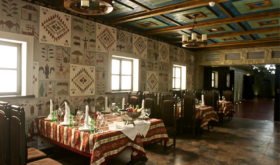
Wine Enthusiast magazine has compiled a list of winery restaurants around the world. The list includes 57 wineries, 22 of which are located in Europe. Moldova is also on the list.
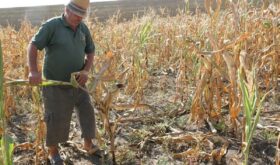
The Agency for Agricultural Interventions and Payments (AIPA) announced the start of financial aid payments to farmers whose corn and sunflower crops were damaged by drought and extreme heat in 2025.
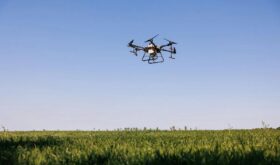
The Moldsilva Agency has announced a government procurement contract for the purchase of 12 unmanned aerial vehicles—two for agricultural use and ten for inspection purposes. The total estimated cost of the procurement is 2.5 million lei, excluding VAT.