
The problem isn’t the choice of tool itself. The government has the right to choose various forms of regulation, including both taxes and bans. The question is to what extent these decisions are interconnected and whether the regulator explains the overall logic behind the new fiscal system.
“Excise Tax on Harmful Activities”: What the Ministry of Finance Is Proposing
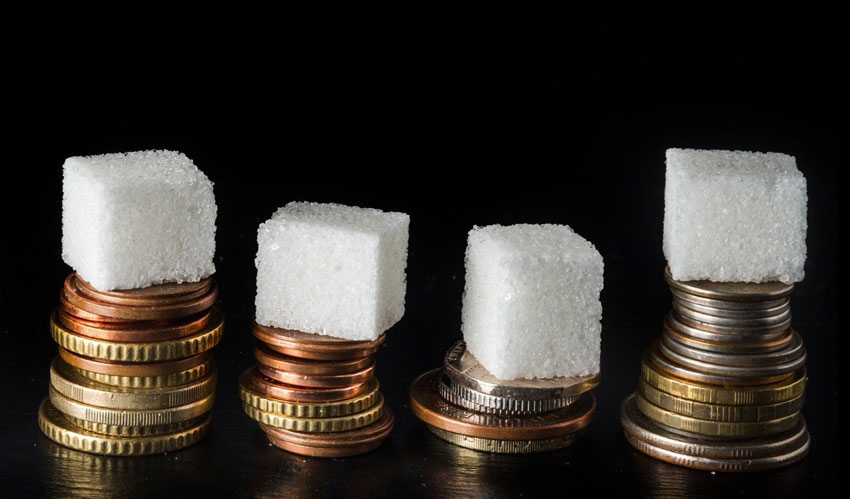
Specifically, in its draft tax policy for 2027, the government proposes introducing new excise taxes on goods associated with “harmful habits or polluting activities.” The list includes sweetened carbonated beverages, e-cigarette liquids, and pyrotechnic products. For carbonated beverages with added sugar or sweeteners, as well as energy drinks, the proposal is to set an excise tax of 2.4 lei per liter. The rate is planned to remain unchanged in 2027, 2028, and 2029.
The Ministry of Finance explains its decision simply: the goal is to increase budget revenues, standardize the tax regime, and limit the consumption of products that may affect health or the environment. And in the case of sugary drinks, the main argument is health. The authorities point to the link between excessive sugar consumption and obesity, diabetes, and cardiovascular diseases. At the same time, it is expected that the tax will affect not only consumers but also manufacturers, encouraging them to change the composition of their products.
In this regard, Moldova is indeed moving in the direction chosen by many EU countries. Excise taxes on “soda” are in effect in Belgium, Finland, France, Hungary, Ireland, Latvia, Monaco, Norway, Portugal, and the United Kingdom. Romania has also introduced an excise tax on beverages with high sugar content, setting different rates depending on the amount of sugar.
But the Moldovan approach is simpler for now: the draft bill provides for a flat rate of 2.4 lei per liter, regardless of sugar content. This approach is easier to administer, but it does not create an additional incentive for manufacturers to reduce the amount of sugar in their products. A number of European countries use a different system: the higher the sugar content, the higher the tax.
The bill also contains technical inconsistencies. For example, in the explanatory note, the Ministry of Finance refers to the taxation of both carbonated and non-carbonated beverages with added sugar or sweeteners. However, the draft amendments to the Tax Code itself specify only carbonated beverages and energy drinks. Thus, the explanatory note for the draft must be broader in scope than the proposed provision.
Sugar and Nicotine: Different Approaches to Product Regulation
Against this backdrop, the situation with nicotine patches—tobacco-free products containing nicotine and intended for use through the oral mucosa—seems particularly strange.
The 2027 draft tax policy makes no mention of this category at all—neither among excise-taxable goods nor in the explanatory note. At the same time, the Ministry of Finance proposes imposing an excise tax on e-cigarette liquids regardless of nicotine content. For cartridges, tanks, and e-cigarette refill liquids, the rate for 2027 is set at 3,914.6 lei per liter.
At first glance, this appears contradictory: sweetened beverages are taxed due to their potential health risks, nicotine-free liquids are subject to excise tax, yet nicotine-containing products remain outside the tax system.
However, the reason lies elsewhere. Instead of regulating nicotine patches following the example of EU countries—that is, in addition to excise tax, introducing standards for packaging, nicotine levels, and flavor additives—the National Public Health Agency (ANSP) decided to ban the product entirely.
Thus, the ANSP announced that as of 2026, the sale of such products on the Moldovan market will be prohibited. The relevant provisions have been incorporated into the Tobacco Control Law. With that, the Agency considered the matter settled.
But this is precisely where the main question arises: why have such different regulatory models been chosen for different nicotine products?
If the ban on nicotine patches is final, then the absence of an excise tax seems logical. But if the market persists in an illegal form or the authorities reconsider the ban itself, it will turn out that the tax system is not prepared to regulate this category. The Tax Code lacks a separate taxable item, tax rate, and accounting mechanism.
In other words, public health legislation already recognizes and prohibits this product, while tax legislation does not account for it at all.
EU Practice: Excise Tax as a Tool for Regulating New Markets
This approach differs fundamentally from the practice in the European Union. There, the current directive on tobacco excise taxes was created before the widespread use of nicotine pouches and does not yet regulate them. However, in July 2025, the European Commission proposed revising the rules to include e-cigarettes, heated tobacco products, and nicotine pouches. For the latter, a minimum excise tax of 50% of the retail price or 143 euros per kilogram is proposed.
The European rationale is not that all nicotine products are the same. The point is this: new product categories should not remain outside the legal framework simply because they emerged after existing regulations were in place.
Some countries have already moved toward tax regulation. For example, as of June 1, 2024, Romania included tobacco-free oral nicotine products in the list of goods subject to a non-harmonized excise tax. Starting September 1, 2024, Ukraine began applying excise taxes to other nicotine-containing products for oral use. And the rate is gradually increasing: from 73 euros per kilogram in 2025 to 77 euros in 2026 and 81 euros in 2027. The Czech Republic and Finland have also expanded their tax bases by including nicotine pouches in their regulatory frameworks, while Denmark imposes taxes on both nicotine and smoke-free products.
This does not mean that Moldova must follow the decisions of other countries. A ban can also be a deliberate political choice. But it must be part of a clear and consistent strategy.
Today, government policy appears to be a collection of isolated decisions. Sugary drinks are subject to excise taxes because they are considered a risk factor for public health. E-cigarette liquids are included in the tax system, even if they do not contain nicotine. Excise taxes on traditional tobacco products continue to rise. Meanwhile, nicotine patches are being pushed out of the legal market. Each of these decisions may have its own rationale, but the published documents do not show exactly how they are connected. Nor do they answer another question: why are products that may compete with one another and affect public health regulated in such different ways?
A consistent policy does not mean that every potentially harmful product must necessarily be subject to excise tax. It means that for each category, the regulator’s choice must be clear: a ban with effective enforcement, a taxed market, or a clearly justified exemption.
For now, however, in Moldova, one group of products is subject to a tax rate, another to an expanded excise tax regime, and a third to a ban that is not reflected in the tax strategy. It is precisely this inconsistency that has become the central issue in the new fiscal policy regarding “potentially harmful products.”