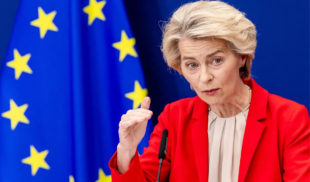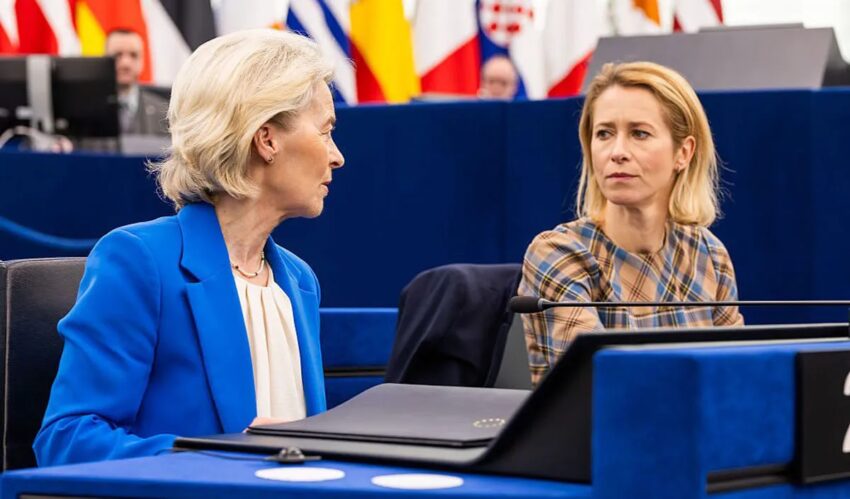
Ursula von der Leyen and Kaya Kallas
A conflict is brewing in the European Union between the European Commission and the European External Action Service over proposed trade sanctions against illegal Israeli settlements, according to Euractiv. EU foreign ministers will discuss possible courses of action today in Brussels.
For several months, the European Commission, led by Ursula von der Leyen, has been locked in a fierce battle with the European External Action Service (EEAS), the EU’s diplomatic corps, led by Kaia Kallas, over who should control foreign policy.
Countries such as France, Spain, Belgium, Sweden, Ireland, and the Netherlands—with the support of EU foreign policy chief Kaja Kallas—are advocating for a pan-European ban on trade with illegal settlements, arguing that this is necessary to bring the bloc into compliance with international law.
In particular, the European Commission’s position was reflected in the legal recommendations presented to member states last week regarding trade restrictions.
“I don’t think the Commission has been very helpful to us on this issue,” said a high-ranking EU diplomat whose country supports the ban, following the document’s publication. The recommendations were drafted by a small circle of officials close to Ms. von der Leyen, another source noted.
The document does not contain official proposals but lists various options for restrictions. Among them, in addition to a complete ban, are tightening the licensing system and increasing tariffs.
Furthermore, according to a source speaking to Euractiv, the European Commission de facto advocates for unanimous approval of the measure by EU countries in the document, as this is a political issue. Supporters of a complete ban, on the other hand, view the restrictions as a trade measure, for which a qualified majority is sufficient for approval.
Follow our updates
Have information for the newsroom? Share it with Logos-Press