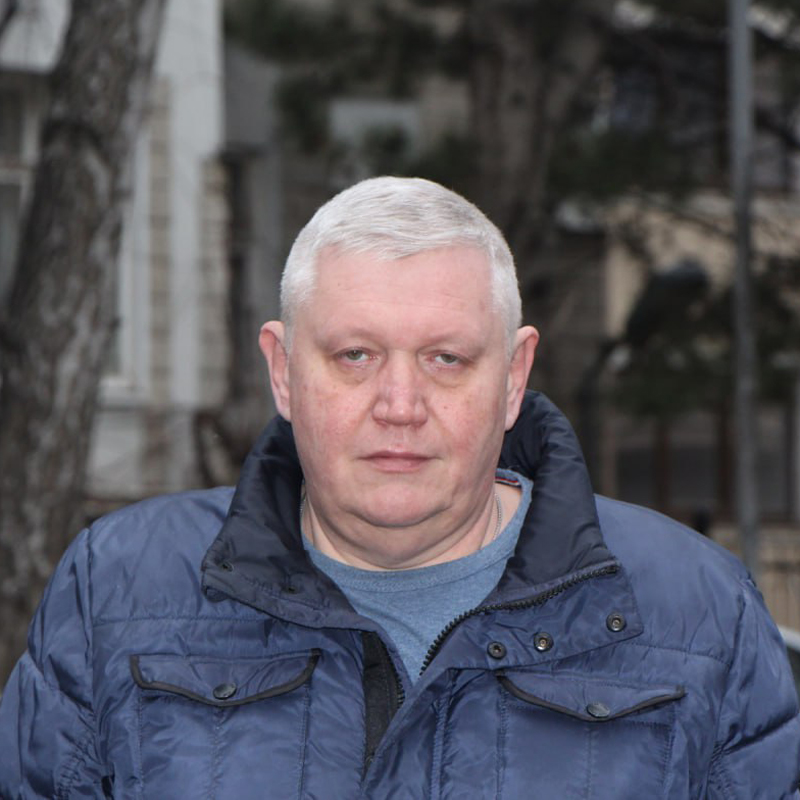

Ion Muntean
This was reported by Ion Muntean, director of the Center for Sustainable Energy (CNED), and Torsten Greis, project manager of “Energy Efficiency and Renewable Energy for Moldova (E4M)” Torsten Greis, at a roundtable discussion on government investments in the rehabilitation of the country’s residential sector.
The FEERM financing program was developed with financial support from the EU and approved by the Moldovan government in April 2024. However, following a preparatory period, it did not begin operations until 2025 and is gradually gaining momentum. In mid-June of last year, the Casa Verde funding line was the last to launch.
Thus, the main topic of the roundtable was to take stock of FEERM’s first full year of operation.
It is supported by the “Energy Efficiency and Renewable Energy for Moldova (E4M)” project, implemented by the German Society for International Cooperation (GIZ).
The project aims to support the energy modernization of housing, reduce energy consumption, promote the use of renewable energy sources, and, consequently, improve citizens’ living conditions.
Three Program Areas
In 2025, the program was implemented (and will continue to be implemented) through three main funding products:
– “Energy Efficiency in Multi-Family Buildings”;
– “Energy Efficiency of Single-Family Homes in Rural Households with Extreme Energy Vulnerability”;
– Casa Verde co-financing of investments in renewable energy sources.
How the Funds Are Allocated
According to Ion Muntean, a total of 1.09 billion lei is planned to be invested in the three areas listed above, while the remaining 310 million will go, according to the official, “toward administrative expenses.”
621 million lei will be allocated to the first area, 93.4 million to the second, and 554 million to the third.
Key Results ofFEERM’sFirst Year
As part of the “Energy Efficiency of Apartment Buildings” project:
– energy audits were conducted for 98 buildings;
– 77 condominium owners’ associations (ARCs) were involved in the process;
– 14 investment projects were approved;
– The total cost of the approved projects amounted to 69.18 million lei;
– Design and procurement procedures for energy retrofit work have been launched.
The grant provided through the FEERM program covers up to 70% of the cost of energy retrofitting work, with residents contributing the remaining 30%.
Ion Muntean clarified that, according to estimates, this investment should pay for itself within 3–4 years of operating the rehabilitated building.
Additionally, extra funding is available for energy-vulnerable residents, which can cover up to 90% of their contribution.
“At the same time, with the support of the ‘Energy Efficiency and Renewable Energy for Moldova (E4M)’ program, a pilot project is being implemented for apartment buildings with up to 20 apartments. It is funded by Norway with a budget of 1 million euros and is part of the E4M program, which has a total budget of 26.3 million euros. This program is also funded by the governments of Germany, the EU, and other development partners,” said Torsten Greis.
In addition, this fund finances training for energy efficiency experts and leaders of residents’ associations, advertising in the media and on social media, and several other programs,
As part of the funding product “Energy Efficiency of Individual Homes in Rural Households with Extreme Energy Vulnerability”:
– contacts have been established with more than 600 households;
– more than 350 site visits have been conducted;
– 192 energy audits were prepared;
– 152 funding applications were approved;
– 141 funding agreements were signed;
– Procurement processes have been launched for 121 single-family homes;
– Work has been completed on 42 properties.
Under this financial product, 50% of eligible expenses are funded by the EU and the German government, another 45% is covered by the Energy Vulnerability Reduction Fund, and beneficiaries contribute only 5%.
Under the Casa Verdefinancing program :
– 745 applications have been submitted;
– 88 investment projects have been approved;
– 68 financing agreements were signed;
The total value of the approved grants is approximately 17.6 million lei.
Under the Casa Verde program, the government reimburses up to 50% of the costs (but no more than 200,000 lei) for insulation, the installation of boilers, heat pumps, or solar panels.
Expected Impact
According to estimates based on approved projects, as reported by Ion Muntean, the implementation of FEERM could result in the following annually:
– energy savings of more than 5.86 million kWh;
– financial savings of more than 14.65 million lei;
– a reduction inCO₂ emissions of more than 1,438 metric tons;
– the rehabilitation or inclusion in the rehabilitation process of more than 60,000m² of heated space;
Installation of approximately 400 kW of photovoltaic capacity as part of the Casa Verde program.
Challenges in Implementing the Program
Responding to questions from journalists, Ion Muntean acknowledged that there are certain challenges in implementing the project. These are mainly related to people’s skepticism about the possibility of a quick return on their personal investment.
“Residents don’t believe that energy retrofitting their homes can reduce their energy bills by up to 50%,” said the CNED director. “Then we send them to projects that have already been completed—‘go to Calea Eșilor in Chișinău at such-and-such an address,’ or ‘go to Hyshchesht’ and talk to the people there who spent this winter in renovated buildings.”
The issue of the first and top floors remains unresolved. Residents with apartments in the middle of a high-rise building do not want to pay for roof or basement insulation.
However, overall, the results from 2025 show that the FEERM state program has become a truly effective mechanism for supporting investments in energy efficiency in the residential sector. And in the coming years, this will be confirmed time and again through concrete examples, asserts Ion Muntean.


