

Pope Leo XIV
Yet public discussion remains narrowly focused on competition between AI labs or on abstract debates about the capabilities of this technology. Virtually no one is asking what purpose AI should serve, or whether our current thinking, institutions, and controls are capable of directing this technology toward broad improvements in human well-being.
It was therefore heartening to see Pope Leo XIV speak out on this issue in his first encyclical, in which he describes the current trajectory of AI as a serious threat to human dignity. As an economist who has long argued that the outcomes of technological progress are a matter of choice rather than fate, I welcome his intervention.
Leo is ahead of most commentators in pointing out that “technology is never neutral because it takes on the traits of those who develop, fund, regulate, and use it.” Yet I fear that even he has not gone far enough on the most important question: what should AI be designed for?
As Simon Johnson and I emphasize in our book Power and Progress: our millennial struggle for technology and prosperity, a technology like AI has many paths to development, and each has far-reaching implications for society. For example, Pope is right to question the current direction of AI in military and law enforcement. What was taboo just a few years ago – mass surveillance using AI, algorithms selecting targets for destruction – has become commonplace.
While many in Silicon Valley are calling for the United States to bolster its “hard power” with a new military-algorithmic complex, Leo warns that “any technology that facilitates attacks without allowing people’s faces to be seen lowers the moral threshold of conflict.” The Pope then calls for the “disarmament of AI” to free it “from the mentality of ‘armed’ competition, which today is not limited to a mere military context, but is also an economic and cognitive phenomenon.”
Technological and moral progress
Behind these particular concerns lies a more fundamental wisdom: technological progress is not necessarily moral progress. Just because something is technologically feasible does not mean it is good for humanity. The desirability of a particular technology depends on who controls it and the ideology and interests that guide those people.
Leo alludes to what I see as the most immediate risk, namely: “while AI promises to increase productivity by taking over routine tasks, it often forces workers to adapt to the speed and demands of machines, rather than designing machines to work with those who do the work.”
But Pope doesn’t go so far as to question the prevailing AI design philosophy. The approach of the entire AI industry is centered on mimicking human abilities and automating human tasks in order to create an “artificial general intelligence” that can do everything humans can do.
This philosophy is based on the erroneous assumption that machine intelligence and human intelligence are fundamentally similar. Humans are “one-shot” learners. We form hypotheses based on a few examples, model possibilities in our imagination, and refine our understanding through a social process of trial and error. So children learn language by imitating a few words, generalizing and adjusting their speech based on how others around them respond to it. We are not good at assimilating huge amounts of information or selecting relevant patterns from unstructured data.
In contrast, AI models thrive on huge training sets and excel at recognizing patterns on a large scale, but they have yet to demonstrate true creativity. They have no real-world embodiment experience, nor the ability to learn by trial and error through interaction with the physical and social world (except in limited cases where there are explicit rewards for reinforcement learning in specific domains).
When two things are different, it should not – and usually is not possible – to use one to imitate the other. The results will be suboptimal. It would be a colossal mistake for Phil Jackson, the legendary coach of the 1990s Chicago Bulls, to push Michael Jordan to copy everything Scottie Pippen and Dennis Rodman did. The team went from one championship to another precisely because these players worked together and complemented each other’s skills.
Not instead of, but with the man
The same is true for AI and human skills. Using AI to do things that humans can’t do so that humans can expand their scope is more productive than imitation. In future scenarios where AI enhances rather than supplants human capabilities, electricians will enlist the help of AI diagnostics, nurses will turn to AI when interpreting symptoms, and teachers may use AI to personalize learning for each student.
Optimists and industry insiders might respond that automation-centric AI could still benefit everyone, provided that income redistribution policies keep pace.
But that argument has a bad reputation. Four decades of digital automation have already concentrated benefits at the top, devastated the middle-skilled labor market, and led to disappointing aggregate productivity growth. There is little reason to expect that an even more powerful round of automation, introduced by an even more concentrated industry, will end any differently.
And the global stakes are even higher than in the US. For billions of people in the developing world, where decent work is the only reliable path out of poverty, an automation-centric AI agenda is a recipe for disaster. We can and must demand a different approach.
Perhaps the biggest flaw in the current AI industry is its refusal to recognize all of this. The handful of people releasing this technology into the world are driven by an ideology of control (over humanity) and a belief that machines are better than humans in every way.
Leo is right to call for moral clarity and serious public discussion. But the conversation needs to move beyond appeals to concrete solutions: anti-trust measures against dominant platforms, public investment in AI that complements humans, regulation of tracking systems and autonomous weapons, and real rights for workers and citizens over the data on which these systems depend.
Leo’s speech makes that answer a little more likely than before. But the rest of us must also stand up for humanity.
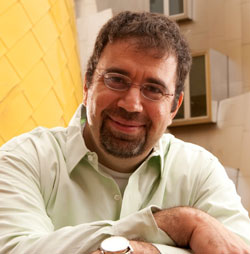
Daron Acemoglu
Daron Acemoglu, winner of the 2024 Nobel Prize in Economics and Professor of Economics at the Massachusetts Institute of Technology, is co-author (with Simon Johnson) of Power and Progress: Our Millennial Struggle for Technology and Prosperity (PublicAffairs, 2023).
© Project Syndicate, 2026.
www.project-syndicate.org


