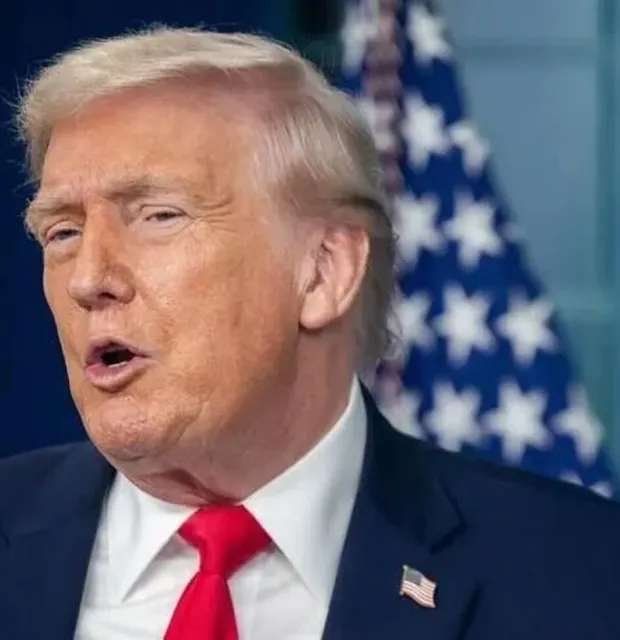

Trump unveils "Project Liberty," designed to ensure safe passage of ships in the forbidden waters of the Gulf of Mexico. (left is picryl, right is Flickr/Gage Skidmore).
The operation was traditionally announced by Donald Trump himself on his Truth Social network. According to the US Central Command CENTCOM, 15 thousand military personnel and more than 100 aircraft are involved in the operation. So far, not a single US Navy ship has suffered from Tehran’s attacks, the Central Command said: “US forces support Project Freedom and provide a naval blockade of Iran’s ports”.
For its part, Tehran reacted immediately and says it has chased US warships out of the Strait of Hormuz. IRIB reports that the Iranian Navy prevented several U.S. destroyers trying to enter the Strait of Hormuz as part of the Freedom Project.
In addition to U.S. troops, multinational coalition forces are involved in the operation. They call the project a “military-humanitarian operation to escort civilian vessels through blocked waters.”
According to many sources, more than 850 ships and about 20,000 sailors have been blocked in the Strait of Hormuz by today. They have been trapped there since late February, with many tankers running out of food and medical supplies.
The thin line between peace and a major war
Donald Trump calls Project Freedom a “humanitarian goodwill gesture,” emphasizing that it is for the benefit of all countries, including Iran itself.
However, Iran has already officially warned that it will regard any US “intervention” as a violation of the current ceasefire. The generals of the Islamic Revolutionary Guard Corps (IRGC) insist that the movement of the ships must be coordinated exclusively with Iranian forces.
Against this backdrop, oil prices are reacting to every message from the Gulf. Today, the price of Brent jumped above $113 per barrel after news of an attack on one of the tankers just after the start of the operation. Goldman Sachs estimates that the blockade has already taken about 10% of global oil production out of the market.
Experts and world media emphasize: Trump’s initiative could lead to both positive developments around the Strait of Hormuz and unforeseen and dangerous consequences. Donald Trump rejected before that Tehran’s latest proposals (the so-called “14-point plan”), calling them unacceptable, but at the same time declared “positive discussions” with the Iranian side through mediators.
The oil market is also frozen in anticipation. If Project Freedom is successful, it will unlock the global economy. If it collides, we risk seeing not just a fuel shortage, but a full-scale global energy collapse.