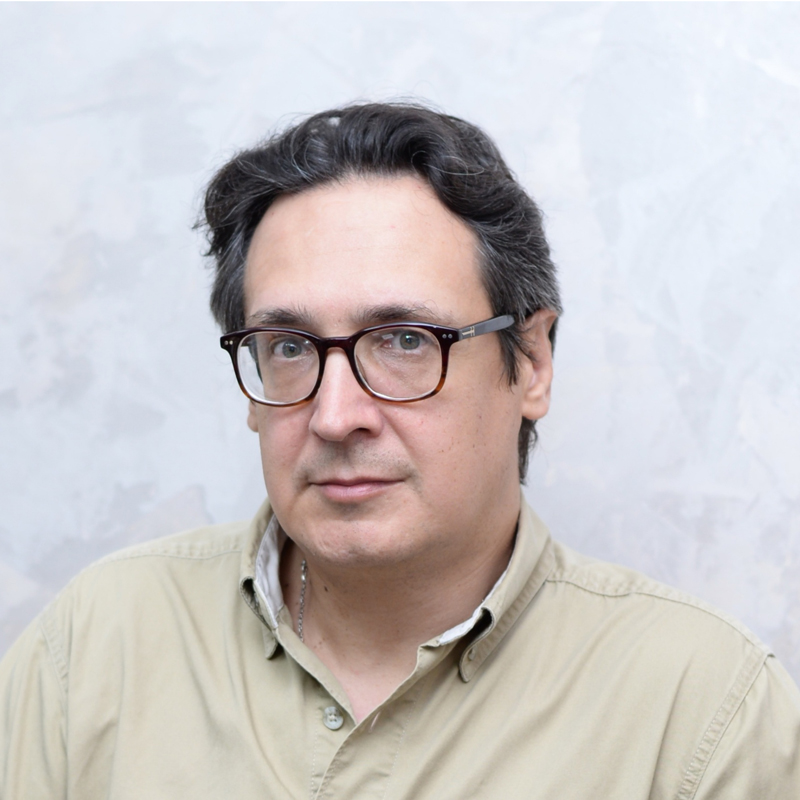

Еуджениу Осмокеску
First, Vitalie Gorincioi, former Minister of Agriculture and current chairman of the “Moldova Fruct” association, points out that it is not yet known whether Eugeniu Osmochescu will retain his position as deputy prime minister or lose it. In the history of the Moldovan executive branch, there have been periods when the head of the Ministry of Agriculture also served as deputy prime minister—with more or less extensive powers befitting the title of “deputy.”
The most recent such instance was quite recent—when Vladimir Bolea served as both minister and deputy prime minister (in the Recean government). If this were to happen to Eugeniu Osmochescu in the Tofan government, the situation—for the individual, for the ministry he heads, and for the agri-food sector—would look different than it does at first glance.
Second, according to Iurie Riza, director of the “Agrocereale” Association of Grain and Oilseed Exporters Iurie Riza, the appointment of the former Minister of Economy to the position of Minister of Agriculture and Food Industry must be viewed in the context of the constitutionally enshrined goal of European integration.
One of the most important aspects of this process is attracting donor resources to implement it. This includes—and this is particularly important for entities in the agri-food sector—financial and other forms of support along this difficult path.
Eugeniu Osmochescu is a seasoned professional with extensive experience in relations with the European Commission, international donor organizations, and major transnational corporations. This means he has a good chance of succeeding in this area of his responsibilities (and, perhaps, his authority).
Incidentally, this view is shared by other representatives of the agri-food community. For example, Igor Grigoriev, director of “AgroVector,” the association of fish and seafood importers.
Third, many influential figures in the agribusiness sector who are personally acquainted with Eugeniu Osmochescu note his sociability and courtesy in communication, as well as his openness and ability to “seek and find common ground.” This quality partly offsets the remarks that could be classified as criticism—or, at any rate, as temporary shortcomings—of the new head of the Ministry of Agriculture.
“He is too much of an expert in finance and macroeconomics to be successful in agriculture.”
This unconventional opinion was expressed in a Logos Press commentary by some leaders of business associations and even political parties that rely, in part, on the rural electorate.
From their perspective, the problem isn’t even that it will be difficult for someone without specialized training to switch from “working with numbers” to “working with animals.” Modern agriculture is a sector no less digitized than the modern military. “Smart” agriculture is literally open-air factories: with automated and integrated processes—satellite navigation for tractors and combines, online logistics for goods flows, accounting, and more—all in a single agribusiness executive’s smartphone. The problem lies in the interaction between the head of the relevant ministry and a group of influential people “from the field” with whom he is largely unfamiliar.
For example, the director of the “Forța Fermierilor” Association of Grain and Oilseed Producers, Alexander Slusari noted that “being a good economist isn’t enough for agriculture; applied knowledge of the processes and connections within the agro-industrial complex is essential.”
According to the leaders of several associations, some of the MAIA state secretaries possess such knowledge; they could seamlessly transition to fulfilling the duties of the Minister of Agriculture. Some of them already see themselves in the minister’s chair. It will not be easy for anyone to accept a different personnel reality.
All the more so because, as former Minister of Agriculture Vasile Bumacov notes, the new minister will have to organize the work of a “fire brigade” — tasked with putting out current fires while simultaneously implementing tough—and therefore unpopular—reforms in the agri-food sector. To do this, at a minimum, they will need to quickly find common ground with the current team (or form a new team) at the Ministry of Agriculture.
Finally, the success of European integration and the current prosperity of Moldova—which is still predominantly rural—will depend particularly heavily on agri-food exports during this very marketing season.
Meanwhile, as Vasile Bumacov notes, “the markets where we are competitive are currently inaccessible to us, and in the markets that are accessible to us, we are not competitive enough.”
At the same time, the issue of increasing the competitiveness of many first- or second-generation Moldovan agribusiness owners “in market competition” with long-established (and well-subsidized) European farmers is, alas, a challenge with no quick or easy solution.


