

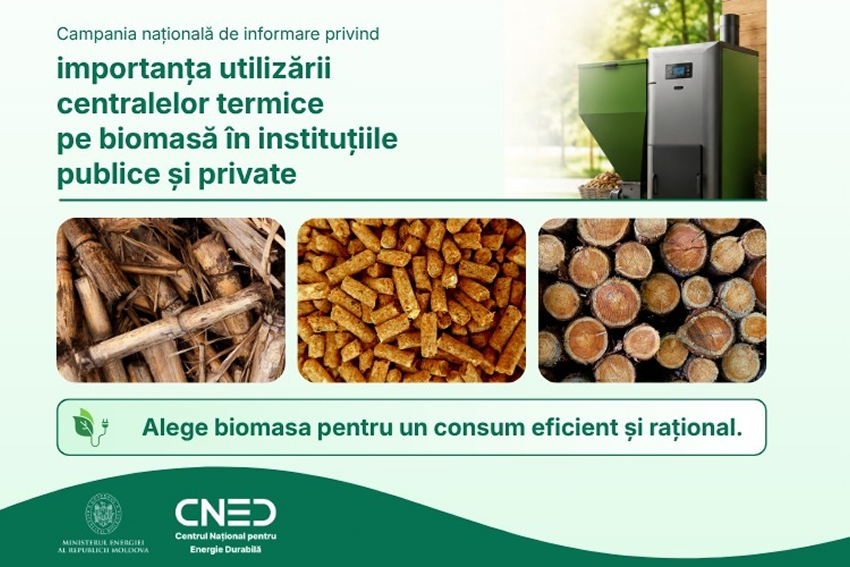
As part of the program, public and private enterprises, as well as households, will be able to receive consultations, participate in informational seminars, and access practical guidance on selecting, installing, and maintaining biofuel boilers. Consumers also have access to the piata-biomasa.md platform, which aggregates data on local suppliers, products, and services.
The Sector’s Economic Potential
According to the Ministry of Energy, Moldova’s public sector already operates over 300 solid biomass boiler plants with a total capacity of approximately 70 MW. The operation of these facilities allows for the substitution of up to 20 million cubic meters of natural gas annually—about 2% of the country’s total natural gas consumption.
In addition, several thousand smaller-capacity plants are in operation in the commercial and private sectors, and approximately 45 local producers ensure the production and supply of fuel in the country.
The ministry notes that the installation of biofuel systems is eligible for subsidy programs under the Energy Efficiency Fund for the Residential Sector (FEERM), administered by CNED.
According to Energy Minister Dorin Jungheteu, the development of the biomass market strengthens the country’s energy independence and creates a local value chain—from the agricultural sector to the end consumer.
CNED Director Ion Muntean emphasized that focusing on local raw materials and energy-efficient technologies will not only reduce heating costs but also keep added value within the national economy.
Follow our updates