However, the International Criminal Court went a step further by issuing arrest warrants for sitting leaders—specifically, Russian President Vladimir Putin and Israeli Prime Minister Benjamin Netanyahu. Although such actions demonstrate a certain boldness, they fail to take political realities into account. In fact, the ICC’s new, more assertive stance could well have led to its downfall.
Western governments unanimously welcomed the ICC’s 2023 arrest warrant for Putin, but remained deeply divided over the 2024 arrest warrant for Netanyahu. While Ireland supported this move, Czech Foreign Minister Jan Lipavský condemned it: “Putting a terrorist and a person defending his country from [terrorists] on the same level… undermines the court’s authority.”
In the United States, nearly half the population believes that Netanyahu should be arrested if he enters the country, in accordance with the ICC warrant. However, President Donald Trump’s administration views the ICC’s actions as part of an unacceptable new front in the “war” that, according to Secretary of State Marco Rubio, the organization is waging against the U.S. and its allies.
Rubio has vowed to dismantle the ICC “brick by brick, ”including by freezing assets, imposing visa bans on ICC judges, and pressuring member states—such as Venezuela, a U.S. ally—to withdraw from the Court. Burkina Faso, Mali, and Niger have also begun the process of withdrawing from the ICC, condemning it as an “instrument of neocolonial oppression.”
An Existential Test for the ICC
This is not just about Netanyahu: although the U.S. supported the ICC’s actions when they aligned with American interests, the Trump administration insists—precisely at a time when it is conducting military operations that violate international law—that the Court should not have jurisdiction over Americans. However, the Netanyahu case has become an existential test for the ICC, one that the organization will almost certainly fail.
A court whose indictments do not lead to arrests is deprived of legitimacy. And the likelihood that Netanyahu—or, for that matter, Putin—will be taken into custody is close to zero. “I don’t think there is a single European country that would arrest Mr. Netanyahu,” said Belgian Prime Minister Bart De Wever, noting that “in the realm of realpolitik, practical considerations take precedence over ethical ones.”
Such defiance is hardly unprecedented. The ICC first charged then-Sudanese President Omar al-Bashir with war crimes in 2009 and issued a second arrest warrant in 2010 for his role in the genocide in Darfur.
Nevertheless, Bashir remained in power until the 2019 coup. When Bashir visited Turkey in 2017, President Recep Tayyip Erdogan stated that he could “only laugh” at the ICC’s arrest warrant. At the same time, Erdogan endorsed the ICC’s arrest warrant for Netanyahu, underscoring how support for the Court is driven by politics rather than respect for the institution itself.
Turkey is not a member of the ICC. Neither are Indonesia, Israel, or Pakistan, not to mention major powers such as China, India, Russia, and the United States. European countries are members of the ICC—and they, too, have refused to assist in the execution of arrest warrants.
In January 2025, Osama Elmasri Njim, a high-ranking Libyan military officer accused of war crimes and crimes against humanity, was arrested in Turin pursuant to an ICC warrant. However, Italy subsequently released Njim and sent him back to Libya without even notifying the Court—a violation of its obligations under the Rome Statute of the ICC. In November of that same year, Njim was arrested in Tripoli.
Selective Justice
The ICC’s credibility is further undermined by accusations of “selective justice,” which are exacerbated by a structural limitation of the Court: in cases where a crime was committed on the territory of a state that is not a member of the ICC, the Court may exercise jurisdiction only if that state consents or if the UN Security Council refers the case to the Court.
This explains why the ICC has been unable to indict former Syrian dictator Bashar al-Assad, under whose rule a massacre claiming the lives of approximately half a million people was carried out.
Nor has the Court charged any Chinese leaders in connection with the cultural genocide being perpetrated against the Uyghur minority in Xinjiang. And despite claims by the Trump administration that the ICC is waging an anti-American campaign, the United States and its British allies remain shielded from accountability for the deaths of hundreds of thousands of civilians in Iraq, which is not a member of the ICC.
In Netanyahu’s case, the ICC has found a way to circumvent this limitation. It claims that it can “exercise its jurisdiction on the basis of the territorial jurisdiction of Palestine,” which has acceded to the Rome Statute, although the legal status of the State of Palestine is the subject of significant controversy among both states and legal scholars.
To move the case forward, the Court also appears to have disregarded the principle of complementarity, which requires the Court to refer cases to national authorities that are willing and able to investigate and prosecute the relevant crimes. The ICC was conceived as a court of last resort, and although Israel’s political elite deserves criticism, its judicial system remains effective and respected. Nevertheless, Israel does not appear to have been given a reasonable opportunity to invoke the principle of complementarity before the ICC issued the arrest warrant.
This is a serious mistake—especially given that, as of last October, 74% of Israelis supported the establishment of a state commission to investigate the war in Gaza. There is every reason to believe that, sooner or later, Israeli leaders will be held accountable for the atrocities they have committed.
Politics Has Overridden Justice
The arrest warrant for Netanyahu highlighted the ICC’s powerlessness and its tendency toward selective justice, but it did not cause them.
In fact, the Court’s days were perhaps always numbered. Created amid the euphoria of the West’s victory in the Cold War, it embodied the aspiration that international law could transcend politics—and that a single institution could fairly and impartially defend human rights around the world.
However, the ICC has always embodied the justice of the victors and has never been prepared to operate in a world defined by “power politics” (Machtpolitik). In this context, extrajudicial mechanisms—such as political pressure, bilateral agreements, economic sanctions, and the promotion of the principle of complementarity—may well prove more effective.
In any case, the ICC’s track record clearly does not live up to its stated role as the universal arbiter of international criminal justice, and it may have to abandon that role.
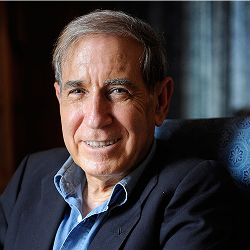
Shlomo Ben-Ami,
former Israeli foreign minister, is the author of *Prophets Without Honor: The 2000 Camp David Summit and the End of the Two-State Solution* (Oxford University Press, 2022).
©: Project Syndicate, 2026.
Follow our updates