

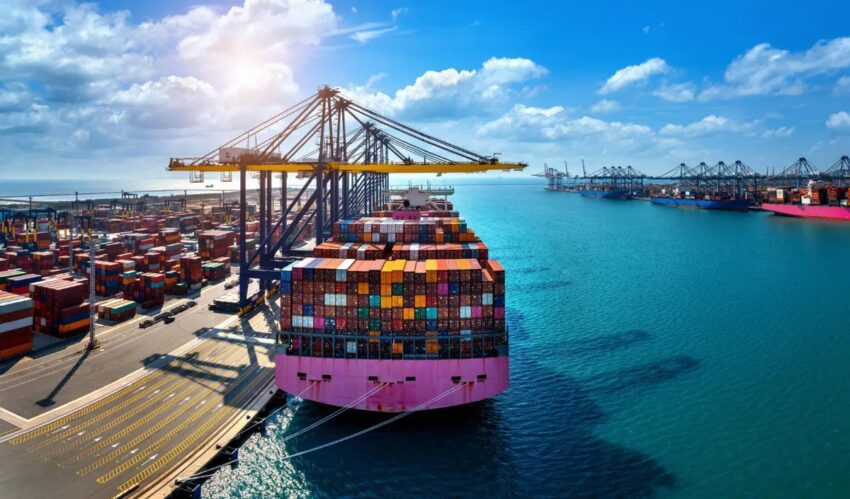
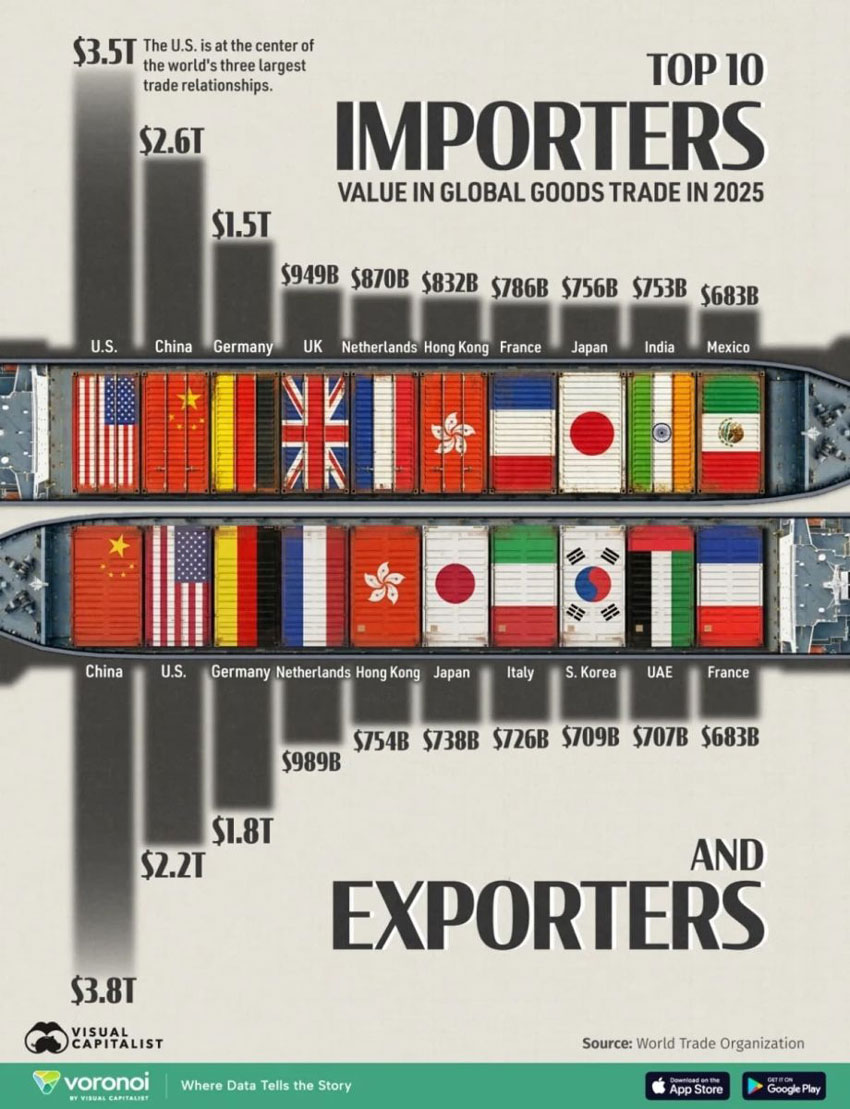
The ranking of the world’s largest importers and exporters of goods by trade volume in 2025, based on data from the World Trade Organization, clearly demonstrates how interconnected modern supply chains are: many nations import raw materials and components and then export finished goods to global markets.
In 2025, the U.S. retained its status as the largest importer, with imports totaling $3.5. The country remains one of the main sources of global consumer demand, purchasing huge volumes of electronics, automobiles, industrial equipment, clothing and other goods from trading partners around the world.
China ranked second with $2.6 trillion in imports, and Germany ranked third with $1.5 trillion.
China is once again the planet’s largest exporter, with $3.8 trillion worth of goods shipped to global markets in 2025. China’s dominance is based on its colossal industrial base, producing everything from consumer electronics to heavy industrial equipment for customers around the world.
The U.S. ranked second with $2.2 trillion in exports and Germany was third with $1.8 trillion.
Notably, many of the largest exporters are also among the largest importers. Modern production chains are based on the fact that countries purchase raw materials, components and intermediate goods and then export finished products to global markets.
Relatively small economies such as the Netherlands and Hong Kong also rank high on the import and export lists. The Netherlands benefits from its position as the main “gateway” to Europe, relying on its advanced port and logistics infrastructure. Hong Kong remains closely linked to mainland China, with more than 40% of its exports going there.
Also notable is the United Arab Emirates, ranked ninth among the world’s exporters with $707 billion in merchandise exports. This result reflects the country’s role not only as a major energy exporter, but also as a critical trade hub connecting Asia, Europe and Africa.
Follow our updates
Have information for the newsroom? Share it with Logos-Press



















Comments
0No comments yet. You can start the conversation.
Comments are open to readers with a Logos Press account.
Sign in to comment