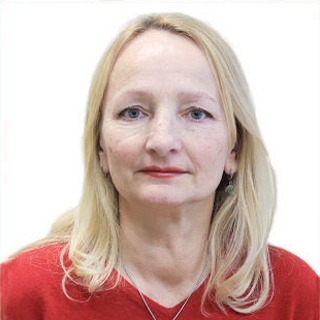

Фото: Леонид Боаге, примар села Сирець
This opinion was expressed by Leonid Boaghi, mayor of the village of Sireti, Straseni district.
“Many citizens left Moldova through no fault of the mayors or because their villages are small,” he notes. – We don’t even have a legal definition of what constitutes a large, small or medium-sized settlement. And there are cities with populations smaller than the number of inhabitants in the village of Sireti.”
Incentives for unification do not solve infrastructure problems
He emphasized that incentives for voluntary unification do not solve problems related to basic infrastructure in the localities. In Sirec, even before the reform, the process of investing in human resources, expanding the staff and training specialists capable of attracting European funds and investments was launched.
Nevertheless, the reluctance of local residents to participate in this process is due to the lack of finances and the degree of mistrust between local authorities, especially in matters of territorial cooperation or distribution of funds.
Sirec loses annually 10-20 million lei
Leonid Boaghi cited the example of Sireti village: out of 5000 inhabitants living there, about 3000 work in Chisinau on a daily basis. Their income tax remains in the budget of Chisinau municipality, which means an annual loss of 10-20 million lei for the village.
“This money has not reached our community for the development of services, and this is an example for which we hope solutions will be found within the reform,” the mayor specified. – But let’s say we have united, we have carried out the reform, but the question remains: what will we do tomorrow? What financial instruments will allow localities to solve the problems of water supply, roads, gas supply, sewerage, lighting and others?”
In Sirec, it was possible to realize these investments, thanks to the contribution of the mayor’s office and residents. The village has 95% solved the problems of water and gas supply, 30% of sewerage, 80-85% of street lighting and more than 60% of roads have been modernized.
However, not all villages have such opportunities, and “we cannot put all mayoralties that have decided to unite in equal conditions,” he emphasizes. He also cites the example of the Călinesti commune, where a merger was realized and a larger administrative unit was created.
Differences in capacities should be taken into account
“However, this does not guarantee that they will be able to solve the problems we solved in Sirec without unification,” he says. – Differences in capacity and resources remain evident and must be taken into account in the reform.”
Therefore, according to the mayor, it is crucial that solutions to a number of issues be found already at the initial stage of reforms:
How will VAT be distributed?
How will personal income tax be distributed – at the place of residence or at the place of work of citizens?
What decisions will be applied to the value of real estate and land?
What financial instruments will be used for infrastructure development after unification?


