


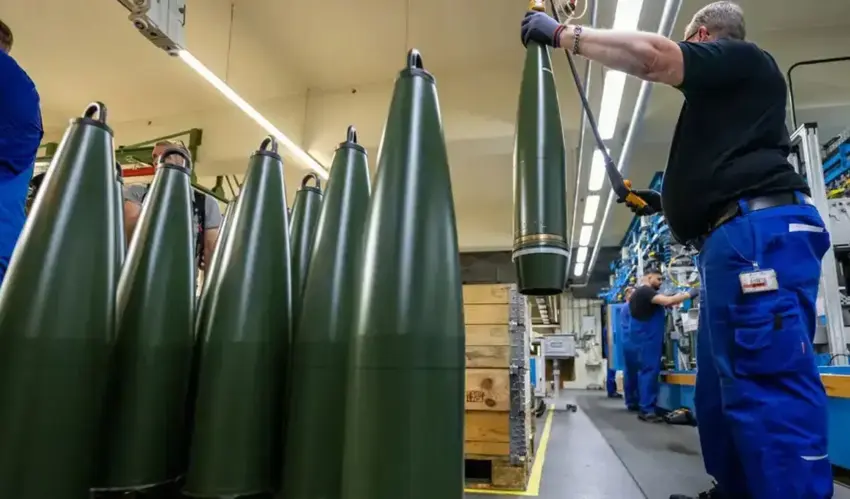
Фото: Philipp Schulze/dpa/picture alliance
Authorisations will be issued by the Public Services Agency (ASP), following the examination of applications by an inter-ministerial committee comprising representatives from the Ministries of the Economy, Defence and Home Affairs, as well as the Intelligence and Security Service. The committee will verify the owners of the enterprises, production capacities, security conditions and compliance with the established requirements.
The draft provides for the creation of a State Register of economic operators in the defence industry, the mandatory recording and marking of military products, as well as the control of their production, storage, transport and destruction.
The development of domestic production is justified, amongst other things, by the shortage of armaments and military equipment on the international market. The authors of the initiative also aim to attract investment and integrate Moldovan enterprises into European value chains.
Enterprises in the Republic of Moldova will be able to participate in procurements and tenders organised by the EU and NATO, subject to meeting the eligibility criteria. International cooperation will have to respect the country’s status of permanent neutrality, as enshrined in the Constitution.
The draft does not provide for specific budgetary allocations for the development of the sector. Any support programmes will require separate decisions and financial justifications.
The Act is due to come into force on 1 January 2027.
This story was translated with the assistance of artificial intelligence.The translation was also reviewed by the Logos Press editorial team.
Follow our updates
Have information for the newsroom? Share it with Logos-Press






















Comments
0No comments yet. You can start the conversation.
Comments are open to readers with a Logos Press account.
Sign in to comment