
When reporting on this, we also wanted to put the sacred thing – the price of bread – in the headline. But we assumed that the government was preparing compensatory decisions in this regard. Therefore, we limited ourselves to the question: what will happen to the prices?
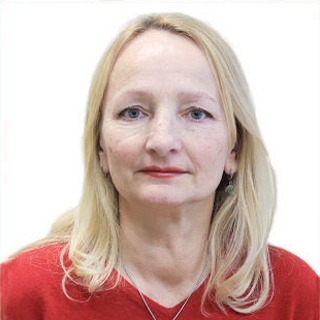
Later Logos Press presented the opinion Program Director of the Independent Center Expert Grup Marina Solovieva “The abolition of the price limit for social goods is irresponsible”.
Reasons for abolishing restrictions
On the air of one of the TV channels, the chairman of the parliamentary commission for economy, budget and finance Radu Marian presented the reasons for this decision.
According to the MP, the restriction of markups directly hit small producers, reducing their profitability.
“Large traders can put pressure on small producers and end up taking away some of their profits,” he said.
These arguments were again commented on by Marina Solovieva.
“First of all, this is not true. The limitation of markups applied to trade markups along the chain of intermediaries (importers and stores), it did not apply to producers,” she said. – Producers could set any margin they wanted for their goods. It was not the producers’ margins that were regulated, but the traders’ markups on the purchase price.
Under such conditions, it is unprofitable for stores to force producers to reduce selling prices for socially important goods, because the lower the purchase price, the lower the trade markup in absolute terms (in lei).
Perhaps, the deputy meant that retailers could demand from producers lower prices for other goods, not socially important, in order to “repel” the insufficient markup on socially important goods, suggests Marina Solovieva.
“But the abolition of the restriction of trade markups will not prevent retail chains from continuing such practices in the future,” she believes.
If in principle there is such a lever (denial of shelf space to manufacturers for disobedience), then why don’t retailers use it further, plus use the opportunity to set unlimited markups, the expert asks a question.
Limiting markups is a targeted mechanism
Radu Marian further argues that limiting trade markups on socially important goods is not a targeted mechanism, because such goods could be purchased by everyone, both the poor and those who are not poor.
“And this is not quite the right interpretation, because we were talking about a limited set of goods,” continues Marina Solovieva. – For example, not all dairy products, but only those with a low fat content. A non-poor person does not save money on milk and buys whole milk, for which the markup is not limited, not skim milk. So the mechanism was targeted and aimed at protecting the most vulnerable”.
In addition, the chairman of the parliamentary commission on economy, budget and finance cited the example of onions, which in 2022 were included in the list of socially important goods. According to him, limiting the trade markup had the opposite effect.
“Our onion producers started selling products abroad, where the markup was not limited,” he said. – We have fewer local products, and prices have gone up.”
Other reasons
“The fact that our supermarkets mostly sell imported rather than local fruits and vegetables is not at all due to the limitation of trade margins,” said Expert Grup’s program director. – This situation is observed for most items without any regulation of markups. Supermarkets explain it by the fact that, firstly, local agricultural producers can not provide the necessary volume of supply (retail chains buy in large quantities, so they turn to importers). Secondly, local producers are often unable to ensure uninterrupted supplies, including out of season, because they lack refrigeration equipment and suitable warehouses for storage.
In order to solve these problems, the state should help small agricultural producers to unite in order to jointly ensure the necessary volume of supplies, as well as to purchase equipment for storing products”.
Unfortunately, the deputy did not say the main thing: whether the state plans any measures of social support for vulnerable groups in connection with the abolition of restrictions.
“In all likelihood, no,” says Marina Solovieva. – He said that “support for vulnerable categories of the population should be provided through pensions, allowances and wage increases.”
If we translate his answer from the clerical style: “there is no money, but you hold on, wait for the indexation of pensions in April next year.”


