

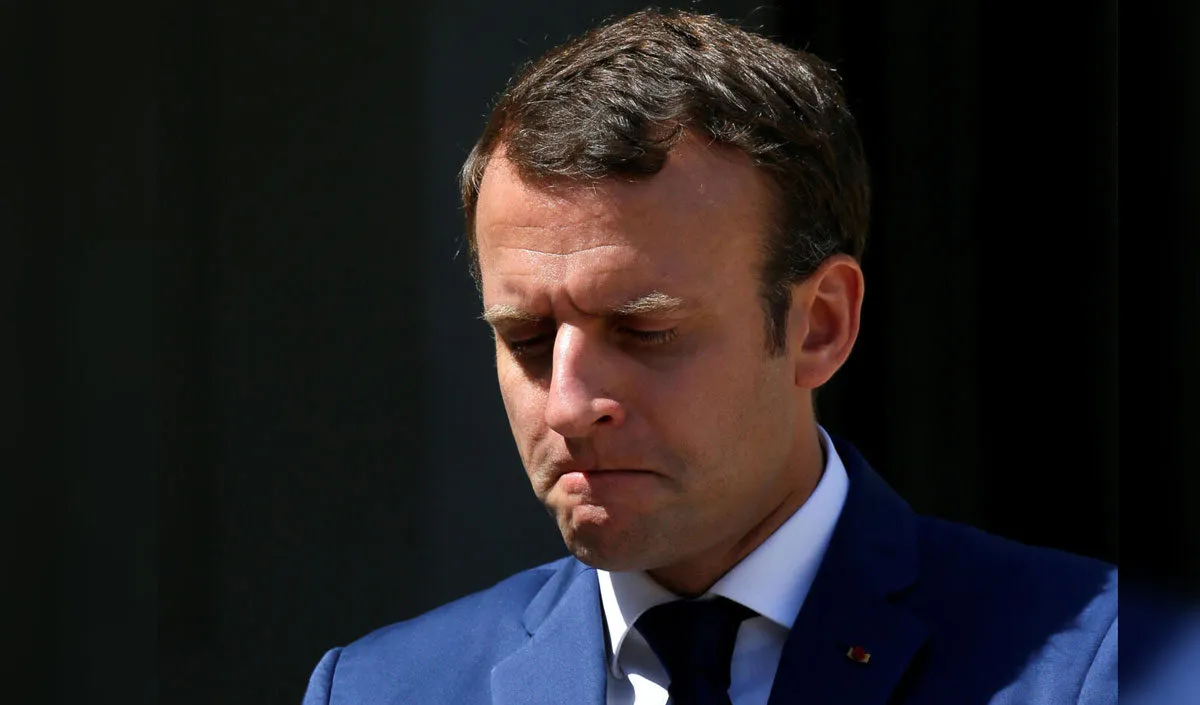
Emmanuel Macron
There is every reason to fear that a French sovereign-debt crisis would have global spillover effects. France is the European Union’s second-largest economy, with a debt many times the size of Greece’s circa 2010. Moreover, France’s debt problems are mounting at a time when bond yields in the United States, Japan, and the United Kingdom have all surged to multi-decade highs.
Not only has France’s public debt ballooned from a little over 80% of GDP in 2010 to 119% today, but budget deficits reaching 5% of GDP continue to add to the problem. Worse, remaining on this unsustainable trajectory has become even costlier now that the French ten-year government bond yield has shot up to 4.81%. With a sclerotic economy that is being buffeted by an energy-price shock and higher interest rates—and which is officially projected to grow by less than 1% next year—France cannot hope to grow its way out of its debt problem.
There is a lack of political will
To date, France has shown little political will to consolidate its budget and cut public spending, which now amounts to a staggering 58% of GDP. Over the past five years, French President Emmanuel Macron’s administration has churned through six prime ministers, not one of whom has managed to reduce the budget deficit in any meaningful way. Deficit-reduction targets have repeatedly been softened, planned spending cuts and pension reforms have been diluted, and promised savings have fallen short of what was initially announced. So polarized is the National Assembly that reaching a consensus on how to achieve debt sustainability remains out of reach.
With a presidential election coming next April, little can be expected in terms of budget consolidation. All the candidates have an incentive to make lofty campaign promises, not to confront the electorate with painful economic-policy choices. Moreover, it is far from clear that any successor to Macron would be able to push through the economic reforms that the situation demands. For that to happen, the next president would need to win a working majority in the National Assembly, elections for which could take place several weeks after the presidential vote.
Even if France had the political will to address its public debt problem, doing so within the euro straitjacket would not be easy. France can neither pursue a currency depreciation nor cut interest rates to offset the contractionary effect of belt-tightening. Putting its fiscal house in order therefore comes with a high chance of recession (especially given the economy’s current weakness); and a recession, in turn, would limit the potential gains from belt-tightening, by requiring increased social spending alongside reduced government revenue.
Markets seem to have taken note of France’s unsustainable public finances and political dysfunction. The spread between French and German long-term interest rates has increased to 119 basis points, its highest level since the 2010 sovereign-debt crisis. The risk now is of a doom loop, where the French government’s rising debt and higher borrowing costs exacerbate each other.
France’s national debt could lead to the break-up of the eurozone
The good news is that the European Central Bank is better equipped than it was in 2010 to support a eurozone member state that is coming under market pressure. Its Transmission Protection Instrument, for example, allows it to buy unlimited quantities of a member’s government bonds in the secondary market, provided that the country has a credible economic-adjustment program in place.
But France would be making a big mistake if it came to rely too much on an ECB safety net. Given the rise of Germany’s right-wing, nationalist Alternative für Deutschland party, there would probably be little to no German public support for another ECB-orchestrated bailout of a fiscally irresponsible neighbor.
Even if France’s mounting debt does not lead to the breakup of the euro, a new crisis for the common currency and tensions between the EU’s two largest economies is the last thing that the world economy and financial markets need right now.

Desmond Lachman,
a senior fellow at the American Enterprise Institute, is a former deputy director of the International Monetary Fund’s Policy Development and Review Department and a former chief emerging-market economic strategist at Salomon Smith Barney.
© Project Syndicate, 2026.
www.project-syndicate.org
Follow our updates
Have information for the newsroom? Share it with Logos-Press













Comments
0No comments yet. You can start the conversation.
Comments are open to readers with a Logos Press account.
Sign in to comment