
The procurement will be carried out through the Estonian Defense Investment Center as part of the 2022–2025 assistance package, specifically designed to strengthen the mobility and transport capabilities of the Moldovan armed forces. The entire project is funded by the European Union through the European Peace Fund, an EU mechanism that provides military and defense support to partner countries. The total cost of the project exceeds 50 million euros ($57 million), provided to Moldova as a non-repayable grant, and the delivery of the Canadian-made vehicles is scheduled for May 2027, according to defence-blog.com.
A Key Difference
The Senator armored vehicles being acquired by Moldova are built on the chassis of a Ford F-550 heavy-duty commercial truck, which distinguishes the entire Roshel vehicle line from the specialized armored chassis used by most traditional defense manufacturers.
Roshel founder and CEO Roman Shimonov described this approach as a deliberate departure from how the defense industry typically manufactures armored vehicles, by adapting proven commercial truck platforms rather than developing an armored chassis from scratch. This strategy reduces the unit production cost and speeds up production timelines compared to conventional military vehicle development programs.
In its standard configuration, the Senator seats up to ten passengers, is equipped with a 6.7-liter turbo-diesel engine producing approximately 330 horsepower and 750 Nm of torque, and provides ballistic protection to the CEN B7 standard, sufficient to withstand sustained small-arms fire, including projectiles up to 50 mm in caliber, according to reports from Ukrainian border guards who have operated this vehicle.
Roshel’s Senator family of armored vehicles has become one of the most widely used Western-made armored platforms in Ukraine’s defense against Russia. This experience lends Moldova’s decision to procure the vehicle real operational weight, rather than merely theoretical confidence in an untested design.
Canada announced its first major delivery of Senator vehicles to Ukraine in January 2023—a package worth 90 million Canadian dollars ($67.3 million), including 200 vehicles. Roshel announced that it would deliver the 1,800th Senator vehicle to Ukraine by May 2025, reflecting a steady ramp-up in production, which, according to the company, has been scaled up to a target capacity of 1,000 vehicles per year to meet wartime demands. Senator armored vehicles have been widely used on the front lines throughout the conflict, including during Ukraine’s invasion of the Kursk region in August 2024.
Nosaty is pleased
Although the press release regarding Moldova’s procurement does not specify which variant of the Senator the country will receive, the vehicle’s overall design concept—combining the affordability of a commercial chassis with combat-proven protection—effectively addresses the mobility and transport challenges that the Moldovan Ministry of Defense has identified as a priority.
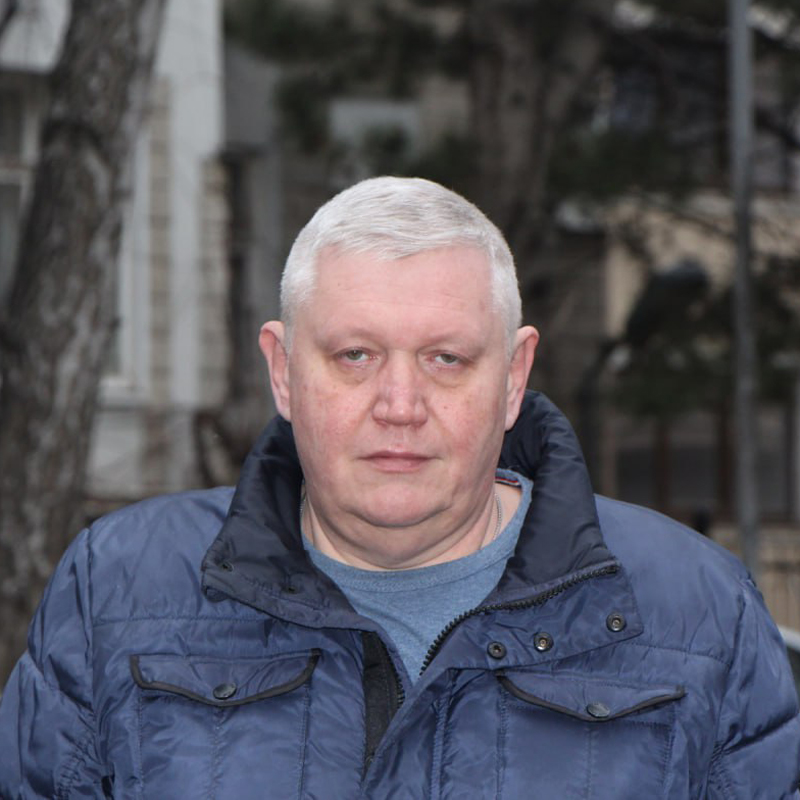
Moldovan Defense Minister Anatolie Nosaty emphasized the importance of the European Union’s consistent support for strengthening Moldova’s defense capabilities.
“This support reflects the European Union’s unwavering commitment to strengthening the Republic of Moldova’s defense capabilities,” said Nosaty, noting that the procurement will contribute to modernizing the country’s training process and enhancing the operational interoperability of the Moldovan armed forces in accordance with European standards.
Moldova’s strategic location lends this procurement special significance that goes beyond its dollar value. Moldova has officially applied for membership in the European Union and, at the same time, is making efforts to modernize its small, historically underfunded army—a process that the European Peace Fund supports through several aid packages aimed at addressing various capability gaps. This procurement of Senator armored vehicles is intended to address mobility and transportation challenges, eliminating—according to the Moldovan Ministry of Defense—a critical shortage of means for moving troops and equipment across the country, which has limited domestic production capacity.


