


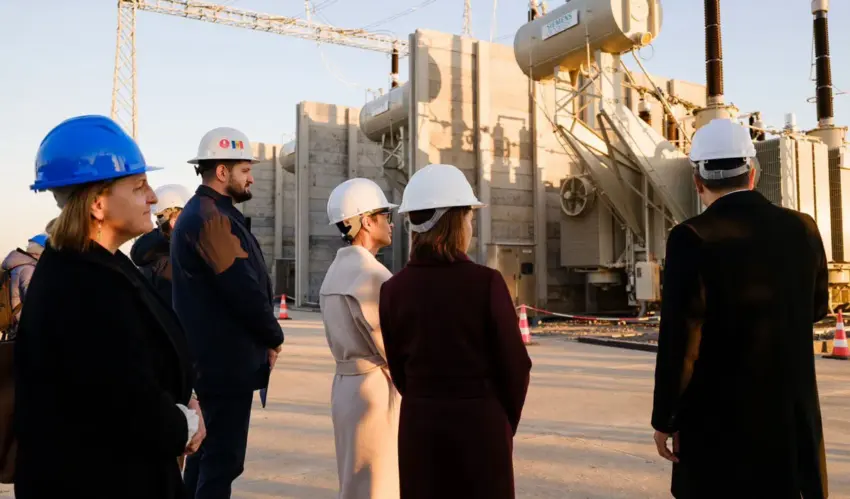
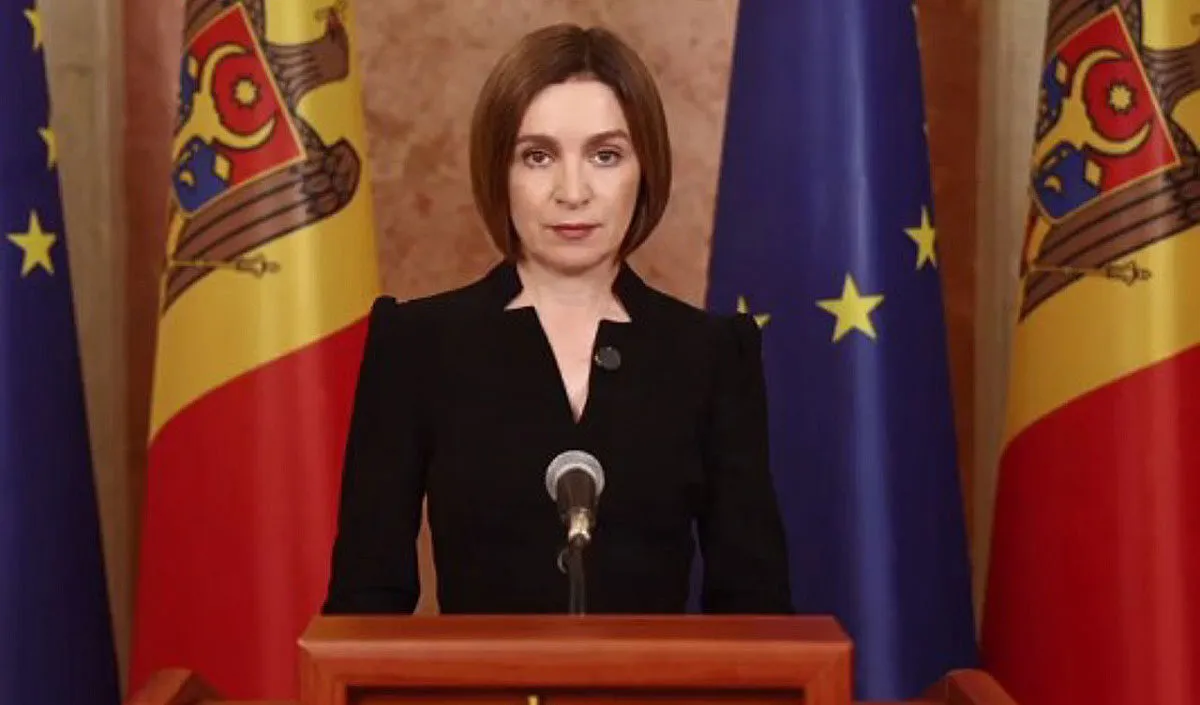
The opening ceremony was attended by President Maia Sandu, European Commissioner for Enlargement Marta Kos and the Minister for Energy, Dorin Junghietu.
Dorin Junghietu: Energy security is part of national security
The Minister for Energy stated that the new line provides the Republic of Moldova with an additional route for electricity transmission and reduces the vulnerabilities of the energy system.
“For the Republic of Moldova, energy security means light in homes, businesses operating and services functioning, but it also means the freedom to make decisions without fear that someone will use energy to impose their will. We have learnt during difficult years the cost of dependence. Today we are demonstrating that we can reduce it through firm decisions, investment and trusted partnerships,” said Dorin Junghietu.
Maia Sandu: “No one can blackmail us, turn off the lights or cut off the heating any more”
President Maia Sandu recalled that the need to build a power line directly connecting the Republic of Moldova to the Romanian market has been under discussion for over a decade. The first steps were taken in 2013, and in September 2019 the World Bank approved a financing agreement worth 61 million euros.
Construction of the line was completed in November 2025, followed by technical testing and safety checks. The Head of State noted that the war in Ukraine had affected equipment deliveries and the project timetable.
According to the President, the new line provides an additional route for electricity transmission, strengthens the system’s capacity and reduces the risk of power cuts.
“This line provides us with an additional route for electricity transmission and reduces the risk of power cuts. Through this project, we are strengthening our electricity transmission capacity, diversifying our supply routes and reinforcing the Republic of Moldova’s connection to the European energy system. For us, energy independence means being able to decide for ourselves where we buy our energy from, without being vulnerable to pressure or blackmail,” the head of state emphasised.
Maia Sandu announced that the next major interconnection projects are the Bălți–Suceava and Strășeni–Gutinaș power lines. The first project, estimated at around 77 million euros, is receiving funding from the European Bank for Reconstruction and Development, the European Investment Bank and a 15 million euro grant from the European Union. The Strășeni–Gutinaș line will be built with support from the United States.
The President also noted that, in parallel, the authorities are continuing to invest in local renewable energy production and the modernisation of the grids. At the same time, the Government will need to continue allocating resources to reduce the burden of energy bills on households, particularly vulnerable ones.
“For the time being, however, we have managed to resolve a major problem. No one can blackmail us, cut off our electricity or turn off our heating any more,” said Maia Sandu.
Marta Kos: Moldova takes a step closer to the EU
For her part, the European Commissioner for Enlargement, Marta Kos, stated that the project represents an important step towards ending the Republic of Moldova’s dependence on Russian energy and strengthening connections with European networks.
“Today we can say that, indeed, the Republic of Moldova’s dependence on Russian energy has come to an end. This power line frees Moldova from any dependence. No country has the right, nor will it be able, to use energy resources to dictate terms to Moldova. You now have more options for sourcing electricity. The grids are more secure, and you can procure energy from wherever it is cheapest,” said Marta Kos.
“This step you have managed to take, along with all the achievements of recent years and months, has brought you one step closer to the European Union, and we look forward to welcoming you into the European Union,” said the European Commissioner.
The Vulcănești–Chișinău line is one of the main investments in the Republic of Moldova’s energy infrastructure and aims to diversify supply routes, increase the security of electricity transmission and strengthen integration into the European energy market. The total value of the project is approximately 61 million euros.
This story was translated with the assistance of artificial intelligence.The translation was also reviewed by the Logos Press editorial team.
Follow our updates
Have information for the newsroom? Share it with Logos-Press















Comments
0No comments yet. You can start the conversation.
Comments are open to readers with a Logos Press account.
Sign in to comment