Send us a message, and we will definitely consider your suggestions and comments.
All
Business & Companies
Agribusiness & Winemaking
Art & Culture
Banks & Finance
International Trade
Culture
Digitalization
Social Sphere
Moldova’s Economy
Global Economy
Economy & Law
Green Economy
Education
Electricity
Renewable Energy
Events
Logos Press Exclusive
Export & Import
FinTech
Gas
Accidents
Infrastructure
European Integration
Artificial Intelligence
Investments & Markets
Municipalities
City & Regions
IT Market
Global Markets
Politics & Economy
Top News
Pro Business
Point of View
Territorial Reform
Retail & HoReCa
Healthcare
Society
Sport & Tourism
Technology & Innovation
Tourism
News
Moldova plans to build 500 charging stations for electric vehicles by 2030. The National Electric Vehicle Development Program, developed by the government, calls for investments of more than 1.19 billion lei to develop charging infrastructure, reduce emissions, and increase the number of electric vehicles on the country’s roads. However, funding sources have been identified for less than 4% of the total amount.
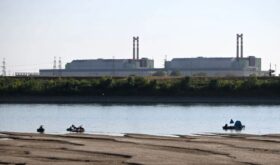
Hungary narrowly avoided a shutdown of its nuclear power sector as the Danube’s water level rose. Hungary’s prime minister said Tuesday that Budapest miraculously managed to avoid a complete shutdown of its nuclear power plant, as the return of the Danube’s water levels to normal allowed the country to keep its only nuclear power plant operational.
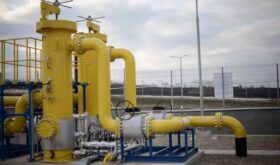
Moldova is preparing a set of measures to ensure the security of natural gas supplies during the 2026–2027 heating season. The plan, developed by the Ministry of Energy, calls for diversifying gas procurement sources, building up necessary reserves, and establishing response mechanisms in the event of emergencies.
The government will determine the amount and mechanism of compensation for the cold season following a decision by the National Energy Regulatory Agency (NARE) on natural gas rates. This was announced by Government Secretary-General Alexei Buz.

Energocom purchased 12,134 MWh of electricity on August 3—27% more than two days ago.
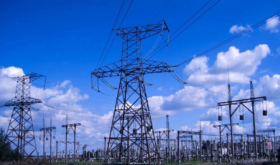
The Romanian government has reached an agreement with major industrial consumers to voluntarily reduce energy consumption during evening hours amid an energy crisis caused by a severe drought and a sharp drop in water levels in the Danube.
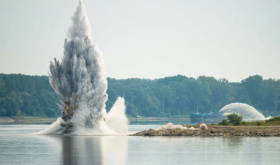
The Romanian Navy carried out a controlled blast of a rock formation on the Danube to increase the water flow to the Cernavodă Nuclear Power Plant. Due to a severe drought, the river’s water level had dropped significantly, posing a threat to the operation of one of the reactors.
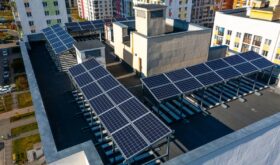
When installing solar panels and heat pumps, no contributions to the Fixed Assets Fund (0.5% of the investment amount) will be required.
Romanian authorities are beginning consultations with major industrial enterprises to reduce the strain on the power grid amid the declared energy alert. On August 3, the Ministry of Energy will hold an online meeting with the largest electricity consumers, during which it will ask them to voluntarily shift some of their energy-intensive production to hours of lower demand.
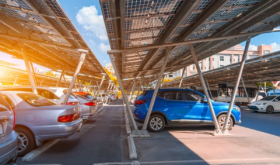
Solar-powered parking lots are popping up all over Europe, but not all countries consider them a profitable investment.
Romanian Foreign Minister Oana Țoiu announced plans to import electricity from Ukraine due to a record-breaking drought, after Bucharest declared a state of emergency in the energy market and shut down one reactor at a nuclear power plant.
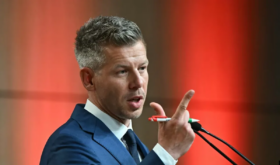
On Sunday, Hungarian Prime Minister Péter Magyar announced the closure of the country’s only nuclear power plant after record-low water levels in the Danube forced it to shut down for the first time in 44 years.
Energocom S.A. warned that Romanian authorities have declared a 30-day state of emergency amid a decline in electricity production caused by low water levels in the Danube.

The government will provide support to the public during the cold season and will reimburse part of the expenses associated with rising gas prices. This was announced by Parliament Speaker Igor Grosu.
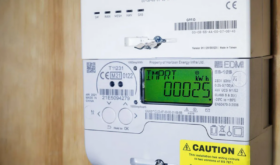
Within 12 months, Premier Energy Distribution and RED-Nord must fully transition to smart electricity meters.
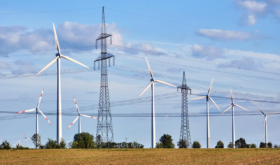
Investor interest in the development of wind energy in Moldova is very high. The second auction, organized by the Ministry of Energy, attracted bids that exceeded the announced capacity by more than two and a half times.
Russia has begun importing gasoline by sea from Morocco due to a domestic fuel shortage. An oil tanker delivered about 30,000 metric tons of AI-92 gasoline, industry sources told Reuters.
In July, Italy became Europe’s largest buyer of liquefied natural gas (LNG). While many EU countries are cutting back on purchases due to high prices, Rome is banking on building up large reserves ahead of winter.
The entity responsible for supplying natural gas to the left bank of the Dniester will be required to build up mandatory fuel reserves in time for the upcoming heating season. Previously, the National Energy Regulatory Agency (NARE) extended the status of MoldovaGas JSC as the organization responsible for supplying natural gas to the left bank until December 31, 2026.
Starting August 1, Russia will impose a ban on the export of gasoline, diesel fuel, and a number of other petroleum products, stepping up measures to ensure the domestic market is adequately supplied following supply disruptions in Russian regions. The restrictions will remain in effect until January 31, 2027.