


Many visitors noted that consumers today are looking for something new. However, Moldova is a country with a history of winemaking stretching back some 5,000 years; the ‘novelty’ here is felt only from the perspective of the British consumer, writes thedrinksbusiness.com.
“Wine is not simply a product we produce,” emphasised Ruslan Bolbocean, Moldova’s ambassador to the UK, as he opened the event in London. “It is part of our history, our culture and our national identity.”
Thanks to its rich winemaking heritage and a new generation of forward-thinking producers, Moldova is entering an exciting phase of its development. The country’s growing ambitions in international markets, including the UK, are opening up new opportunities for Moldovan wines: they can find their audience and gain the recognition they deserve, notes the British publication.
The day’s programme included several events: a tasting session for industry representatives took place during the day, followed by an open tasting for the press and influencers in the evening. Two masterclasses were also held: Patrick Schmitt (a Master of Wine) spoke about Moldovan wines, whilst Melita Kili presented the ‘Divin’ category (Moldovan brandy).
The advantages of Moldovan wines
Moldova’s extensive vineyard areas enable it to produce wine on a large scale. Combined with a favourable continental climate and rare, incredibly fertile chernozems, this allows producers to consistently yield high-quality and commercially successful harvests.
Another key advantage Moldova offers the UK market is its unique raw material base, which goes beyond the usual standards. “I think buyers are looking for something special, and Moldova can offer this thanks to its indigenous grape varieties,” noted Patrick Schmitt during the masterclass.
These include varieties from the ‘Fetească’ family: for example, the light and refined ‘Fetească Albă’ or the full-bodied ‘Fetească Neagră’, which is reminiscent of ‘Malbec’ in character. Also worth mentioning is the ancient ‘Rară Neagră’ variety, which produces red wines that pair beautifully with food, and the white ‘Viorica’ variety – a real ‘ace up the sleeve’, as Schmitt put it. For those seeking something new and unusual, Moldova offers a rich selection. These indigenous varieties vividly express the distinct character of Moldovan winemaking, allowing international buyers and consumers to discover flavours and styles of wine deeply rooted in the country’s cultural heritage.
Market potential
Offering consumers something interesting is an undeniable advantage in the saturated UK market, but it is not enough. Shoppers have their own preferences regarding brands and regions, to which they return time and again; to compete with them, you need to stand out from the crowd whilst offering the right price.
This was clearly understood by both exhibitors and visitors alike. Some of the wineries represented have already achieved success in the off-trade sector thanks to very attractive prices. British buyers and experts note that price-conscious consumers are keen to try something new and unusual, provided the wine costs no more than £15.
“Moldova has the potential to attract those who are looking for high-quality, distinctive wine and want to discover something new without spending a fortune,” explained Katie Lawton, a wine expert and host of the evening’s event.
For example, Asconi Winery managed to break into the British market by capitalising on consumers’ interest in new discoveries: their Feteasca Albă wine was included in the Co-op’s ‘Hidden Vine’ range, whilst their Viorica wine has been added to Waitrose’s range under the ‘Loved & Found’ brand. The retail price of both wines is less than £10.
“We can be very competitive in terms of price and value for money,” noted Mihaela Syrbu, co-owner of the winery. “We now hope to move into the price segment above £10.”
Some producers are represented in the UK in a higher price segment, although this has required a different strategy. For example, Château Vartely sells its wines through The Wine Society and Laithwaites, targeting more discerning and knowledgeable consumers.
A representative of the winery noted: “You need wine clubs: their members are open to everything new.”
Indeed, the idea of engaging with consumers who are well-versed in wine was also supported by wine critic Dr Jamie Good, who was present at the tasting. “In my view, there are significant opportunities here in the mid-range and high-end catering sector — for example, in more prestigious restaurant chains,” he said.
Of course, this does not mean at all that Moldova does not produce wines in the premium price segment; it is simply that winemakers understand exactly where there is currently potential for growth in the British market.
Château Vartely has even launched its premium Taraboste wine in a large-format bottle. “It’s too expensive for the UK,” explained a spokesperson, “but we always strive to showcase such a product. It’s a question of image.”
Strategically advantageous positions
One of the main aims of the tastings was to give buyers and distributors the opportunity to get to know the wineries. This helped to establish contacts, thanks to which Moldovan wine will reach a greater number of importers, shops and restaurants. However, the event also had another aim: to prove that Moldovan wine is capable of generating genuine interest.
At the most basic level, this meant dispelling the doubts prevalent in British business circles: namely, that since Moldova is a lesser-known wine-producing region, the quality of its produce must be lower. Dr Good offered a highly convincing assessment on this point: ‘I was impressed by the level of professional expertise on display. All the wines presented were of very high quality and stood out for their purity of flavour.’
The range on offer is also worth noting. Thanks to its sparkling and still wines, grape varieties of both international and local origin, and a wide palette of styles, Moldova has proven that it is capable of offering consumers variety and flexibility. In a situation where the number of available partners is limited, such a range becomes a key advantage.
And most importantly, this event demonstrated that Moldovan winemakers are ready to adapt to any format: be it an in-depth, detailed tasting session or a relaxed evening get-together.
“By creating a relaxed atmosphere in which people can taste wine without any preconceptions, you can change their perception far more effectively than simply convincing them that a particular region is worth paying attention to,” explained Lawton.
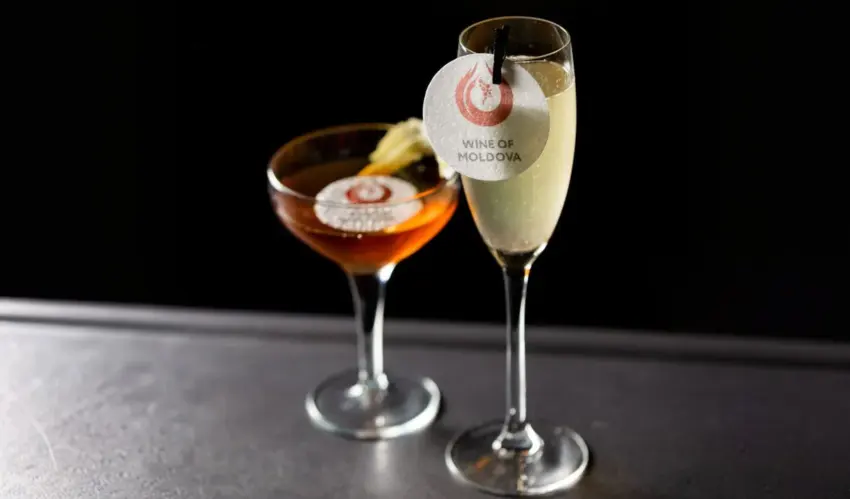
This was evident in everything from the tastings led by Schmitt and Keely (drawing on their own experiences of travelling to Moldova) to the evening DJ sets. During the day, guests were offered a light lunch, whilst in the evening there was an informal wine tasting, cocktails made with divin (Moldovan brandy) and traditional Moldovan desserts. Instead of the usual, often dull wine-tasting event, the Moldovan producers brought a slice of their culture to London, focusing on an atmosphere of warmth and lively conversation.
The UK market is promising, yet extremely competitive: shop shelves are already stocked with a wide variety of wines from all sorts of countries and regions. To make a name for themselves and carve out a place in the market, producers need precisely this sort of ambitious presentation.
“The wine’s country of origin should not be a barrier,” concluded Lawton, “but I believe that Moldova’s more than 5,000-year history of winemaking and its deeply rooted wine culture give it every reason to be taken very seriously,” concludes the specialist British publication.
Follow our updates
Have information for the newsroom? Share it with Logos-Press























Comments
0No comments yet. You can start the conversation.
Comments are open to readers with a Logos Press account.
Sign in to comment