


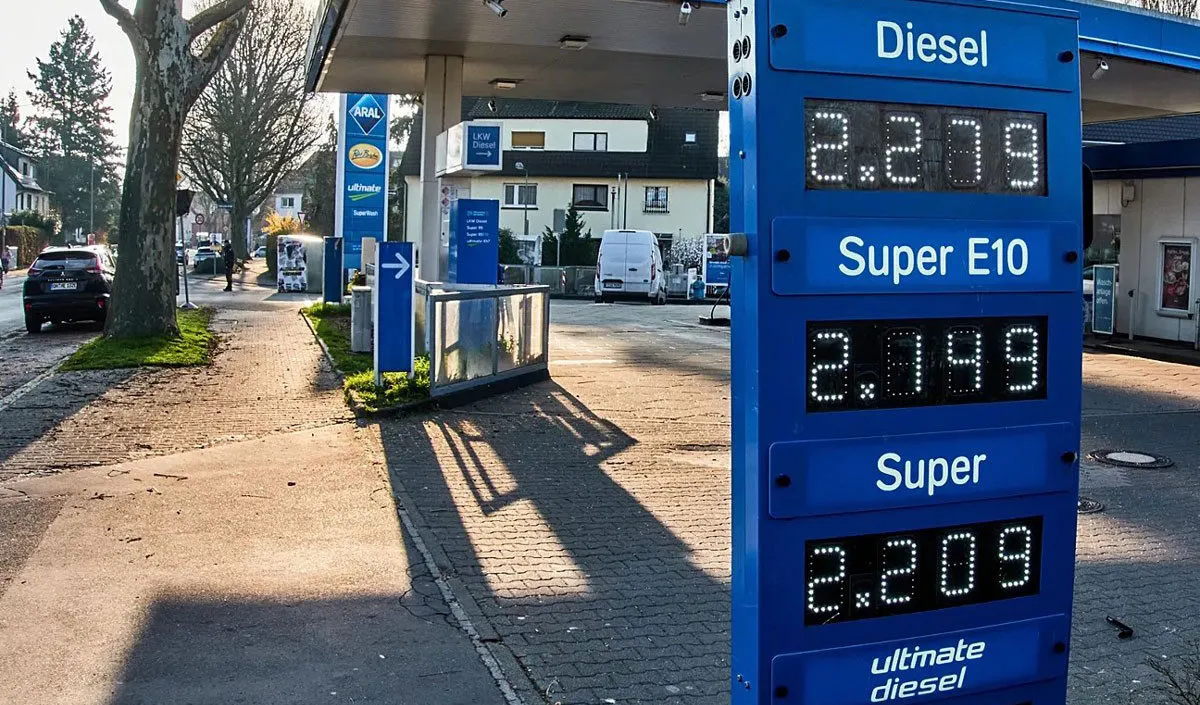
According to the European Commission’s Weekly Oil Bulletin, the EU-weighted average price of diesel on 21 September 2026 reached €2.226 per litre. This is the highest figure since records began in 2005. This is 13.4 cents more than a litre of Euro-super 95 petrol costs.
On average across the EU, the tax burden on diesel stands at €0.861 per litre, or 38.6 per cent of the final price at the pump. For petrol, it is €0.981 per litre – 12 cents more.
Why is diesel taxed less than petrol?
A more favourable tax regime for diesel has been in place for many years. EU rules set a minimum excise duty rate for diesel at €0.33 per litre, compared with €0.359 for petrol.
Most governments maintain this gap in their own rates, justifying it as support for hauliers, farmers and other businesses that use diesel.
In 2015, the Brussels-based environmental organisation Transport & Environment calculated that Europeans pay, on average, 14 cents more in tax per litre of petrol than per litre of diesel. A decade on, this gap remains.
The European Commission’s 2021 plan, which envisaged taxing fuel based on its energy content rather than volume, would effectively have removed diesel’s tax advantage. However, its adoption requires the consent of all 27 EU member states, and a compromise proposal failed to secure unanimous support in November 2025.
How the tax on diesel fuel is calculated
Taxes on diesel are levied in two stages. First, an excise duty is charged – a fixed amount per litre. In some countries, additional charges are added to this, such as a carbon tax. Then, value added tax (VAT) is levied on the total amount, including the excise duty, ranging from 17 per cent in Luxembourg to 27 per cent in Hungary. In effect, this is a tax on a tax.
In Greece, diesel is taxed 28.6 cents less than petrol – the widest gap in the EU. The Netherlands has the highest retail price for diesel in the EU – 2.579 euros per litre – yet the country ranks only sixth in terms of tax levels. Taxes on diesel are 26.7 cents lower than on petrol.
Italian motorists currently pay the highest fuel taxes – up to approximately €1.034 per litre, or up to 45.3 per cent.
Against the backdrop of record-high diesel and petrol prices in Europe, these duties and taxes may change rapidly. From 1 October, Germany will reduce taxes on petrol and diesel by around 17 cents per litre (including VAT), whilst the expected reduction in diesel taxes in the Czech Republic should save motorists around 10 cents per litre. Spain has also extended its fuel tax relief scheme.
This story was translated with the assistance of artificial intelligence.The translation was also reviewed by the Logos Press editorial team.
Follow our updates
Have information for the newsroom? Share it with Logos-Press




















Comments
0No comments yet. You can start the conversation.
Comments are open to readers with a Logos Press account.
Sign in to comment