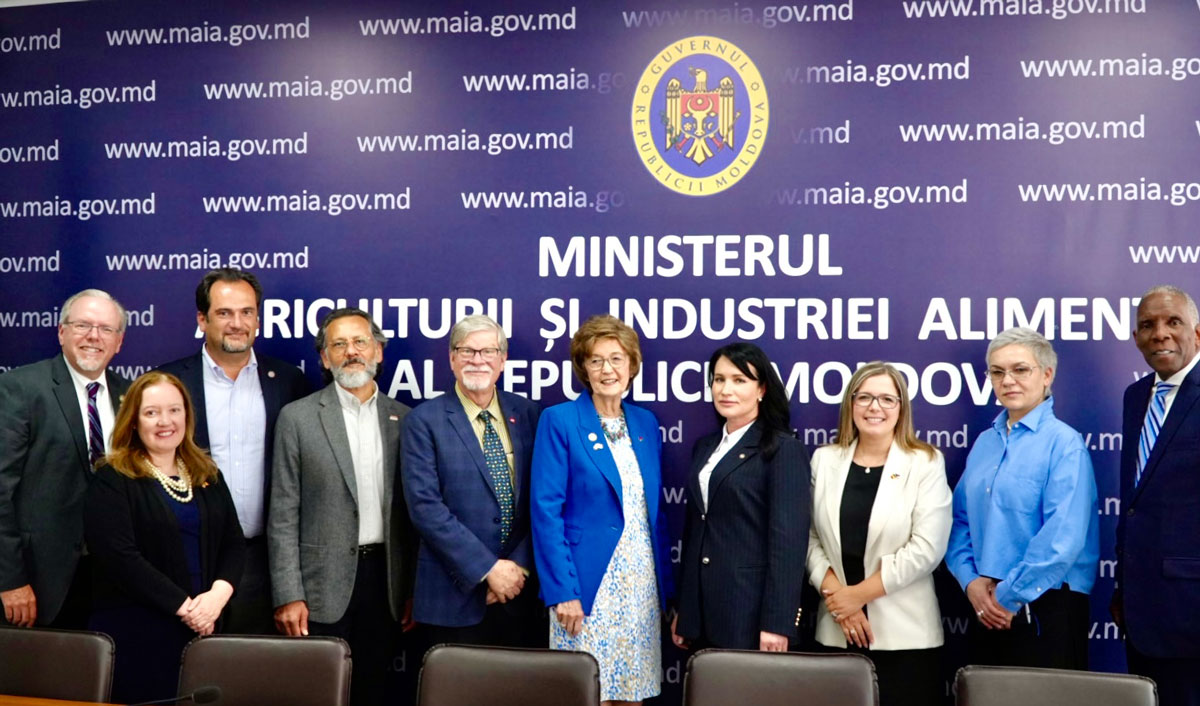

Pictured, from left, is Elaine F. Marshall.
The parties discussed the experience of the state of North Carolina in establishing links between universities, government agencies, researchers and farmers. Representatives of the U.S. delegation noted that North Carolina’s advisory services model is based on ongoing collaboration between academic institutions, government agencies, and agricultural communities. This model promotes rapid technology transfer and better management of risks related to fertilizer, water, soil, productivity and climate.
In its turn, MAIA management emphasized that the Republic of Moldova needs agricultural advisory services “closer to the farmer”. In the process of adaptation to the requirements of the European Union, local farmers need clear and applicable information for agricultural production at different levels – from small farms to export-oriented producers.
The parties also discussed the AKIS information system currently under development, which will bring together knowledge, research, advice, training and useful information for agriculture. In this context, extension centers and agricultural advisors could play an important role in testing, refining and using the system together with farmers.