Send us a message, and we will definitely consider your suggestions and comments.
Category: Energy
The Republic of Moldova presented its achievements, current environmental challenges, and ways to improve regional cooperation on environmental protection at the second EU4Green Recovery East regional meeting in Paris.

Europe is the fastest-warming continent on the planet: its climate is changing at roughly twice the global average rate. As temperatures continue to rise, a key question arises: Is Europe prepared for a hotter future?

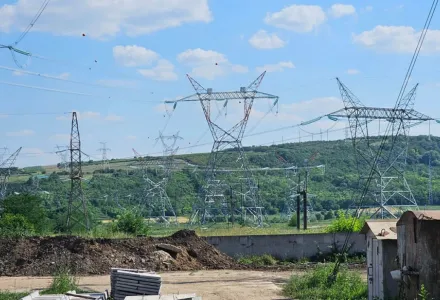
According to a statement from the Ministry of Energy, construction work on the 400-kV Vulcănești–Chișinău overhead power line and related infrastructure has been completed, and the “Energy Independence” line has entered the final stage of testing prior to its commercial commissioning.
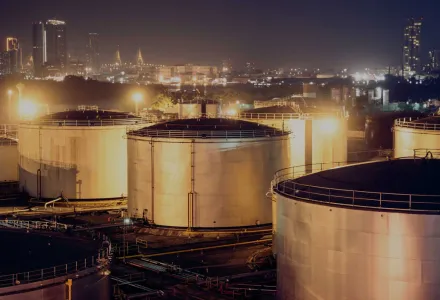
In Moldova, on June 30, 2026, Law No. 119 of June 26, 2026, on the security of petroleum product supplies, entered into force. The purpose of the law is to establish a comprehensive regulatory framework necessary to ensure the security of petroleum product supplies by creating an effective storage system.
Romania has increased its natural gas supplies to Moldova by 50% compared to last year, raising them from 2 million m³ to 3 million m³ per day.

The Ministry of Energy of the Republic of Moldova and the International Bank for Reconstruction and Development (IBRD), a member of the World Bank Group, have signed an agreement to provide grant funding of up to $1.7 million to prepare a project for the construction of new, highly efficient thermal and electric power generation facilities for Termoelectrica S.A.
U.S. President Donald Trump has demanded that companies that sell gasoline in the United States immediately lower their prices.

Spain had been developing renewable electricity so aggressively that it eventually found itself with a surplus.

Gas prices on European exchanges are rising again. On Monday, the price of July futures on the TTF hub rose by more than 3%. Prices recovered from their recent drop below $490 and are once again heading toward the psychological threshold of $500 per thousand cubic meters.

A report by the European Environment Agency (EEA) titled “Overheated and Underprepared” states that approximately one in ten EU residents has difficulty accessing sufficient quantities of safe and clean water. The problem is most acute in Cyprus (36.5%) and Greece (31.5%). The situation is only slightly better in Bulgaria (27%), Romania (21%), and Hungary (20%).

The 400-kV Bălți–Suceava power line, dubbed the “Line of Sustainability,” will be built by the Turkish company SA-RA, which won an international tender; the contract between SA-RA and the state-owned company Moldelectrica was signed last Friday.

Using land for both electricity generation and food production is a promising solution.

Russian President Vladimir Putin publicly acknowledged for the first time that the country is facing a fuel shortage due to Ukrainian drone strikes on oil refineries and energy infrastructure facilities. He emphasized, however, that the situation is not critical.

At the meeting of the secretaries-general on June 22, a draft resolution of the Moldovan government was reviewed and approved, exempting the state-owned enterprise Moldelectrica from paying to the budget income tax on revenue received in 2025 in the amount of 26,997,786,25 lei.

In 2026–2027, the price of oil will fluctuate between $70 and $80 per barrel.

At the annual General Meeting, the shareholders of Moldovagaz JSC heard reports on the activities of the Management Board, the Supervisory Board, and the Audit Commission for 2025.

Today, June 26, a contract will be signed at the Government House for the design and construction of the Moldovan section of the 400-kV Bălți–Suceava overhead power line, the second of three lines connecting the country to the European ENTSO-E grid.

External partners will finance the design and construction of a cogeneration plant at Termoelectrica
The Foreign Policy Committee of the Moldovan Parliament approved an advisory opinion on opening negotiations with the International Bank for Reconstruction and Development (IBRD) regarding a grant of approximately $1.7 million.

The Ministry of Energy of the Republic of Moldova has published a Memorandum of Understanding with the U.S. companies SBCC and Wheeler Machinery Co. to develop a project for a gas-fired power plant with a capacity of at least 100 MW. The purpose of publishing the document has not been specified.

The Republic of Moldova ranks 64th out of 120 in the World Economic Forum’s Energy Transition Index 2026.