

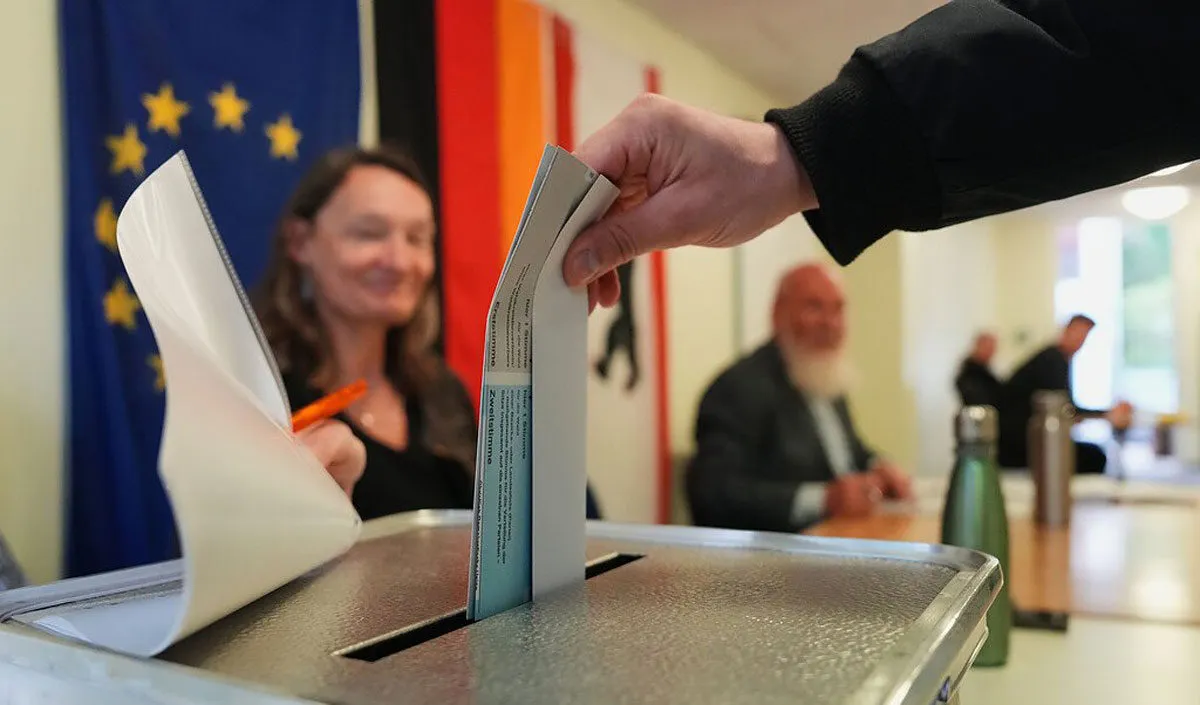
The fact that Saxony-Anhalt is a small state is hardly consolation. What happens there could happen elsewhere, and the stakes could not be higher. The AfD wants Germany to withdraw from NATO, the European Union, and the euro. It openly supports Russian President Vladimir Putin and seeks to shift the country’s foreign-policy alignment from the West toward the Kremlin.
The shock on election day was compounded by the poor showing—or rather, the outright collapse—of the center-right Christian Democratic Union (CDU), which had been Saxony-Anhalt’s governing party. Its share of the vote was effectively halved, despite substantially higher voter turnout. The governing coalition in Berlin, and Chancellor Friedrich Merz in particular, was widely assigned much of the blame for the result—and not without justification.
A crisis of authority
The CDU’s disintegration has become a realistic possibility nationwide, auguring a coalition and governing crisis in Berlin. After all, Germany is struggling with persistently weak growth and a failure to push through urgently needed reforms to the tax system and major social-security programs, including pensions, health care, and long-term care.
Political stability and predictability have always been important pillars of Germany’s postwar democracy, both before and after reunification in 1990. It was the Federal Republic’s strong rule of law, strategic anchoring in the West, and staunch commitment to the project of European integration that enabled it to build trust with its neighbors and former wartime adversaries. It was these commitments that made reunification possible.
Is all that about to come to an end? Are the pillars crumbling? If so, the rest of Europe would once again be confronted by the “German Question.” For the first time in many decades, Europeans would have to wonder which way the largest, most powerful country in their midst is leaning. They would no longer be sure if Germany is firmly anchored in Europe and NATO, or once again pursuing a national course of its own.
Stability in the EU is at stake
Nothing has yet been decided, of course. But the danger is real, and when combined with the looming political crisis in France—where the far right is also ascendant—the consequences for the European Union could be disastrous. The rest of Europe now must account for the fact that both France and Germany—the EU’s two largest, indispensable member states—are operating from a position of domestic weakness, with each threatened from within by its own version of the new nationalism.
The makings of a European nightmare scenario are already visible. Consider what it would mean if the political and economic crises afflicting the Franco-German partnership were to converge. On the western side of the Rhine would be a government lacking a parliamentary majority and struggling with weak growth and exorbitantly high public debt; and on the eastern side would be a country also struggling with weak growth, foreseeable political instability at the federal level, and a manifest identity crisis.
In this scenario, the EU’s irreplaceable Franco-German engine would grind to a halt. If the two largest, most important member states were to succumb to political renationalization, it is difficult to imagine that the EU and the euro could survive.
Worse, this looming existential crisis for the EU is unfolding against the backdrop of the continuing war in Ukraine, a persistent Russian threat to the continent, and America’s military withdrawal from Europe. The coming weeks and months could prove decisive for Europe. The new nationalism represents an open betrayal of the postwar European project, and a vote in favor of Russia. Whether European sovereignty, values, and freedom can survive this year and 2027 has become an open question.
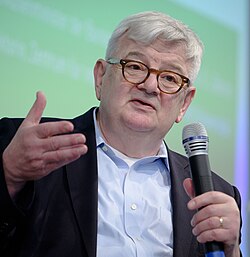
Joschka Fischer,
Germany’s foreign minister and vice chancellor from 1998 to 2005, was a leader of the German Green Party for almost 20 years.
© Project Syndicate, 2026.
www.project-syndicate.org
Follow our updates
Have information for the newsroom? Share it with Logos-Press
















Comments
0No comments yet. You can start the conversation.
Comments are open to readers with a Logos Press account.
Sign in to comment