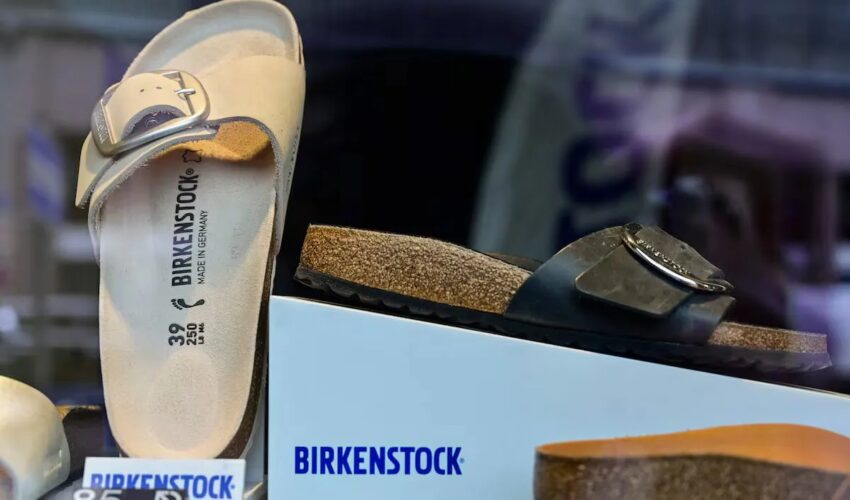
Foto: JOHN MACDOUGALL (AFP)
The reason for the new wave of sales was the company’s quarterly report, writes Reuters. Birkenstock showed weaker revenue growth, did not raise its forecast for the year, and warned of pressure from U.S. tariffs and instability in the Middle East. The market reaction was harsh, with the stock plunging more than 14% to a record low of $32.44. Since the IPO, Birkenstock’s capitalization has fallen by almost 38% from its initial valuation of $9.3 billion.
The reversal is particularly painful for a company that built its stock history around the idea of “affordable luxury.” Birkenstock emphasized its German origins, its centuries-old heritage and its rejection of aggressive discounting – all things that were supposed to bring the brand closer to the aesthetics of luxury houses like LVMH.
But investors are increasingly doubtful that the orthopedic sandal maker can play by the rules of haute couture. Unlike the luxury giants, Birkenstock remains dependent on one key product – its signature cork-insole sandals. Despite attempts to expand into new categories – from sabots to sneakers – the company has yet to prove that it is capable of becoming a full-fledged lifestyle brand on a global scale.
Additional pressure is created by the structure of the business. The company manufactures most of its shoes in Germany, which maintains the brand’s premium status, but also makes its costs significantly higher than those of competitors producing in Asia. Against the backdrop of slowing consumer spending, this is becoming an increasingly visible problem.
The situation is also exacerbated by changing customer sentiment. Wealthier customers are still willing to pay for a brand, but the mass audience is becoming more cautious due to the rising cost of living. Analysts note: the market is no longer ready to evaluate Birkenstock as a fast-growing luxury story and is gradually moving the company into the category of stable but “ordinary” consumer brands.
Today, Birkenstock stock is trading at about 13 times projected earnings – close to shoe sector averages. For a company that until recently was being compared to the biggest names in the luxury world, this was a painful signal: investors no longer believe in the unlimited growth story.
Follow our updates
Have information for the newsroom? Share it with Logos-Press