Moldova’s chairmanship of the Committee of Ministers of the Council of Europe ends this week. The “farewell” ceremony will take place in a solemn atmosphere in the presence of numerous delegations, after which Moldova’s mandate will pass to the Principality of Monaco.

Exxon and Shell are resuming Arctic exploration under Donald Trump’s slogan “Storms, Crumbs, Storms.” They are seeking to replenish reserves, diversify portfolios and maximize profits from Donald Trump’s policy of ramping up fossil fuel drilling, even though they recently claimed otherwise. Record investments and the success of new projects promise to exceed all expectations, in what experts see as a great success of the U.S. administration’s public policy.

The National Bank is stepping up efforts to transition to “environmentally friendly” credit instruments, which should give borrowers significant advantages and enter the country’s “green transition” system in accordance with European requirements. The Central Bank is already holding training seminars with professional participants in the banking system to assess such business initiatives and create appropriate financial conditions for green loans.

Leading economic experts consistently argue that classic monetary methods of the National Bank are ineffective against the current inflation. It is not about money. And even – not in their quantity. It is about the economic sovereignty of the country.

OPEC oil production continued to decline in April to its lowest level in more than two decades, according to a Reuters poll. Crude oil production by OPEC, which consists of 12 member countries, fell by 830,000 bpd in April. The March figure was revised down by 700,000 bpd due to Saudi Arabia’s output estimate.

The National Bureau of Statistics (NBS) will conduct a pilot study of income and living conditions in accordance with the EU statistical legislation in the period from May 13 to June 2, 2026. The main objective is to obtain statistical data on living conditions of the population taking into account social aspects: income, housing conditions, health status, education, employment, provision of housing with various amenities and durable goods, etc.

Ceadir-Lunga Municipality is planning the third issue of municipal bonds for a total amount of 8 million lei. Following an open tender, the commercial bank maib was appointed financial intermediary for the placement of the issue. Today, the sides signed a contract on financial mediation.

A large-scale nationwide strike is planned for May 12, 2026 in Belgium, organized by the country’s largest trade unions in protest against the government’s socio-economic policies, working conditions and planned reforms in the pension system. Severe disruptions in public transportation and air travel are expected.

The EU may start direct membership talks with Ukraine by the end of June. This was announced by European Commissioner for Enlargement Marta Kos today, 11 May. Commissioner Kos urged member states to officially open all negotiating clusters on Ukraine’s membership as soon as possible.

In April 2026, average consumer prices in Moldova increased by 6.8% year-on-year, up 4.5% YTD, confirming the acceleration trend. In March, the annual inflation rate was 5.8%, after the January minimum of 4.8%.

Europe is actively working on creating its own digital payment systems to reduce dependence on US giants Visa and Mastercard, which control about two-thirds of card transactions in the eurozone. The main goal is to ensure “digital sovereignty” and payment security, as the EU’s financial infrastructure is currently heavily dependent on the US.

The 2026 FIFA World Cup (2026 World Cup), which will take place from June 11 to July 19 in the United States, Mexico and Canada, is projected to be a powerful driver of the global economy, capable of bringing significant GDP growth and creating hundreds of thousands of jobs. By expanding the format to 48 teams and hosting matches in 16 cities, the scale of the event promises an unprecedented economic impact.

The deadline for the completion of installation works is the last week of May, while the line’s commissioning and testing phases should be completed during June. This is reported by the Energy Ministry, referring to the visit of Energy Minister Dorin Jungietu to the Vulcanesti power plant.

The Moldovan national team successfully performed at the 43rd Balkan Mathematics Olympiad (BMO 2026), which took place in Thessaloniki, Greece, from May 3 to 8, 2026. Moldovan schoolchildren won a total of 4 medals – one silver and three bronze. The young mathematicians won silver in the team competition.

The National Bank of Moldova (NBM) reported a favorable economic growth forecast for the first quarter of 2026, noting positive dynamics in industry, agriculture and retail trade. However, along with this, the National Bank decided to tighten monetary policy to control inflation by raising the prime rate to 6.5% per annum.
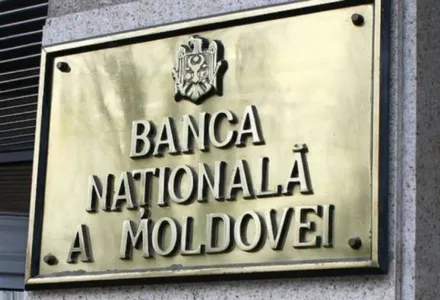
According to the National Bank of Moldova (NBM), the official reserve assets at the end of April 2026 amounted to 5,209.83 million euros, decreasing by 56.71 million euros year-on-year. The main factors for the decrease were the depreciation of the dollar against the euro (40.69 million euros) and payments for servicing the external public debt (21.53 million euros).

Yesterday, May 8, Europe celebrated Victory Day, marking the surrender of Nazi Germany and the end of World War II. The act of unconditional surrender of Germany came into force on May 8, 1945 at 23:01 Central European time, when the clock in Moscow was already on May 9. The attitude to this day varies in the countries of Europe.

The International Energy Agency (IEA) said the medium-term outlook for the natural gas industry is likely to last longer than previously thought. The conflict with Iran has already led to a loss of about 120 billion cubic meters of liquefied natural gas between 2026 and 2030, Gergely Molnar, an IEA expert, said Thursday.

The European Commission has stepped up coordination with member states in response to the hantavirus outbreak aboard the MV Hondius, a Dutch luxury cruise ship bound for Spain, while insisting the risk to the public remains “low”.

According to market analysts, published in an interview with CNBC, the growth of gold and silver prices may resume if a peace agreement is reached between the U.S. and Iran. During the conflict, gold price fluctuations have been subdued, moving in opposite directions to fluctuations in oil prices and the U.S. dollar. However, gold and silver market growth will resume this year as momentum forces resume.