

— Have more young people from Moldova started studying abroad, and where do they go most often?
— Generally speaking, about 40% of students who go abroad choose Romania. That’s still a very high percentage.
There is also a steady stream of students applying to Germany, Austria, the Netherlands, the Nordic countries, the United States, and other destinations. It’s not accurate to say that the numbers have changed significantly—there are fluctuations of 5–10% annually, either up or down. Overall, the total number of applicants remains stable.
— Which countries will be the most popular destinations for Moldovan high school graduates in 2026?
— The top destination is the Nordic countries: Sweden, Norway, Denmark, and Finland. The main reason is that courses are taught entirely or partially in English. In terms of funding, education is mostly free, and the quality of education is comparable to that of leading countries around the world, such as the United States, the United Kingdom, Canada, and New Zealand.
The next most popular destination is the Netherlands. It leads continental Europe in the number of English-language programs. There are virtually no fields of study there that cannot be pursued in English.
Next come Austria and Germany, where the number of programs taught in English is also increasing, especially at public universities.
— Have any new destinations emerged that are now in demand?
— Among the new ones, Italy stands out. It might seem that the country has close ties with Moldova—including in terms of migration and labor—but at the same time, its education system has long remained relatively unknown to us.
At the same time, Italy is home to some of the oldest universities in the world, including those with strong programs in medicine, law, architecture, history, literature, and engineering. It is particularly important that a significant portion of the programs are already available in English, mainly at public universities and often on a state-funded basis.
However, applying to universities in Italy is a complex, multi-stage process—a sort of “long marathon” for prospective students. It’s important to understand all the bureaucratic and procedural nuances.
Another rapidly growing destination is Poland. Over the past 5–6 years, the country has made significant strides in the development of higher education, which is reflected in what universities have to offer. English-language programs have become much more accessible than before. Students are considering both public and private universities. Engineering fields are particularly in demand: automation, manufacturing, digitalization, and computer technology. Business and economics also remain consistently popular.
As for Poland’s public universities, tuition ranges from approximately 1,000 to 3,000 euros per year. This is a fairly affordable option, given a level of quality comparable to that of many German and Austrian universities.
— How much cheaper is studying in Poland for popular fields of study?
— The main factor influencing tuition costs in Scandinavia, the Netherlands, Austria, and several other countries is the applicant’s citizenship. Oddly enough, it is citizenship that most often determines the cost of a program.
At the same time, academic performance affects admission but not always the cost. In other words, there is no direct correlation between academic performance and lower tuition costs.
Therefore, citizenship is usually the deciding factor. For European Union citizens—for example, those with Romanian or Bulgarian citizenship—tuition-free education is available in many EU countries, including Scandinavia, Germany, France, Italy, Spain, and others.
For citizens of Moldova, the situation is different. In some countries, such as Germany, education in English remains free because it is funded by the government. The same applies to France and several other education systems.
There are also separate scholarship programs that Poland and Hungary are actively developing. These are government initiatives to attract international students. They often include not only free tuition but also coverage of living expenses and monthly stipends.
— Does Moldova’s current status in its relations with the European Union affect the terms and cost of education?
— Yes, it does. Candidate country status in itself offers certain advantages, as it allows students to qualify for discounts and access to a range of programs. This is particularly noticeable in Central and Eastern European countries—Poland and Hungary. The Baltic states also offer special conditions for Moldovan citizens.
Full EU membership would open up even broader opportunities: equal rights with EU citizens, access to free education in all EU countries, freedom of movement, and simplified conditions for employment. Students would not have to apply for visas, submit additional applications to open bank accounts, provide proof of financial support, or face restrictions on employment.
For example, Romanian or Bulgarian citizens can not only study for free but also receive government grants to partially cover their living expenses. Programs are also often structured so that students can combine their studies with part-time work.
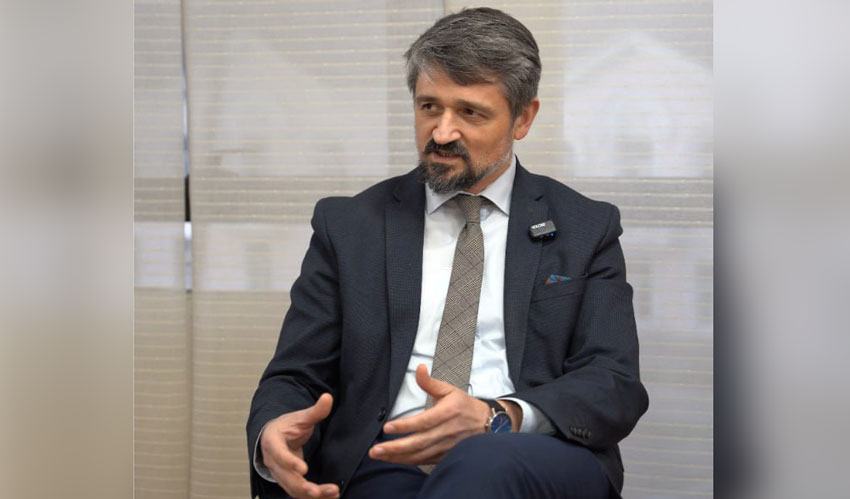
Petru Descalescu
— Looking beyond the European Union, what other opportunities are emerging?
— Outside of Europe, scholarship programs are actively developing in Asia. These include Japan, China, Hong Kong, Singapore, and Thailand. These countries offer government-funded programs that fully cover tuition. However, interest in them is still limited; it is most often shown by students who enroll in language and cultural preparation programs in advance through relevant centers. For example, through Chinese or Japanese cultural centers in Moldova. Through language and culture, further interest in the country’s educational system is fostered.
I would recommend that students consider this path because citizenship no longer plays a key role in such programs.
It is worth noting separately that, for example, a citizen of Romania or Moldova must still apply for a visa and go through the standard admission procedures. However, tuition costs—even at private universities in these countries—are relatively low.
In Japan, for example, private universities cost approximately $7,000–10,000 per year. By comparison, in the United Kingdom, this can reach 40,000 pounds sterling. At the same time, the main expense is housing. Here, the student’s ability to adapt and the opportunity to work part-time within visa restrictions are important factors.
Students often choose these countries to gain access to specific markets. For example, Taiwan is known for digital technologies and electronics, while China offers a wide range of industrial and economic opportunities.
The Moldovan government also provides annual scholarships for study in these countries, including the opportunity for initial language training and coverage of a portion of living expenses.
— Which fields of study and programs are currently off-limits to Moldovan students?
— It’s not so much a matter of closed fields of study as it is of restrictions. For example, in the United Kingdom, visa procedures have become more complicated and tuition costs have risen since Brexit.
Even with the introduction of digital visas, the requirements for financial guarantees and documentation remain quite strict.
Medical education is a separate issue. In most countries, English-language programs in this field are practically unavailable, as they are closely tied to the national healthcare system and the country’s language.
Italy is a partial exception, with about 11 public medical universities offering programs in English. However, competition there is extremely high, and requirements are constantly increasing.
The situation is similar for dentistry and, to some extent, architecture.
Legal education is also challenging, as the law is directly tied to the national legal system. Even if instruction is available in English, obtaining a professional license requires knowledge of local legislation.
In other fields, on the contrary, there is an expansion of English-language programs and a growing number of opportunities.
— How much does the most affordable study option cost right now?
— When it comes to countries where education is fully funded by the state, Germany is a good example. It has one of the largest university systems in Europe, with more than 500 institutions. The government continues to fund education, allocating an average of 15,000–20,000 euros per student per year.
However, students still need to cover their living expenses. On average, this amounts to 880–1,100 euros per month. Costs may vary depending on the city and region: they are higher in Munich, Frankfurt, or Berlin, and lower in other federal states.
On-campus housing can start at around 300 euros. In Chisinau, rent for international students may, in some cases, be comparable or even higher. Additional expenses, including transportation, can amount to about 200–250 euros.
All in all, the total monthly living budget is approximately 880–1,100 euros. But it’s important to note that students can partially offset these expenses by working part-time.
— Are there any paid internships available while studying?
— Yes, several EU countries have government programs to support students. For example, in Denmark, students with EU citizenship can work 9–11 hours per week and receive compensation. In total, this can amount to about 900 euros per month.
Many students combine their studies with part-time work or remote work for foreign companies. This has become particularly common in recent years.
— How else might external factors affect the cost of education?
— Fluctuations in the cost of transportation and housing will have the greatest impact. Most educational programs are financially stable, so no drastic changes in tuition costs are expected in the near future.
— Prospective students who go abroad are often viewed as part of a “brain drain.” Is that really the case?
— Probably not. There are examples of countries where studying abroad is the norm. For example, Luxembourg, which for a long time did not have its own university, actively sent students to neighboring countries. This created a system in which students gain international experience and then return to help develop the country’s economy.
A similar model is also characteristic of Romania, whose citizens receive an education at the best European universities without placing a serious burden on the budget, but return with a high level of training.
We hope that a similar model will develop in Moldova as well. Already, many students studying abroad are returning and implementing their own projects at home.
Yehor Yudaiev,
student at the Faculty of Journalism, Moldova State University


