Send us a message, and we will definitely consider your suggestions and comments.
All
Accidents
Agribusiness & Winemaking
Art & Culture
Artificial Intelligence
Banks & Finance
Business & Companies
City & Regions
Culture
Digitalization
Economy & Law
Education
Electricity
Energy
European Integration
Events
Export & Import
FinTech
Gas
Global Economy
Global Markets
Green Economy
Healthcare
Infrastructure
International Trade
Investments & Markets
IT Market
Logos Press Exclusive
Moldova’s Economy
Municipalities
Point of View
Politics & Economy
Pro Business
Renewable Energy
Retail & HoReCa
Social Sphere
Society
Sport & Tourism
Technology & Innovation
Territorial Reform
Top News
Tourism
News
In the first half of 2026, the European Union imported more liquefied natural gas (LNG) from Russia’s flagship “Yamal LNG” project than ever before. EU purchases reached a record 9.89 million metric tons in the first six months of the year—an 18% increase over the same period last year. According to Urgewald, Europe paid up to €6 billion for the shipments.

Demand for transport capacity on the Vertical Gas Corridor exceeded expectations last week, even during the very first auctions for capacity reservations. Interest from market participants underscores the growing role of this new gas supply route to Southeast Europe, which is set to become one of the alternatives to Russian gas.

Germany has faced an unexpected consequence of its decision to stop using Russian gas. The system of mandatory filling of underground gas storage facilities, established after the energy crisis to ensure the reliability of supplies, has now itself become a source of additional costs and debate about the future of the gas market.

Gasoline production in Russia has fallen to about 65% of the average seasonal consumption level. The problem arose amid Ukrainian drone attacks on energy infrastructure and the shutdown of several major oil refineries.

Constantin Cuiumju, a member of parliament from “Our Party,” stated that government representatives on the Moldovagaz Supervisory Board rejected a proposal to cancel payments to board members, even though Gazprom had put forward that initiative.

The water level situation on the Dniester is rapidly shifting from the “concern” stage to the “alert” stage. Today, the water level in the Dniester Reservoir stands at 113.74 meters and continues to drop at a rate of approximately 6 cm per day.

Qatar has temporarily suspended the development of new projects aimed at increasing liquefied natural gas (LNG) exports. This is a significant signal for the global gas market.

The Ministry of Energy has confirmed that negative electricity prices may emerge in Moldova in the near future—that is, producers will pay consumers to dispose of the excess electricity they generate.

National legislation will establish a mechanism for coordinating and approving energy infrastructure projects of strategic importance, which will ensure priority treatment for projects developed in partnership with European Union member states.

Constantin Cuiumju, a member of the “Our Party” faction in the Moldovan Parliament, is demanding that the leadership of Energocom appear before Parliament after the company spent approximately 18 million lei on a billing information system that was supposed to go live on June 1, but has not yet been put into operation.

Russia has increased its seaborne oil exports to their highest level since 2022. Over the past four weeks, average shipments have reached 4.22 million barrels per day, Bloomberg reports, citing tanker tracking data.

For the first time since the ceasefire between the U.S. and Iran and the reopening of shipping lanes in the Strait of Hormuz, a Qatari gas tanker was attacked and caught fire on July 7.

Romania became the largest recipient of the latest tranche of funding from the European Union’s Modernization Fund, receiving 636.9 million euros for investments in the energy sector out of a total of 2.5 billion euros, allocated to 11 EU member states.

One of Georgia’s largest industrial projects—the oil refinery in Kulevi—will completely cease processing Russian crude oil starting in August–September 2026. This was announced by Black Sea Petroleum, the company that operates the facility.

At 10:00 a.m. today, 145 power plants operating under free-market conditions were shut down because they were unable to sell their electricity through OPEM.
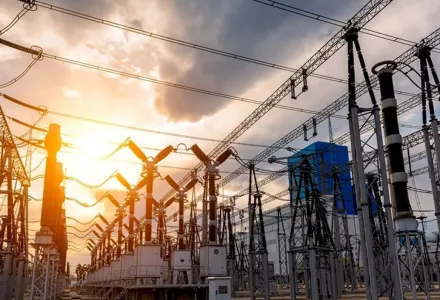
In June, the state-owned company Energocom purchased 41.3 million euros worth of electricity, a 12% increase from May, amid a heat wave and a sharp rise in prices on the stock exchange.

The Danish shipyard Fayard remains the last facility in the European Union that continues to service specialized Arc7 ice-class gas carriers used to transport Russian liquefied natural gas from the Yamal LNG project.

The Republic of Moldova presented its achievements, current environmental challenges, and ways to improve regional cooperation on environmental protection at the second EU4Green Recovery East regional meeting in Paris.

Europe is the fastest-warming continent on the planet: its climate is changing at roughly twice the global average rate. As temperatures continue to rise, a key question arises: Is Europe prepared for a hotter future?

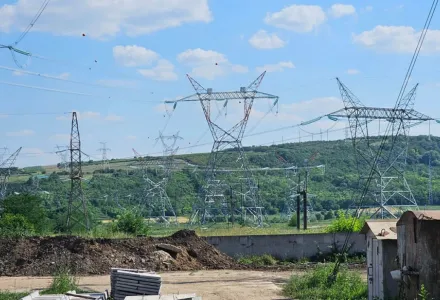
According to a statement from the Ministry of Energy, construction work on the 400-kV Vulcănești–Chișinău overhead power line and related infrastructure has been completed, and the “Energy Independence” line has entered the final stage of testing prior to its commercial commissioning.