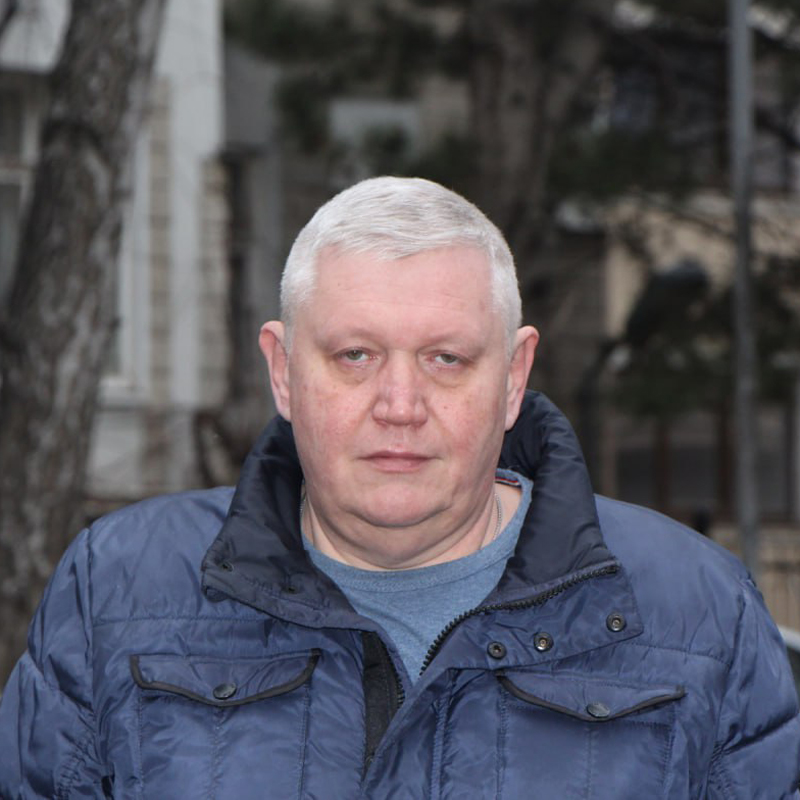

Dorin Junghietu
LP: – After the accident on the Isaccea–Vulcănești 400 kV line, it became clear that Moldova’s energy security regarding electricity supply is still insufficiently ensured. Can the Bălți–Suceava 400 kV line (to be completed by 2027) and the Strășeni–Gutinaș 400 kV line (planned completion by 2030) remedy this? Is the government planning to accelerate their construction?
– The accident on the Isaccea–Vulcănești 400 kV line was indeed a stress test for our energy system. It showed what we have said before: energy security is not a one-time solution but a systemic architecture built step by step.
Today, the Republic of Moldova is in a significantly more resilient position than just a few years ago. We are synchronised with the European ENTSO-E network, we have access to the markets of Romania and the EU, and a fully functional market model is in place, including the intraday market. However, physical infrastructure remains a key constraint – and that is exactly what we are actively reinforcing now.
The Bălți–Suceava 400 kV and Strășeni–Gutinaș 400 kV projects are not just power lines – they are strategic elements of the country’s new energy geometry. Their implementation will allow us to:
– significantly increase import capacity from Romania and the EU;
– reduce dependence on individual routes and the risk of accidents;
– ensure full integration into the European electricity market;
– create conditions for the development of renewable generation, exports, and energy storage systems.
The Bălți–Suceava line is already in the active implementation phase, with a clear target for completion in 2027. We are working with international partners, including the EBRD and others, to secure not only financing but also adherence to the schedule.
Regarding the Strășeni–Gutinaș project: after the closure of USAID, which had previously provided financing for the line’s construction, the United States reaffirmed its financial support for the project. $130 million has been allocated for work on the Moldovan side of the line, the company that will handle the project has been identified, and a preliminary feasibility study is currently being developed, with completion planned for this summer.
The United States continues to support the strengthening of Moldova’s energy security through pragmatic investment partnerships.
Just this Monday, I met with the US Ambassador to the European Union, Andrew Pazder, who reaffirmed the United States’ commitment to developing bilateral cooperation and investment partnerships in this area.
To answer your question directly – yes, the government is taking steps to accelerate these projects. This includes:
– simplifying approval and permitting procedures;
– prioritising the projects in national investment plans;
– attracting additional financing;
– strengthening institutional coordination among all stakeholders.
But it is important to understand: in the energy sector, speed cannot come at the expense of reliability. Our task is not just to build faster, but to build correctly, so that these lines serve for decades and provide real energy independence.
And to put it briefly: the accident revealed vulnerabilities, but also confirmed that we are on the right course. We are already building a system where such incidents do not lead to a crisis but remain manageable technical events.
LP: – After the Isaccea–Vulcănești line accident, you proposed building another power line – a 110 kV line from Galați. Can you tell us more about this project?
– Given the emergency situation caused by the military attacks of the Russian Federation on the Isaccea–Vulcănești 400 kV power line, the need to strengthen the energy security of the Republic of Moldova has become even more evident. In this context, the state enterprise “Moldelectrica” is considering the development of a new 110 kV interconnector with Romania along the Galați–Giurgiulești route.
The project is being analysed in coordination with Romania’s transmission system operator, CNTEE Transelectrica SA, and entails the construction of a cross-border 110 kV line along with associated infrastructure. This will create a new connection between the power systems of the two countries.
The project aims to improve the reliability and security of electricity supply, especially in the southern part of the country; provide alternative import routes in case of emergencies or maintenance; and increase cross-border electricity exchange capacity. This interconnector can be used both in normal operation and in emergency situations requiring rapid reconfiguration of power flows.
Currently, the project is at the feasibility and technical viability analysis stage. In this regard, the Ministry of Energy has sent a request to the Romanian side to ensure coordination at the intergovernmental level. If the decision is positive, the project may be granted the status of a nationally significant public utility, after which the necessary agreements for its implementation will be signed. Financing for the line is to be secured from revenues generated by the congestion income distribution mechanism.
LP: – Suppose the aforementioned lines are built. However, the EU quota for electricity supplies from the EU to Moldova and Ukraine remains, currently set at 2.4 GW. Will this limitation change?
– It is important to clarify: the quota of 2.4 GW for the joint Moldova-Ukraine control block (of which Moldova’s share is 15%, corresponding to the number of transmission lines) is not a political or commercial restriction, but a technical parameter determined by the transmission system operators within ENTSO-E. It refers to the available cross-border transmission capacity – NTC (Net Transfer Capacity) – between the Moldova-Ukraine block and the continental European network.
The NTC calculation mechanism is based on strict power system security rules. The operators calculate the maximum permissible power flows considering:
– network stability under various load scenarios;
– the N-1 principle (the system must withstand the loss of one key element);
– the condition and capacity of internal and cross-border lines;
– synchronous operation with the European network following emergency synchronisation in 2022.
After that, the available capacity is allocated through market mechanisms – primarily auctions for cross-zonal capacity (day-ahead, intraday) – ensuring transparent and competitive access for market participants.
Regarding the future: the construction of the Bălți–Suceava 400 kV and Strășeni–Gutinaș 400 kV lines will directly impact this parameter.
Today, the ~2.4 GW limitation is partly due to bottlenecks in the region’s grids and insufficient physical connectivity. New interconnectors will:
– increase the number of physical transmission “corridors”;
– reduce the load on existing lines;
– improve system stability and allow operators to safely raise flow limits.
According to TSO estimates, after the new lines are commissioned, transmission capacity may increase gradually – by an estimated several hundred megawatts for the Republic of Moldova, with further growth potential as the network is modernised and regional infrastructure develops. In the broader regional context, this creates conditions for reviewing and gradually increasing the current 2.4 GW level.
However, it is important to stress that an increase in NTC does not happen automatically with the commissioning of a single line. It results from a comprehensive assessment of the entire regional network, including neighbouring countries’ infrastructure. Therefore, our strategy is not only to build new lines but also to work with partners in the EU and Ukraine to synchronously strengthen the entire system.
The key here is to move from “limited integration” to full participation in the European electricity market, where trade volumes are determined not by quotas but by the network’s real capabilities.
LP: – In early April, CNED reported that the installed capacity of all renewable energy source (RES) installations exceeded 1 GW. At the same time, another tender for large RES producers was announced. Is there any ultimate limit after which Moldova will declare a ban on further construction of such power plants?
– It is important to understand that in its renewable energy policy, the Republic of Moldova does not use a “hard ban” after reaching a certain volume. Instead, it applies a more flexible and manageable mechanism – planning through capacity limits, quotas, and auctions.
Today, we have indeed reached an important milestone – installed RES capacity has exceeded 1 GW, reaching over 1,023 MW. This confirms that the sector is developing very rapidly.
However, according to the National Energy and Climate Plan (NECP) and the draft Energy Strategy, the state sets targets, not “stop‑line” restrictions. For example, at least 27% of final energy consumption and over 30% of electricity from RES by 2030. To achieve these goals, a controlled development system via tenders (auctions) is being introduced – the government approves capacity limits and quotas up to 2030, which determine how much new capacity can be supported under state support schemes.
These limits do not mean a ban on construction as such. They mean that projects within the quotas receive support (e.g., fixed price or premium), while projects outside the quotas may be implemented on market terms, provided technical connection capabilities exist.
Today, the issue of limitations is related not to a “political ceiling” but to the technical capabilities of the system:
– grid capacity;
– system balancing (especially with increased solar generation);
– availability of storage systems (BESS) and flexibility;
– export possibilities via interconnectors with neighbouring countries.
That is why new tenders already require the combination of RES with storage systems, and generation development is synchronised with grid modernisation.
Thus, the Republic of Moldova does not plan to introduce a ban on RES construction after reaching a certain level. However, the sector’s development will occur within managed limits and technical system capabilities to avoid grid overload and ensure stable electricity supply.
In other words, we are moving from a phase of “rapid growth at any cost” to a phase of balanced development – where every new megawatt must be integrated safely and efficiently.
LP: – Several years ago, the use of biomass energy for heat and electricity was actively developing in Moldova. Later, with the closure of the EU “Energy and Biomass” project implemented by UNDP, this theme gradually faded. Although the use of such energy is growing in the European Union, and Moldova has millions of tons of agricultural and forestry waste that could be turned into briquettes and pellets. Are there any plans to revive such a project?
– The biomass issue is indeed very important, and we need to strike a proper balance: the theme has not “disappeared” but is moving into a new phase – from donor-funded projects to sustainable market development.
First of all, it should be acknowledged that the EU “Energy and Biomass” project implemented by UNDP was one of the most successful in the country’s energy sector. Over 7 years, it effectively created a new industry: more than 200 public institutions switched to biomass heating; dozens of pellet and briquette companies emerged; hundreds of thousands of citizens gained access to cheaper, local heating.
And most importantly, it proved a key thesis: biomass is one of the most accessible domestic renewable resources for the Republic of Moldova. Biomass is not an alternative to solar or wind energy, but their logical complement, especially in the heat segment, where it can deliver maximum impact with minimal import dependence.
After the project ended, the focus did shift – but not because the direction was abandoned; rather, the market needed to transition from a subsidised model to a commercial one. The state’s attention temporarily focused on gas and electricity crises, with priority given to rapid integration into the EU market and electricity sector development.
However, in strategic documents – both the NECP and the draft Energy Strategy – biomass remains an important element of the energy balance, especially in the heating sector and rural areas.
Today, we are actually seeing a second wind for this direction, but in a more mature format. The Ministry of Energy, together with partners, launched a specialised biomass market platform in 2024 that connects fuel producers and consumers; support mechanisms for modernising pellet and briquette production are being considered; the segment of building energy efficiency, where biomass remains a competitive solution, is developing; and projects on biogas and cogeneration based on agricultural waste are being discussed.
The key approach now is not simply to repeat the old project, but to integrate biomass into the new energy model as a local heat source, especially for vulnerable households, as an element of energy independence in rural areas, and as part of a circular economy where waste becomes a resource.
LP: – Integrating energy from renewable sources into the national grid is hindered by a lack of sufficient balancing capacity in Moldova. We understand that there were at least three serious proposals to build base-load gas-fired power plants with a total capacity of up to 86 MW by private investors by 2025. Why were these projects not implemented? And are there any others that will actually be built?
– The issue of balancing capacity is one of the key challenges in the current transformation of the energy system. And it is important to clarify: the problem is not so much the “absence of projects” but that conditions for their implementation are only now becoming stable and predictable.
Indeed, in previous years, several private investor initiatives were considered to build gas-fired power plants with a total capacity of around 80-90 MW. However, they were not implemented for a combination of reasons.
First, until recently, the electricity market in the Republic of Moldova did not provide sufficient predictability for such investments. There were no full-fledged price signals, no intraday market, and limited opportunities to participate in balancing. Only after the launch of the modern market architecture, including day-ahead and intraday segments via OPEM, did the situation begin to change.
Second, there were no clear mechanisms for return on investment specifically for balancing capacities. Unlike renewables, which are supported through auctions and guaranteed price schemes, flexible gas generation lacked instruments such as capacity payments or availability contracts.
Third, uncertainty over gas supplies and price volatility in 2021–2023 significantly raised risks for investors. With fuel prices capable of changing multi-fold, projects highly dependent on gas became economically difficult.
Finally, limited grid and interconnector capacity also reduced commercial attractiveness – without sufficient system flexibility, even available generation did not guarantee efficient dispatch.
Now the situation is fundamentally changing. We are moving towards a more balanced model where renewable energy development is accompanied by the creation of system flexibility.
In particular, the energy storage segment (BESS) is actively developing and has already become a mandatory element of new auctions. Mechanisms to incentivise flexible capacity are being considered, including potential availability payment schemes. Integration with the EU market through ENTSO-E is being strengthened, expanding balancing possibilities via imports/exports. Grid infrastructure is being modernised, increasing the system’s ability to accept and redistribute energy.
We are also seeing new initiatives – both in energy storage, with capacity reaching up to 200 MWh in the coming months, and in flexible generation, including gas and potentially biogas. For natural gas generation, we have signed a memorandum with two American companies ready to build a 100 MW power plant. There are also other private initiatives in this direction.
In addition, we are modernising CHP plants – we are currently negotiating with companies that participated in the tender to build 55 MW, and we are advancing preparatory processes for implementing a 250 MW project at Termoelectrica.
The Republic of Moldova will not build excessive conventional generation. Our goal is to create a smart, flexible system where balance is achieved through a combination of interconnectors, energy storage, and, where necessary, highly efficient flexible generation.
LP: – Is there any possibility that Moldova will return to receiving electricity from the Moldovan GRES (Cuciurgan power plant)?
– We must approach this question pragmatically, without emotion, and with a clear understanding of national interests.
MGRES has historically been an important source of electricity for the right bank and was even intended for export to the Balkans. However, the events of recent years have shown the main risk of such a model – critical dependence on a single supplier located outside the constitutional control of the Republic of Moldova and linked to geopolitical factors.
MGRES is a facility that is now morally and physically obsolete. Its competitiveness in the past was largely explained by one factor – access to gas on non-market terms. In a situation where fuel is supplied at market prices, electricity generated at that plant will objectively be more expensive than offers on the Romanian exchange or generation at our CHPs, let alone renewables.
Second, there is the political decision taken by the government in 2025. The Republic of Moldova has consciously set a course for a complete break from dependence on the traditional supplier, which, unfortunately, has repeatedly demonstrated that it uses energy as a tool of political and geopolitical pressure. This is not an abstract risk – it is an experience the country has already lived through.
That is precisely why our strategy is diversification: integration into the European market via ENTSO-E, development of interconnectors with Romania, growth of domestic generation, including renewables and highly efficient capacities, and creating a competitive, transparent market environment.
Theoretically, the market remains open, and any supplier can participate on equal terms. But from a practical and strategic perspective, returning to a model where a significant share of electricity comes from a single source, especially with such risks and pricing parameters, makes neither economic nor strategic sense.
LP: – Recently, at a working meeting at the Ministry of Energy with the participation of distribution and transmission system operators, it was said that the degree of wear and tear on Moldova’s power transmission networks ranges from 70% to 90%, and many have exceeded their service life. What actions does the Ministry intend to take in this regard?
– The problem of network wear is not news, but a systemic challenge that has been accumulating for decades. And today, for the first time, we are addressing it not in a piecemeal manner but through a comprehensive infrastructure modernisation programme.
A key step has already been taken: the transmission system operator Moldelectrica has developed, and ANRE has approved, a 10-year network development plan that envisages investments of about 8 billion lei. This marks a shift to systematic renewal of the backbone network. This includes step-by-step replacement of the most worn-out lines and substations, especially those that have already exceeded their standard service life.
Second, expansion of the network to integrate renewable energy sources and new interconnectors with Romania and the EU.
Third, the introduction of modern network management technologies, including digitalisation and smart grid elements.
But equally important, we are changing the approach to investments in distribution networks, including regulatory mechanisms. Distribution operators receive incentives to increase investment in modernisation. For example, higher allowable profitability is foreseen if companies reinvest a large share of profits into the network, and control over the implementation of investment programmes is being strengthened.
In parallel, the Ministry is working on several additional fronts, such as:
– attracting international financing from development partners to accelerate modernisation;
– simplifying procedures for implementing infrastructure projects;
– synchronising grid development with generation growth to avoid “bottlenecks”;
– developing energy storage systems, which reduce grid load and increase its resilience.
LP: – What is the current situation with natural gas? For what period are supplies contracted, and can we expect that the tariff will not rise?
– The Ministry of Energy is not involved in the procurement of natural gas. Under current legislation, we are explicitly prohibited from interfering in the operational activities of companies. We certainly monitor the market situation and receive reports from companies, but procurement decisions are made by them independently.
As in the previous year, Energocom has developed a procurement strategy. However, its details are not disclosed publicly to avoid influencing the market and to ensure the most favourable procurement conditions, and therefore optimal prices for end consumers.
LP: – Since April 1, 2026, large non-household gas consumers (over 100,000 cubic metres per year) in Moldova are required to switch to the free market. How does this work physically, since medium and small consumers will have to follow later? And what role does the BRM East exchange play in this process?
– The switch of large consumers to the free gas market is already a practically implemented process, with a very high level of success.
As of April 1, 2026, all large non-household consumers (203 companies) have completed the transition. Of these, 193 companies (about 95%) have already concluded contracts on the free market, covering approximately 99% of the volume in this segment. Another 10 companies with seasonal consumption have temporarily given up gas and will return to purchasing later.
Now, how does this work physically? The physical delivery of gas does not change. Gas, as before, flows through the same infrastructure – via the transmission system operator and distribution networks. Only the commercial part changes: the consumer chooses its own supplier, concludes a contract with them on market terms, negotiates price, delivery schedule, and payment terms, and the supplier books the necessary capacity in the system and ensures the gas supply.
Thus, it is about a separation: the physical flow of gas remains unified, but the supplier becomes the customer’s choice. This is the key principle of the European market model.
Regarding the role of the BRM East exchange, it is one of the instruments of this process. The exchange provides transparent and competitive gas trading, allows consumers and traders to buy gas at market prices through auctions or SPOT transactions, sets price benchmarks linked to regional markets, and reduces the risks of opaque bilateral agreements.
At the same time, the exchange is not the only channel. Companies can also conclude direct bilateral (OTC) contracts, choosing the most advantageous model.
The next stage of the reform is already planned. As of April 1, 2027, medium consumers (10,000–100,000 m³ per year) will enter the free market, followed eventually by small and household consumers, for whom easy supplier switching and tools for comparing offers will be provided.
LP: – What actions have already been taken, and what does the Ministry of Energy plan to do to limit the rise in oil product prices and reduce the negative impact on the country’s economy from their significant increase?
– The rise in oil product prices is primarily an external factor linked to the dynamics of crude oil and oil product prices on international markets. The Republic of Moldova, as an importing country, cannot directly influence these prices. But the state’s task is to mitigate the effect on the economy and consumers and to ensure a maximally competitive and transparent domestic environment. What has already been done:
First, a pricing mechanism administered by ANRE is in place, which links domestic fuel prices to international quotes and the exchange rate. This eliminates speculation and ensures pricing transparency.
Second, the state does not impose administrative “freezes” on prices, as that approach has led to shortages in the past. Instead, a market model with control and transparency is applied.
As for further actions:
First – diversification of supply sources and logistics. Expanding access to regional markets reduces dependence on individual routes and increases resilience to price shocks.
Second – development of alternatives. We are actively promoting electromobility, the use of biofuels, and improving energy efficiency in transport and industry.
Third – targeted support measures. In the event of sharp price spikes, the state considers support instruments for the most vulnerable categories and key economic sectors, without distorting market signals.
Fourth – improving storage and logistics infrastructure, allowing companies to purchase fuel during more favourable periods and smooth out price fluctuations. This is foreseen in the draft law on oil reserves, which transposes the relevant European directive and provides for the creation of mandatory reserves equivalent to approximately 60 days of average consumption. This involves bringing the national system into line with the requirements of Directive 2009/119/EC, which obliges member states to maintain minimum stocks of crude oil and petroleum products to ensure energy security in the event of supply crises.
In the Republic of Moldova, the relevant draft law provides for the creation of a mandatory stock system for petroleum products (gasoline, diesel, fuel oil), a gradual increase in volumes to a level comparable to European requirements, a split of responsibilities between market participants (importers, suppliers) and the state, the creation of an institutional management mechanism (including a specialised agency or authorised body), and the use of these stocks solely in emergencies or severe supply disruptions.
Building such stocks is not only a security issue but also a tool to smooth market shocks, enabling the economy to respond better to external crises. Implementing this system is another step towards integrating the Republic of Moldova into the European energy space and strengthening its resilience to external risks.


