

Donald Trump
It is tempting to dismiss these plans as a mere manifestation of narcissism, but that would be a mistake. America’s rococo leader long ago realized what many of his critics fail to grasp: spectacle shapes public reality and institutional memory.
The media has repeatedly described Trump’s plans as his “imprint.” A recent New York Times headline called his proposed arch “another imprint” on Washington, while Reuters reported that Trump has taken steps to “imprint his image and influence on federal institutions.” The Associated Press, for its part, portrayed the White House ballroom as part of an effort to leave his “indelible imprint” on the capital.
While journalists use the term “imprint” in a descriptive sense, they also, perhaps unintentionally, reveal something deeper – and more dangerous – than the usual presidential conceit.
In biology and the social sciences, “imprinting” refers to the specific process by which institutions, organizations, and individuals absorb the conditions of a defining moment and carry them into the future in ways that are difficult to reverse. Understanding this concept is necessary not only to understand Trump’s actions, but also to determine how to stop them.
In our 2022 book Mao and Markets, Cunyuan Qiao and I explored how Mao Zedong so profoundly transformed China’s political system that his successors were forced to operate within the boundaries he set. Despite all their transformative effects, Deng Xiaoping’s reforms did not erase Mao’s imprint on Chinese institutions and culture. Markets expanded, private enterprise grew, and China integrated into the world economy, but these developments occurred within a system designed to preserve the Communist Party’s power.
Many Western observers misinterpreted China’s trajectory, believing that markets would override ideology and push the country toward liberal democracy. In fact, the reforms changed the mechanism of the system, leaving its underlying structure intact. From this perspective, President Xi Jinping’s tightening of party control is not so much a departure from the political reforms of the Deng Xiaoping era as a reactivation of forces that never really disappeared.
A warning for the U.S.
China’s experience should serve as a warning to the United States. If Trump’s imprint takes root through monuments, politicized agencies, subordinate courts, and official narratives that impose a more exclusive vision of American identity, future presidents may find themselves bound by a system he has already deformed.
Certainly the United States is no stranger to this dynamic. Ronald Reagan used the stagflation crisis of the 1970s to promote a “small government” ideology that his successors, including Democrats Bill Clinton and Barack Obama, largely embraced – just as Republicans Dwight D. Eisenhower and Richard Nixon largely embraced the “big government” ideology of the New Deal.
Now Trump is trying to create a competing legacy – based on personal power, cultural isolation and the rewriting of history – just in time for the 250th anniversary of the Declaration of Independence. His planned construction projects are not isolated gestures, but part of a coordinated attempt to bring his symbols into the physical landscape of the capital.
Trump’s March 2025executive order against the Smithsonian Institution extends this logic to institutions that shape public memory. Calling for “restoring truth and sanity” to U.S. history by getting rid of so-called “anti-American ideology,” the executive order seeks to determine whose version of America will become official.
This is where the concept of “imprinting” proves particularly useful. The danger lies not in Trump’s desire for grandiosity. It lies in the fact that he understands, better than many of his opponents, how to turn temporary power into long-term constraints.
His architectural designs and attacks on independent institutions are all part of the same strategy. If successful, his legacy will endure regardless of whether Republicans continue to support him or whether the MAGA agenda remains popular, because it will be embedded in structures – institutional but also physical – that will outlive himself.
Countermeasures
However, there are steps that Trump’s opponents can take to prevent such an outcome. The first is to deny permanence more aggressively. Too often, critics treat every construction project, executive order, and institutional encroachment as an isolated absurdity.
Trump wins when his critics divide into aesthetic, political, and legal camps. His project is integrated, and the response should be the same.
That means resisting the temptation to focus only on the “big” battles. In Trump’s first months in office, Democratic Party leaders debated whether to respond selectively to his institutional attacks, with Senator Chuck Schumer arguing that “we pick the most important battles and lie down on the rails in those battles.”
This was a mistake. Any project that requires congressional authorization, appropriations, conservation review, project approval, or environmental authorization should be challenged on procedural, legal, and constitutional grounds. Delay may help prevent Trump’s whims from becoming precedent.
Second, treat elections – especially the midterm elections in November – as a contest to strengthen institutions. An unfriendly Congress can investigate, block funding, tighten appropriations, and raise the costs of executive overreach. With the right approach, routine oversight can keep Trump’s personal branding from infiltrating the structure of government.
But stopping Trump’s current projects is not enough. The deeper challenge is getting rid of his imprint once it begins to take root. Imprints persist through rules, appointments, habits, and material arrangements. They weaken only when these supports are dismantled.
So a future administration, in cooperation with Congress, must do more than simply repeal Trump’s most egregious initiatives.
It must create defense mechanisms against presidential self-assertion, including tighter congressional oversight of changes to symbolic federal spaces, legislative protections for the White House grounds and major cultural institutions, independent appointment procedures to bodies like the Commission on Fine Arts, and preservation rules that cannot be easily overturned by executive action.
Democratic societies cannot rely on decency or inherited norms of restraint for their defense. Trump has already shown how fragile they are. He also realizes that spectacle lingers in the memory long after the initial outrage has faded. More than kitsch or vanity, his project is driven by a desire to leave behind institutions, symbols and cultural habits shaped in his image.
The overall civic lesson is clear. The correct response is not mockery (though mockery has its place) but organized rejection now and institutional restructuring later. The spectacle of Trump is not meant to distract attention from his larger project – it is that project.
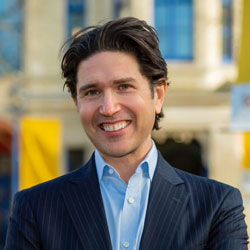
Christopher Marquis
Christopher Marquis, Professor of Management at Cambridge University and author of “Speculators: How Business Privatizes Profits and Socializes Costs ” (PublicAffairs, 2024).
© Project Syndicate, 2026.
www.project-syndicate.org


